In the summer of 2021, a four-leaf cutting of Philodendron spiritus-sancti went for the price of a used Honda. Screenshots flew through DMs like contraband. A man in suburban New Jersey, who two years earlier had been growing pothos under a shop light, posted a stud cutting of Anthurium papillilaminum × luxurians and woke to ninety-seven offers. Somebody in Bali was airmailing wet-stick Monstera obliqua Peru inside hollowed-out books. The whole thing had the manic, slightly embarrassed energy of a casino at four in the morning.
Three years on, the room is quieter. Prices on the showpieces have dropped sixty, seventy, in some cases ninety percent. The flippers are gone — to mushrooms, to orchids, to whatever the algorithm rewards next. What remains is something more interesting than the boom itself: the people who were going to grow these plants anyway, methodically, in spare bedrooms and converted garages, long after the speculation washed out.
What the boom actually was
The rare-plant run from roughly 2019 to early 2022 was not really about plants. It was about a confluence: lockdown, stimulus checks, low interest rates, a captive audience scrolling Instagram, and a small set of species that photographed beautifully and propagated slowly. Velvet aroids — Anthurium clarinervium, A. crystallinum, A. magnificum, the harder-to-find papillilaminum and dressleri — were the blue chips. Variegated Monstera, particularly the albo and Thai Constellation, were the meme stocks. Philodendron verrucosum, gloriosum, Spiritus-sancti, and the McColley's Finale lineages floated somewhere between.
Auction culture moved from closed Facebook groups to public Instagram lives. Ecuagenera shipments turned into spectator sport. A grower with a clean white wall and decent lighting could move four-figure cuttings on a Sunday night without leaving the couch. New importers — some excellent, some catastrophically careless — sprang up to feed the demand. The price of a Philodendron billietiae rooted cutting tripled, then quintupled, then quietly came back down to roughly what it had been before anyone was watching.
The bubble didn't kill rare-plant collecting. It just made it harder to confuse a collector with a day trader holding a leaf.
The flippers, briefly
You could spot them by the captions. The plants were always "stunning," "unicorn," "grail." The substrate was usually wrong — heavy peat, no perlite, often a nursery pot still wrapped in the import sleeve. The accounts were six months old and had four thousand followers. They didn't grow the plants; they staged them, photographed them under a ring light, and sold them within the week.
This was a rational response to a market. If a wet stick of Philodendron luxurians doubled in value in ninety days, holding it under your own LEDs and risking root rot was the worst possible move. The flippers were correct, financially, until they weren't. When demand softened in mid-2022, the people sitting on twenty cuttings of Monstera albo bought at peak suddenly had inventory, not a portfolio. Most quietly disappeared. Some pivoted to hoyas for about four months, then to carnivorous plants, then out of the hobby entirely.
The collectors who stayed remember the flippers without much rancor. Mostly they remember the secondary damage: import lots stripped, mother plants chopped to within an inch of their lives, Anthurium seed batches sold as named hybrids when they were anyone's guess.
What the collectors were doing the whole time
Meanwhile, in less photogenic corners of the hobby, people were doing unglamorous work. Pollinating Anthurium inflorescences with a fine brush across staggered male and female phases. Keeping germination logs. Trading pollen by mail to Florida and Hawaii and the Netherlands. Building IBC-tote grow chambers with PC fans and an Inkbird controller, because that's what dressleri wants and nothing else will do.
These collectors were rarely the ones with the largest followings. Their feeds tended to be badly lit. They posted juvenile leaves and root shots and the occasional confession of a thrips outbreak. They knew the difference between A. forgetii Red Vein and the Panama form because they had grown both from seed to bloom. When prices were vertical, they weren't selling — they were trading, quietly, with three or four other people who had the seedlings they actually wanted.
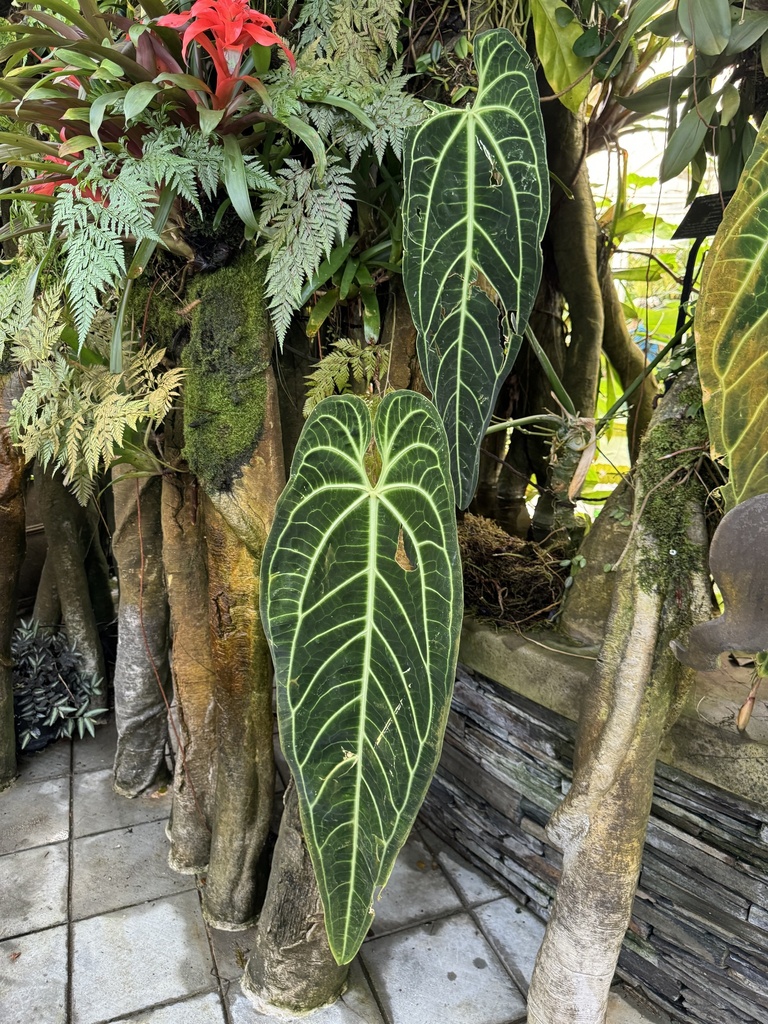
The new baseline
A rooted, established Philodendron spiritus-sancti today might run a thousand to fifteen hundred dollars depending on size and seller — still a serious plant, but no longer mortgage-adjacent. Monstera Thai Constellation, mass-tissue-cultured by several labs, sits around fifty to a hundred. Anthurium warocqueanum in a four-inch pot is forty bucks at a decent nursery. The species haven't changed. The supply caught up, and the speculative premium evaporated.
This is healthy. A hobby in which the entry fee for a velvet philodendron was eight hundred dollars was a hobby with a very narrow door. The collectors who stayed are, on the whole, glad about this — even the ones who paid peak prices. Watching a teenager in Ohio post a first unfurling A. crystallinum leaf is a better feeling than watching another auction screenshot.
What hasn't come down: genuinely rare, well-grown, ethically sourced material. A mature Anthurium dressleri from a known lineage, with documentation, still commands real money, because there are still only a handful of people growing them properly. The premium has shifted from scarcity to provenance and skill.
The vendors who survived
The nurseries still standing after the correction tend to share a few traits. They grew their own stock rather than reselling import lots. They acclimated plants for months before shipping. They answered questions about substrate and humidity instead of just posting price drops. Several of them — Equatorial Exotics, NSE Tropicals, Gabriella Plants, a handful of smaller operations in Florida and California and Oregon — have been around long enough to remember the previous mini-boom, around 2015, and to know that the species outlast the speculators.
On the import side, the better operators have gotten more transparent about CITES paperwork and country of origin. Ecuagenera still ships, with the usual caveats about acclimation. Indonesian sellers who survived did so by building reputations on consistent labeling and clean roots, not on chasing the latest viral cultivar. The bad actors — the ones selling mislabeled seedlings as named clones, or shipping wild-collected material with vague paperwork — are still around, but they're easier to spot now that the noise has died down.
What collecting looks like now
The texture of the hobby in 2024 is closer to what it was in 2017 than what it was in 2021. Discord servers have replaced some of the Instagram churn. The serious anthurium people gather in a few private groups where the conversation is about Madison Cario's hybrids, or the latest papillilaminum × luxurians F2 ratios, or whether a particular Panamanian form is really dressleri or an intergrade with crystallinum. Pollen swaps happen by USPS Priority in little gelatin capsules.
Shows have come back. The International Aroid Society meetings, regional rare-plant swaps in Miami and Los Angeles and Houston, the spring sale at Fairchild — these are where serious material moves now, often for less than it would on Instagram, and almost always with better information attached. You can stand in front of a flat of seedlings and ask the person who grew them what the mother looked like.
The plant was always the point
The collectors who stayed will tell you, if you ask, that the boom was mostly an inconvenience. It made imports harder, drove up the price of basic supplies like sphagnum and orchid bark, and filled their DMs with people who didn't know that Philodendron gloriosum is a creeper and will not grow up a pole no matter how hard you try.
What it didn't do was change the underlying thing. A Philodendron verrucosum pushing a new leaf — the petiole hairs catching the morning light, the bronze flush slowly turning that impossible iridescent green — is the same event it was in 2018 and the same event it will be in 2030. The market noise is incidental. The plant is the point. It always was. The people still here are the ones who knew that the whole time.