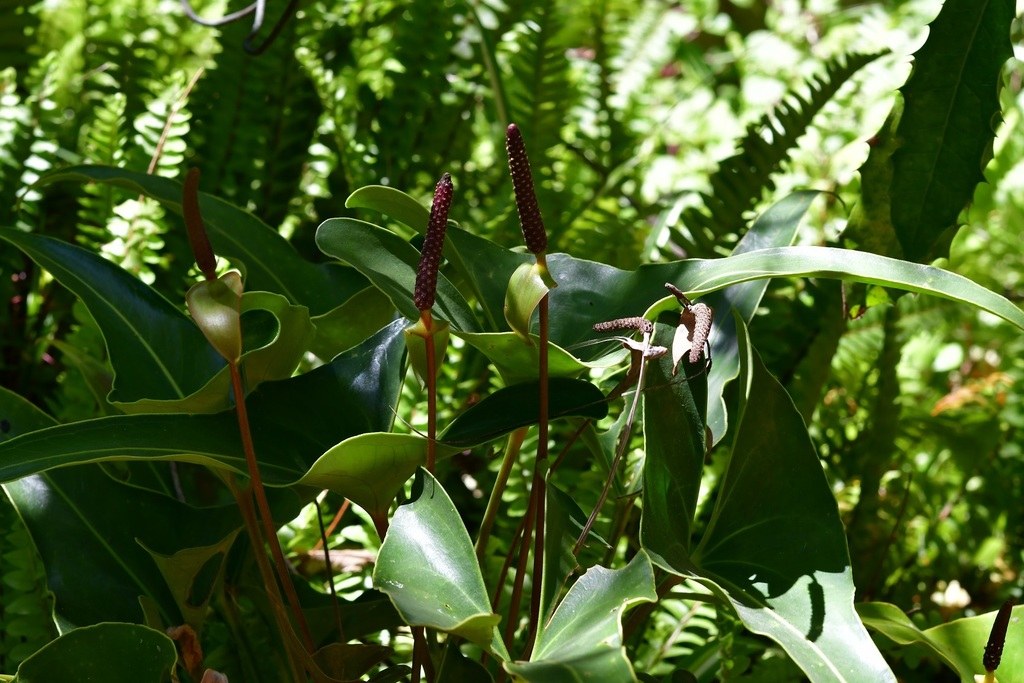
📷 Cody H. / Wikimedia Commons (CC BY 2.0)
Field Guide · Philodendron
It sulks, it spots, it drops a leaf the week you rearrange the shelf — and then it unfurls something that makes the whole room go quiet.
The form most growers mean when they say verrucosum — emerald blade, pale midrib and lateral veins, wine-red abaxial, and the bristly petiole that gives the species its name. Andean, cool-loving, and happiest scrambling up a damp pole. New leaves can flush bronze before settling into deep green. Reasonably available now from tissue culture, which has dragged prices into sane territory.
The benchmarkA narrower, more elongated leaf with sharper silver venation and a darker ground color than the standard Ecuador form. Holds its shape well under apartment humidity once established, and the smaller leaf size suits a 60 cm cabinet. Petiole bristles are pronounced — almost ticklish to the touch. A good pick if you want the species but not a meter-long leaf.
Best for cabinetsSelected for the dramatic new-leaf color: peach, salmon, and copper before the chlorophyll catches up and pulls it to green. The mature leaf is closer to standard verrucosum but with a warmer cast. Slower than the Ecuador form, and pickier about humidity drops. Worth it for collectors who like the unfurl as much as the finished leaf.
Showiest unfurlA natural-looking cross that takes the elongated drip-tip of melanochrysum and the bristled petiole and contrast veining of verrucosum. More forgiving of warm rooms than pure verrucosum, which makes it a sensible gateway into the velvet group. Leaves lengthen with each node once it's climbing. Sold under several clone names; quality varies, so buy rooted.
Most forgivingA regional form with deeper, almost black-green leaves and reduced silver in the venation. The contrast comes from the red reverse glowing through when backlit. Tends to run hotter on humidity demand — below 70% and it will spot. Less common in trade than the Ecuador form and usually priced accordingly.
Collector's pick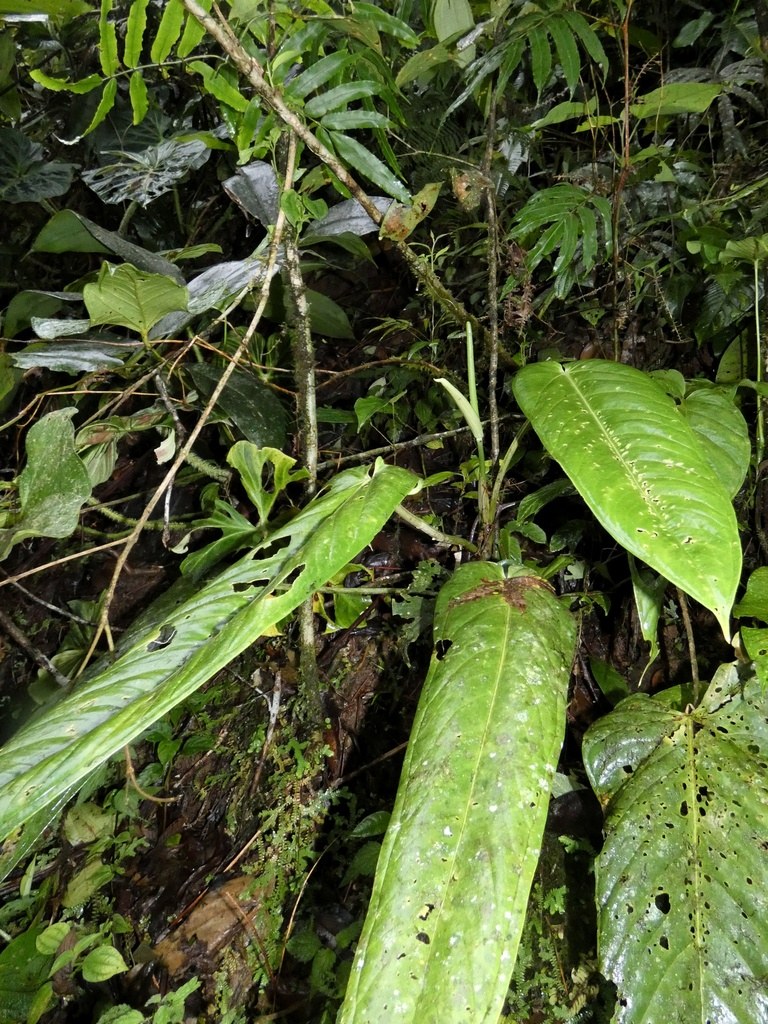
Philodendron verrucosum grows across the Andean slope from Costa Rica down through Ecuador and into Peru, mostly between roughly 200 and 2,300 meters. That elevation range matters. The plants you most often see in cultivation came from cooler, wetter cloud forest — nights in the high teens Celsius, near-constant mist, mossy bark to climb. Reproducing even a fraction of that in a living room is the whole project.
The name comes from the petiole: covered in fine reddish bristles, verrucae, which are unique enough among Philodendron that you can ID the species blind by touch. The leaf itself is heart-shaped, velvety from microscopic papillae on the surface, with pale veins on top and a wine-red reverse. Backlit, a healthy mature leaf looks stained-glass.
It earns the fuss because almost nothing else in the genus does all of this at once — the texture, the color contrast, the red abaxial, the bristled petiole. Melanochrysum is longer and darker but flat-colored. Gloriosum is a crawler. Verrucosum is the one that combines velvet, contrast, and a climbing habit, and it's the one that punishes you hardest when conditions slip.
Build the mix for air first. A workable blend is roughly one part fine orchid bark, one part perlite or pumice, one part chunky coco chips or coco husk, and a generous handful of sphagnum worked through. Some growers go heavier on sphagnum for young plants and pull back as the root system matures. The goal is a substrate that stays evenly damp for a day or two and then breathes — never sodden, never bone dry for long.
Light should be bright and indirect. Think 150–250 µmol·m⁻²·s⁻¹ at the leaf, or a well-lit spot a meter back from an east or filtered south window. Direct sun bleaches the velvet surface and can scorch a new leaf in under an hour. Under LEDs, raise the fixture rather than cranking intensity; this species reads burn before it reads happy.
Give it something to climb. A damp sphagnum pole, a slab of tree-fern, or a cedar plank wrapped in moss — any of these will pull the plant upright and trigger larger, better-shaped leaves. Aerial roots want to bury themselves in something moist. A plant left to flop in a pot will stall at small juvenile leaves and look perpetually unhappy.
Humidity is the lever most people get wrong. Verrucosum wants 70–85% relative humidity, sustained, not spiked by a misting bottle three times a day. Below about 60% you'll start seeing crispy margins, aborted new leaves, and brown patches on the velvet that never recover. A grow cabinet, an IKEA Milsbo with a small humidifier, or a dedicated grow tent solves the problem in a way a room never will.
Pair humidity with airflow. Still, wet air is what gives you bacterial leaf spot — small translucent lesions that spread and smell faintly sour. A quiet computer fan moving air across the canopy 24/7 is the single best preventative. Water when the top couple of centimeters of mix start to dry; the plant should never wilt, and it should also never sit in a swamp. Filtered or rain water is kinder than hard tap, which can burn leaf edges over time.
Temperature: 18–27 °C is the comfortable band. It tolerates warmer briefly but resents it, getting leggy and prone to pest pressure. Below about 13 °C and growth stops; sustained cold and wet is how you rot a crown.
Treating it like a heartleaf. Verrucosum is not a tough hybrid Philodendron from a big-box store. It will not bounce back from chronic neglect. Owners who succeed treat it more like a fussy Anthurium — careful substrate, steady humidity, attentive watering.
Wiping the leaves. The velvet is structural, made of light-scattering papillae. Rubbing it with a cloth crushes them and leaves permanent dull patches. If a leaf is dusty, rinse gently with lukewarm water and let it air-dry with the fan running.
Chasing every new leaf. Healthy plants in good conditions still abort the occasional leaf, especially after a move or a humidity drop. One ugly leaf is data, not a crisis. Three in a row is a signal to check roots, recheck humidity, and stop adjusting variables at random.
Buying unrooted cuttings in winter. This species roots slowly in cool, low-light conditions and is prone to stem rot when stressed. Buy established, rooted plants when you can, and if you must take a cutting, do it in spring with bottom heat and high humidity from day one.
The Field Guide from Leaf People.