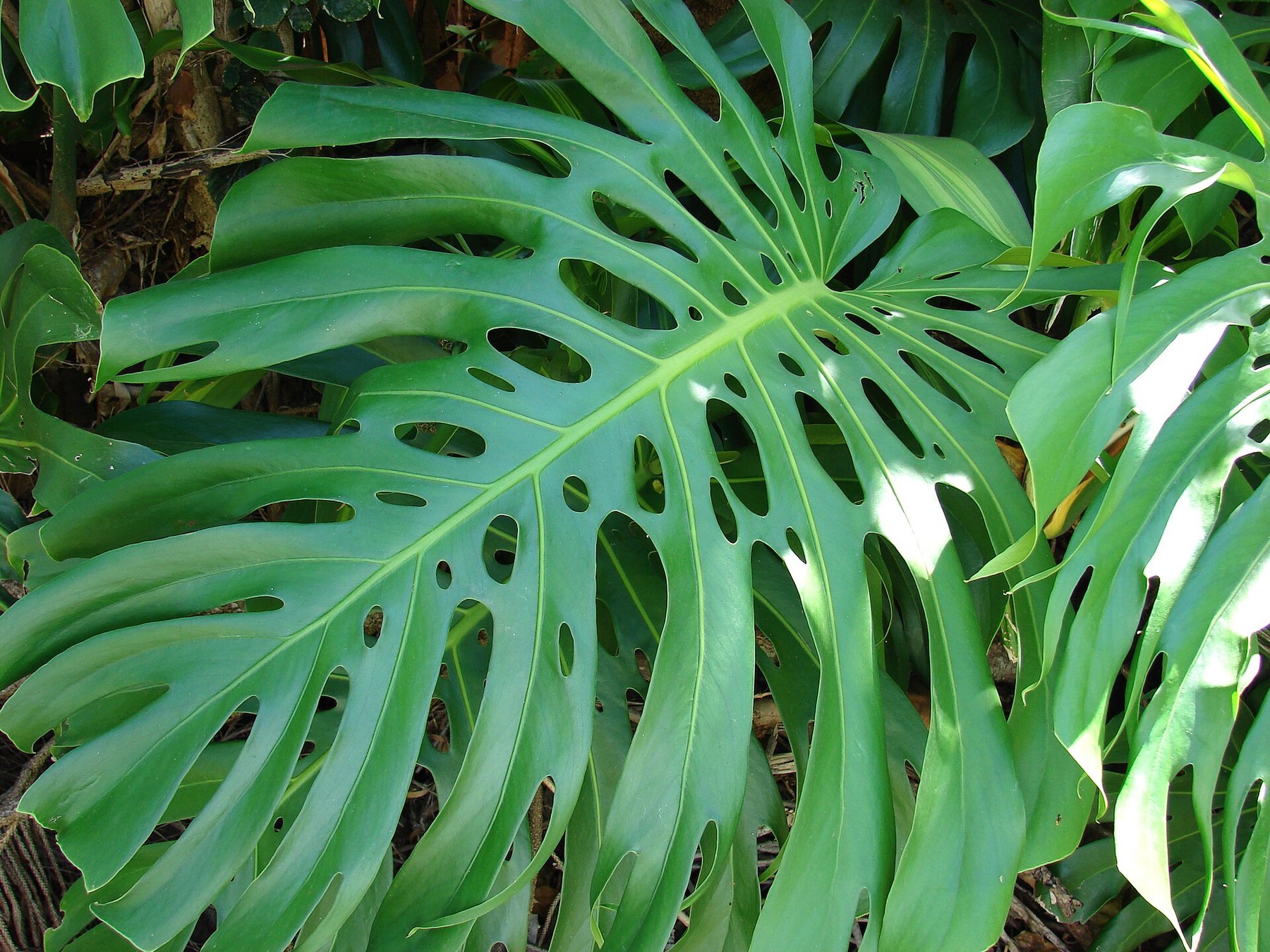
📷 Letizia Weichgrebe / iNaturalist (CC BY 4.0)
Field Guide · Monstera
A vining Monstera with strap leaves, no fenestrations to wait for, and the manners of a houseplant that wants to grow.
Often sold as Philodendron cobra by mistake, M. standleyana is a true Monstera from Central American rainforests, with glossy, strap-shaped leaves that never fenestrate. It climbs hard once it finds bark or moss, throwing leaves up to 12 inches on a mature pole. The variegated form — usually white-on-green sectoral — is the one collectors chase, but the plain green is genuinely handsome and far easier to keep balanced. Forgiving of household humidity in a way most Monsteras aren't.
Most overlookedThe default Monstera for a reason. Given a stout pole and room to climb, M. deliciosa produces the deep lobes and oval holes that made the genus famous, with leaves easily clearing two feet in cultivation. It tolerates a wide range of light and substrate moisture and recovers from almost any abuse short of rot. The variegated forms (albo, Thai Constellation, aurea) command the prices; the species itself is one of the best plants you can grow.
The benchmarkSmaller-leaved and faster than deliciosa, with asymmetric leaves perforated by clean oval holes. Climbed on a pole it produces larger, more dramatic foliage; left to trail it stays juvenile and bushy, which is fine but sells the plant short. The narrow-form (sometimes labeled laniata in trade) has glossier, more elongated leaves and is worth seeking. Wants more humidity than standleyana but less than the velvet-leaf species.
Best mid-tierThe shingling juvenile phase is the whole appeal: small, silver-mottled leaves pressed flat against a slab or pole, climbing like a creature. Mature foliage is enormous and deeply fenestrated, but reaching it in a home takes years and a tall, consistently moist surface. Treat it as two plants at two life stages. Keep the climbing substrate genuinely wet — sphagnum-wrapped cedar works — or the shingle phase stalls.
For patient growersJuvenile leaves are lance-shaped with a chalky silver overlay between dark green veins — striking, and unlike anything else in the genus. On a pole the leaves enlarge, lose most of the silver, and develop small fenestrations near the midrib. Faster than dubia and more tolerant of average humidity. The El Salvador form circulates and is worth the small premium for tighter silvering.
Best silver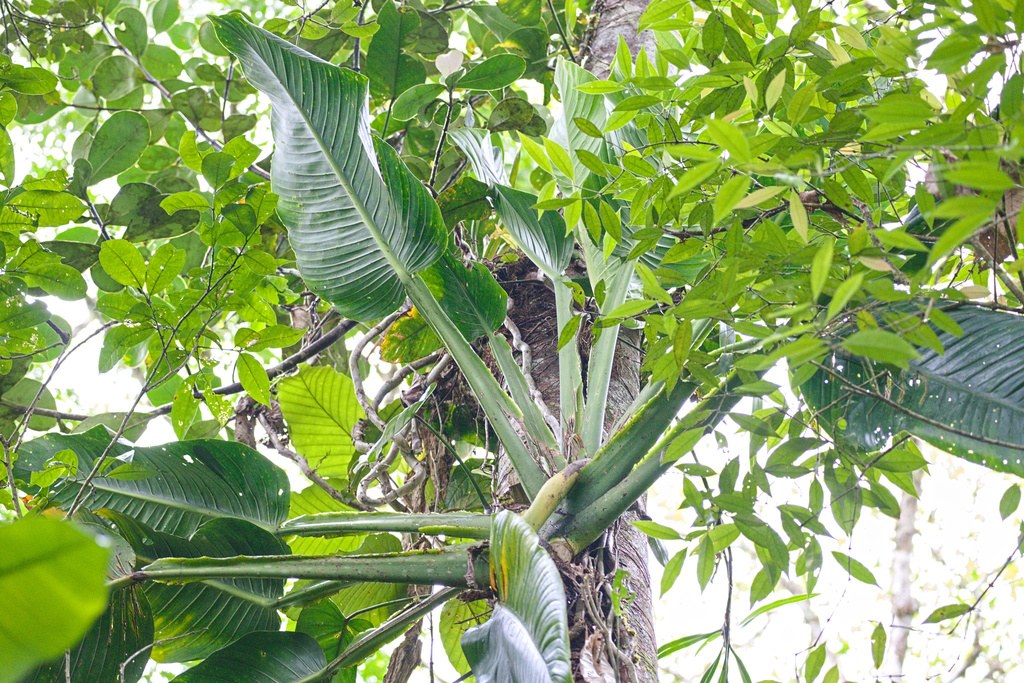
The plant has an image problem. Sold cheap at big-box stores, frequently mislabeled as a Philodendron, and overshadowed by its fenestrated cousins, M. standleyana reads as a starter plant rather than a collector's piece. The variegated form changed that conversation a few years ago, but the plain green still gets shelved next to pothos in the public imagination.
That's a misread. Standleyana is one of the few Monsteras that climbs willingly indoors without demanding a greenhouse, throws large adult leaves on a modest pole, and tolerates the kind of inconsistent humidity most apartments actually offer. The leaves stay entire — no waiting three years for the first split — and the gloss on a healthy adult leaf is genuinely beautiful in raking light. If you want the climbing Monstera experience without the room-sized footprint of deliciosa, this is the plant.
Every climbing Monstera lives or dies on its substrate and its support. Use a chunky aroid mix: roughly two parts orchid bark, one part coarse perlite or pumice, one part coco chips, and a handful of horticultural charcoal. Avoid anything peat-heavy and anything that compacts. The mix should hold moisture for a day or two, then breathe.
The pole matters as much as the pot. A sphagnum-wrapped or coir pole that you can keep genuinely damp is what triggers the aerial roots to attach and the leaves to enlarge. A bare wooden stake is decoration; the plant will climb it but won't size up. Mist the pole, top-water it, or run a slow drip — whichever fits your routine — and pin new growth to the surface with floral pins until the roots take.
Repot when roots circle the pot or the mix breaks down, usually every 18 to 24 months. Standleyana is not particularly sensitive to root disturbance, which is part of why it's such a forgiving plant.
Bright indirect light is the honest answer: an east window, a north window with nothing blocking it, or a few feet back from a south or west exposure with sheer curtains. Direct midday sun bleaches the leaves and burns the variegated form in particular. Too little light and the internodes stretch, the leaves shrink, and the plant climbs without filling out.
Water when the top inch of the mix is dry to the touch — typically every 5 to 8 days in active growth, longer in winter. Water thoroughly until it runs from the drainage holes, then dump the saucer. Standleyana is more drought-tolerant than deliciosa but resents sitting wet in a dense substrate, which is the usual cause of failure.
Humidity above 50% is ideal; the plant will grow at 40% and merely look less glossy. Variegated specimens benefit from the higher end of that range because the white sectors lack chlorophyll and dehydrate faster. Airflow is non-negotiable for any climber — a small fan on low, ten feet away, prevents nearly every fungal problem you'd otherwise have to treat.
The first is the pothos assumption: hanging the plant in a basket and letting it trail. Standleyana will survive this for years but never produce its adult form. The leaves stay small, the stems get leggy, and the owner concludes the plant is boring. Give it a pole from the start.
The second is overwatering a variegated cutting. The white-sectored form photosynthesizes less, transpires less, and rots faster in cold or saturated mix. Smaller pots, chunkier substrate, and a slight stretch between waterings keep it alive. If you're propagating, root in damp sphagnum or pon rather than water — the transition to soil is where most variegated cuttings fail.
The third is impatience with variegation reversion. Sectoral variegation drifts. Prune back to a node with good marbling when a stem starts producing all-green leaves, and accept that you're managing the plant, not just growing it. That's the deal with every variegated aroid, and standleyana is no exception — just cheaper to learn on than a Thai Constellation.
The Field Guide from Leaf People.