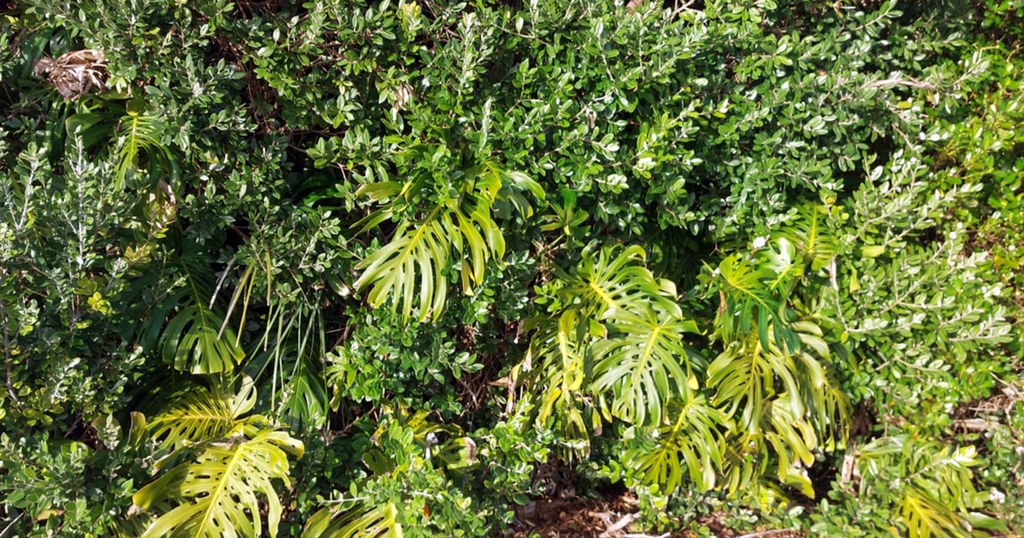
📷 no rights reserved / iNaturalist (CC BY 4.0)
Field Guide · Monstera
Some are hype that fades with the next trend; these are the ones that still make sense when the market cools.
Produced from a stable tissue-culture mutation developed in Thailand, 'Thai Constellation' throws creamy yellow-to-white sectoral and speckled variegation distributed across the leaf rather than concentrated on one side. Because the variegation is encoded at the cellular level rather than maintained by a chimeric sector, it doesn't revert — every leaf comes out patterned. Growth is slower than a standard deliciosa, but the trade-off is consistency: you're not gambling on whether the next push will be all-green. In a mature specimen the fenestrations read through both green and cream tissue simultaneously, which no other cultivar replicates.
Most reliableThe original white-variegated deliciosa, and still the benchmark everything else is measured against. Variegation is chimeric, meaning it's unstable by nature: leaves can come out half-white, fully green, or — occasionally — almost entirely white, which looks dramatic until the chlorophyll-deficient tissue dies back. That instability is a feature for collectors who enjoy the unpredictability, a liability for growers who want a tidy plant. Cuttings from heavily variegated nodes command serious money for a reason: there's no guaranteeing what the next leaf will do, and a run of all-white leaves will stall the plant without intervention. Prices have come down from their 2021 peak but a well-variegated cutting is still a considered purchase.
Classic benchmarkOften overlooked in conversations that fixate on deliciosa, 'Archipelago' is a white-variegated form of adansonii that offers the same chimeric instability in a more compact, faster-growing package. The smaller leaf size — rarely exceeding 25 cm on a home-grown specimen — means you cycle through more leaves per year and see variegation expression change quickly. Fenestrations cut through both green and white sectors in a way that reads as almost architectural. It doesn't need a moss pole to look good early on, which makes it easier to stage and observe at a windowsill scale before committing it to a full climbing setup.
Best compactMonstera deliciosa 'Mint' produces a blue-green variegation rather than true white or cream — the affected tissue sits somewhere between celadon and pale sage, which photographs distinctly and looks genuinely different in person. Supply is genuinely limited: 'Mint' hasn't been stabilized in tissue culture at commercial scale, so plants circulate as cuttings from a small number of established mother plants. That scarcity means prices remain elevated and fakes — leaves dusted with powder or marketed from misidentified plants — are common. Buy only from sellers who can show the mother plant or multiple leaves in sequence; a single leaf proves nothing. For collectors who already have 'Albo' and 'Thai Constellation', this is the logical next step.
For the committed
Variegated Monsteras carry less chlorophyll than their all-green counterparts, which means they photosynthesize less efficiently and are more sensitive to root stress. A substrate that retains water too long punishes them faster than it would a standard deliciosa. Aim for a mix that drains freely and holds just enough moisture to prevent desiccation between waterings: roughly equal parts coco coir, perlite, and orchid bark (medium grade) works well. If you're using a commercial aroid mix, cut it with additional perlite until a squeeze of moist substrate releases no more than a few drops of water.
Terracotta pots help regulate moisture passively, especially in humid rooms where evaporation from plastic containers slows down. For climbers going onto a moss pole or coco coir totem, let the aerial roots make contact with the support and keep the support lightly misted — this encourages the plant to feed through both root systems and reduces the load on the pot. Repot only when roots are visibly circling the base or pushing through drainage holes; unnecessary repotting during active variegation expression disrupts momentum without benefit.
Bright, indirect light is the correct prescription, but that phrase means something specific: a spot that receives 1,500–2,500 foot-candles for the majority of the day, with no direct midday sun hitting the leaf surface. Direct sun bleaches the already-pale variegated sectors and causes papery necrosis along the margins of white tissue within days. An east-facing window with full morning light and shade by 10 a.m. is close to ideal in most Northern Hemisphere homes. South- or west-facing windows work if you diffuse with a sheer curtain or position the plant a meter back from the glass.
Insufficient light is the more common problem. Under low light, green sectors dominate future growth as the plant compensates for lost photosynthetic capacity, and variegation expression becomes sparse. If you're growing under supplemental lighting, a full-spectrum LED panel at 18–24 inches running 12–14 hours a day will push consistent growth without burning marginal tissue. Watch the first few leaves after adjusting light levels: they'll tell you faster than any meter whether the balance is right.
For 'Albo Variegata' specifically, monitor the ratio of white to green tissue over successive leaves. A run of heavily white leaves is a warning sign — beautiful but unsustainable. If three consecutive leaves come in more than 70% white, move the plant to slightly stronger light and consider cutting back to a node that showed balanced variegation.
Water when the top third of the substrate has dried out — not on a fixed schedule. In a well-draining mix, this might be every five to seven days in summer, every ten to fourteen in a cool winter room. When you water, water thoroughly until it runs freely from the drainage holes, then don't water again until the substrate has dried appropriately. Sitting in a saucer of water for more than an hour promotes root rot, which in a variegated plant means losing an expensive investment.
Humidity between 60–80% supports fast, clean leaf unfurling. Below 50%, new leaves are prone to edge browning as they open, and the pale variegated tissue is the first to show it. A small humidifier on a timer is more reliable than pebble trays. Airflow matters equally: stagnant humid air invites fungal issues. Run a small fan on low near — not directly at — the plant to keep air circulating.
The two mistakes that account for most variegated Monstera failures: overwatering a slow-growing plant (variegated specimens in lower light simply don't drink as fast as you'd expect), and propagating a cutting before it has established roots and at least one mature leaf. A freshly cut node needs to root before it can support new variegated growth; rushing it into high humidity without drainage will rot the cutting before it has a chance. Patience here is not optional — it's the actual technique.
The Field Guide from Leaf People.