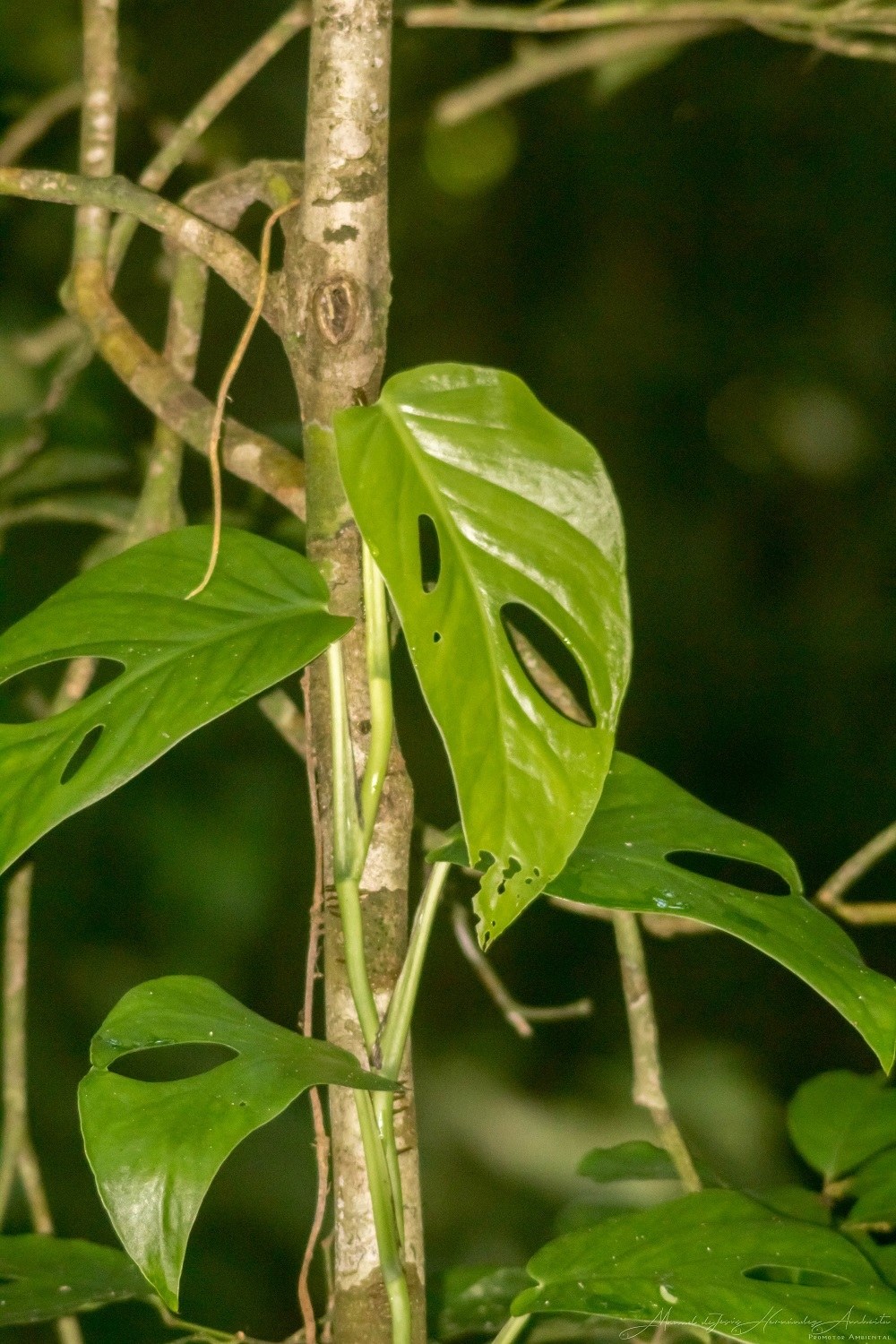
📷 Manuel de Jesús Hernández Ancheita / Wikimedia Commons (CC BY-SA 4.0)
Field Guide · Monstera
Wide form, narrow form, round form, and the archipelago of names that arrive on the same shipping invoice.
The plant most growers actually own when a tag reads adansonii. Leaves are broadly ovate with generous fenestrations and a slightly asymmetric base. Mature growth on a pole pushes wider lobes and more open windows; juvenile growth on a shelf stays small and modest. Tough, fast, and the sane place to start.
Reliable workhorseSometimes sold as "laniata-like" or "long form" — narrower, more lanceolate leaves with fenestrations that sit closer to the midrib. Often confused with true M. laniata, which is a distinct taxon with thicker, glossier blades and a different geniculum. Grows quickly on a pole and tolerates lower humidity than its reputation suggests.
Often mislabeledTrade name for plants whose juvenile leaves stay distinctly circular before fenestrating. Likely a regional ecotype rather than a separate species, though the taxonomy is unsettled. Holds its round shape longer on a moss pole with steady humidity; reverts to standard adansonii proportions if grown loose and dry. Worth the markup only if you can give it a climbing surface.
Shape collectorNot adansonii, but constantly sold as one. Mature leaves go almost entirely to window, with a thin border of tissue around enormous oblong holes. Wants more room, more light, and a sturdier pole than its cousins. The plant people actually mean when they say they want "big swiss cheese."
Frequently confusedA recognized variety with thicker, shinier leaves and a more pronounced drip tip than the common wide form. South American provenance, somewhat slower, and noticeably more architectural once it climbs. If you've grown standard adansonii to maturity and want a step up without jumping to M. deliciosa size, this is the move.
The upgrade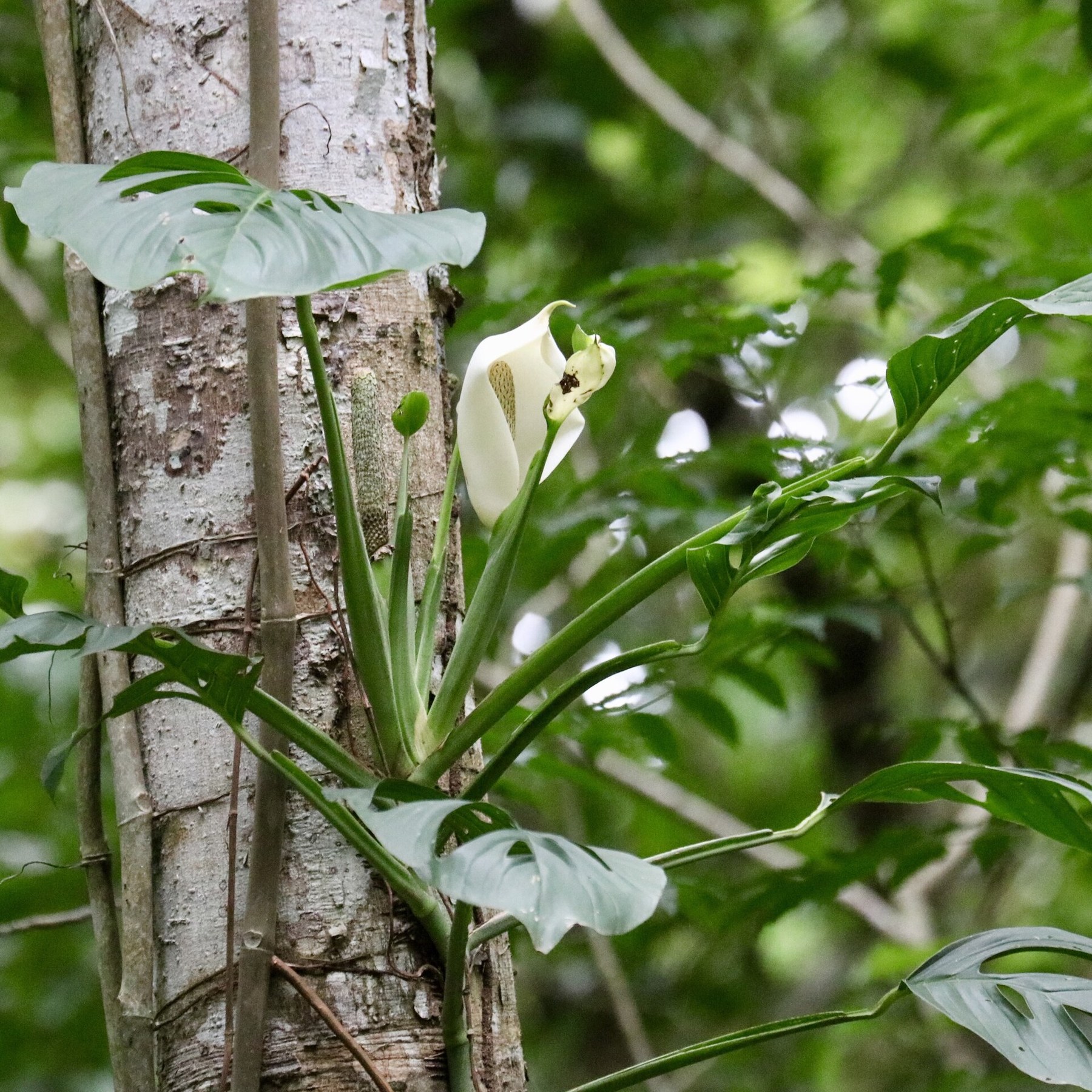
Monstera adansonii has a wide natural range — Mexico through Brazil, plus much of the Caribbean — and the species varies a lot across that range. Add a decade of tissue culture, hobbyist imports, and Instagram nicknames, and you get a genuine taxonomic snarl. Wide form, narrow form, round form, "Brazil form," "Peru form," laniata, esqueleto, and the occasional M. acuminata slipped into the pile under the same label.
A few practical truths. First, juvenile leaves in this group look more alike than mature leaves do; a 4-inch starter is often unidentifiable with confidence. Second, leaf shape shifts dramatically once the plant climbs — flat shelf growth tells you almost nothing about what the plant will become. Third, "round form" is a marketing description, not a botanical rank, and the plant behind it is usually a regional ecotype of plain adansonii. If a vendor can't tell you where their stock originated, assume you're buying the common wide form and price accordingly.
Every plant in this complex is a hemiepiphyte. In habitat the roots run over bark, leaf litter, and moss — never compacted soil. A mix of roughly equal parts orchid bark, perlite or pumice, and coco chunks works well, with a handful of charcoal and a little sphagnum to hold moisture without going anaerobic. The mix should drain within seconds when you pour water through it.
A moss pole or wood plank changes the plant. Without one, adansonii will fenestrate but stay small-leaved and a bit floppy. With one — kept damp, not soaked — leaves roughly double in size within a year and the windows open up. This matters most for round form and laniata, both of which only show their best traits as climbers. Tie new growth in gently; the aerial roots will find the pole on their own within a few weeks if humidity is decent.
Bright indirect light is the honest answer: a few feet back from an east or south window, or directly under a 30–40W LED panel on a 12-hour cycle. Direct midday sun bleaches the thin leaves of the wide form within days. Too little light and fenestrations close up — the plant will survive, but you bought it for the holes.
Water when the top inch of mix is dry and the pot feels noticeably lighter. These plants resent both bone-dry stretches (crispy leaf edges, aborted new leaves) and constant wetness (black petioles, root loss). Humidity above 60% helps, especially for new leaves unfurling cleanly, but adansonii is unusually forgiving down to 45% if airflow is steady. A small clip fan does more for leaf quality than any humidifier.
Buying a name, not a plant. If round form or laniata matters to you, buy from a seller who can show mature growth from the mother plant. Juvenile leaves lie.
Treating it like a pothos. Adansonii tolerates neglect, but tolerance is not preference. The difference between a shelf-grown vine with quarter-sized windows and a poled specimen with hand-sized fenestrated leaves is entirely down to climbing surface, light, and consistent moisture at the root zone.
Overpotting. A 6-inch plant does not want a 10-inch pot. The mix stays wet in the middle, roots rot, and the plant sulks for months. Go up one pot size when roots circle the current one, and use a deeper pot rather than a wider one if you can — these are vertical-rooted plants.
Ignoring thrips. Thin monstera leaves are thrips candy. Check the undersides of new growth weekly; silvery stippling and black flecks of frass mean you're already two weeks behind. Predatory mites (Amblyseius cucumeris) handle small populations; systemic treatment is the move for anything worse.
The Field Guide from Leaf People.