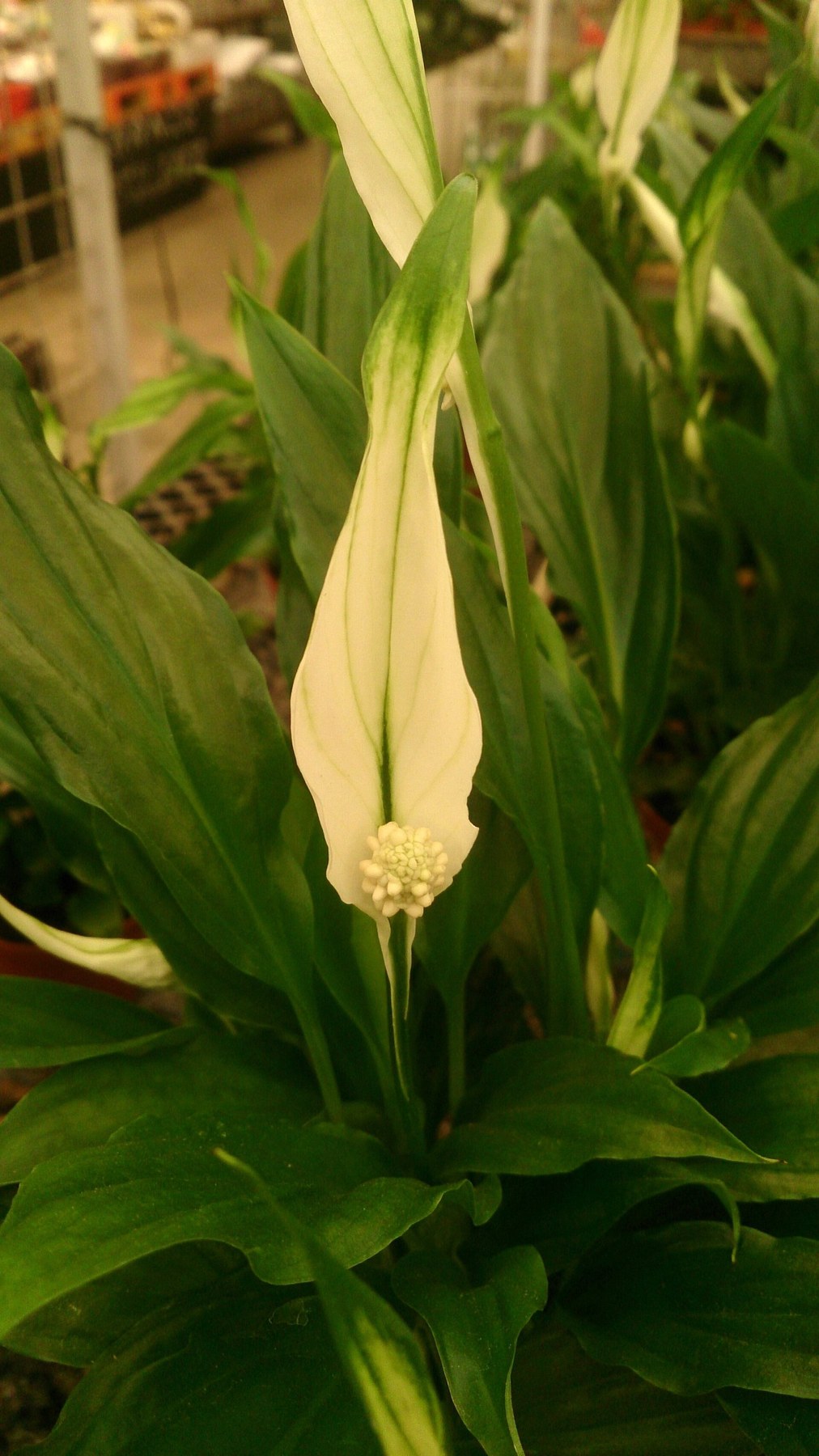
📷 Mokkie / Wikimedia Commons (CC BY-SA 3.0)
Field Guide · Spathiphyllum
The grocery-store flag-waver hides a genus of forest-floor specialists with thicker leaves, longer spadices, and more character than the trade lets on.
The species behind most of the cheap hybrids, and still the one to grow if you want the genus done honestly. Narrow, ribbed leaves to about 30 cm and a clean white spathe that holds for weeks. It flowers reliably in modest light, which almost nothing else does. Source a true wallisii rather than a no-name hybrid and the difference in leaf substance is obvious.
Honest baselineA larger, stiffer species from northern South America with broad, canna-like blades on long petioles. The spadix is fragrant — a real, sweet scent, not the faint vegetal note most Spathiphyllum produce. Wants more light than the supermarket types and rewards it with thicker leaves and steadier blooming. Worth tracking down from aroid specialists.
Fragrant pickA tetraploid selection that pushes leaves over a meter long on a mature plant, with deep ribbing and a matte finish that reads almost like a small Anthurium veitchii from across the room. Slow to settle, but once rooted it becomes a piece of furniture. Spathes are proportionally huge. The one Spathiphyllum that genuinely commands a corner.
Statement plantA stable variegated cultivar with crisp white streaks and speckling on a wallisii-type frame. Holds variegation well in moderate light and doesn't revert as readily as cheaper variegated aroids. Slower than the plain species, which is the price of admission. A useful gateway if you want variegation without Monstera prices.
Variegated valueA smaller Colombian species with darker, velvety-feeling leaves and a profuse flowering habit — the epithet earns itself. Tolerates lower light than cannifolium but appreciates higher humidity than the average windowsill. Often mislabeled in the trade; a correctly ID'd plant from a serious grower is worth the effort.
Collector's species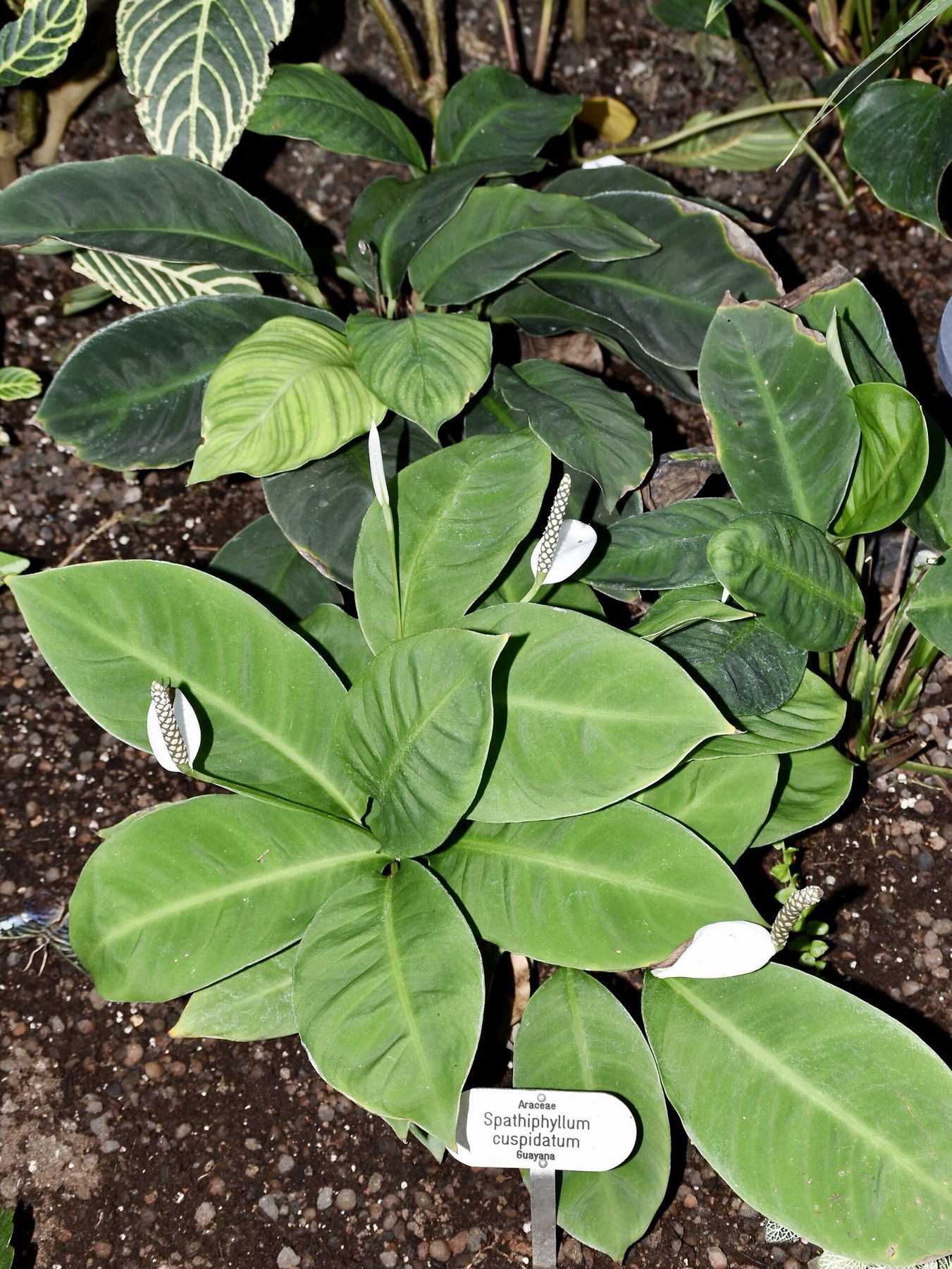
Spathiphyllum suffers from familiarity. Every office lobby, every hospital corridor, every grocery checkout has one, usually a stressed wallisii hybrid wilting dramatically and then bouncing back to demonstrate the trick that built its reputation. Collectors skip the section. That's a mistake.
The genus contains roughly 47 species across the Neotropics, with one outlier in southeast Asia (S. commutatum). Most are understory aroids from wet forest — the same shelf of habitat that produces Anthurium and Philodendron — and they share the family's preference for warm, airy roots and consistent moisture. What separates them is tolerance. A Spathiphyllum will flower in light levels that would etiolate a Philodendron gloriosum into a wire. It will forgive a missed watering, a cold night, a week of neglect during a work trip. For a serious collection that already includes things you can kill by looking at them wrong, that resilience is not a defect.
The trade has also flattened the genus into about three cultivars. Track down the actual species — cannifolium, floribundum, silvicola — and you find plants with real presence: thicker leaves, longer spadices, often fragrance, sometimes a velvet sheen the hybrids have lost.
Treat Spathiphyllum as the aroid it is, not the houseplant the tag suggests. The peat-heavy nursery mix it arrives in is the single biggest cause of the slow decline most people experience by year two. Repot into a chunky aroid mix — bark, perlite, a little coco coir or sphagnum, a handful of charcoal — that drains in seconds but holds moisture in the particles. Roots want air. In dense peat they suffocate, the plant droops, the owner waters more, and the spiral closes.
Water when the top 2–3 cm of mix has dried but before the whole pot goes light. Spathiphyllum telegraphs thirst with a theatrical wilt that is famously reversible, but each episode costs the plant root tips and lower leaves. Don't use the wilt as your watering cue; use a finger or a moisture meter. Tap water is usually fine, though plants in soft-water regions appreciate the lack of fluoride — leaf-tip burn on Spathiphyllum is almost always a water-quality or fertilizer-salt issue, not humidity.
Light is where collectors under-deliver. The genus tolerates low light; it doesn't prefer it. A plant in true shade survives and produces the occasional spathe. The same plant 1.5 m from an east window, or under a 30–40 µmol grow light, will push thicker leaves, flower repeatedly, and resist spider mites. Bright indirect is the target. Direct midday sun bleaches the blades to a tired yellow-green within a week.
Humidity above 50% is plenty for most species. Cannifolium and floribundum appreciate 60–70% and will show it in leaf substance, but no Spathiphyllum needs a sealed cabinet. Airflow matters more than absolute humidity — stagnant warm air invites Erwinia rot at the crown, which is the way most large specimens die suddenly after years of good health.
Feed lightly and often. A balanced liquid fertilizer at quarter strength every second watering through the growing season suits the genus better than the monthly full-strength dose most labels suggest. Salts accumulate quickly in the fine roots and present as crispy leaf edges that get misdiagnosed as low humidity. Flush the pot thoroughly with plain water every couple of months.
The recurring mistakes: pots too large (the plant prefers to be slightly rootbound and will flower harder for it), water sitting in the decorative cachepot (root rot, always), and the assumption that because the plant tolerates neglect it should be neglected. A Spathiphyllum given the same care as a mid-tier Anthurium — chunky mix, decent light, steady feeding, attention paid — looks nothing like the sad office specimen it shares a name with. That gap, between what the genus is sold as and what it can actually become, is the reason to keep one in a serious collection.
The Field Guide from Leaf People.