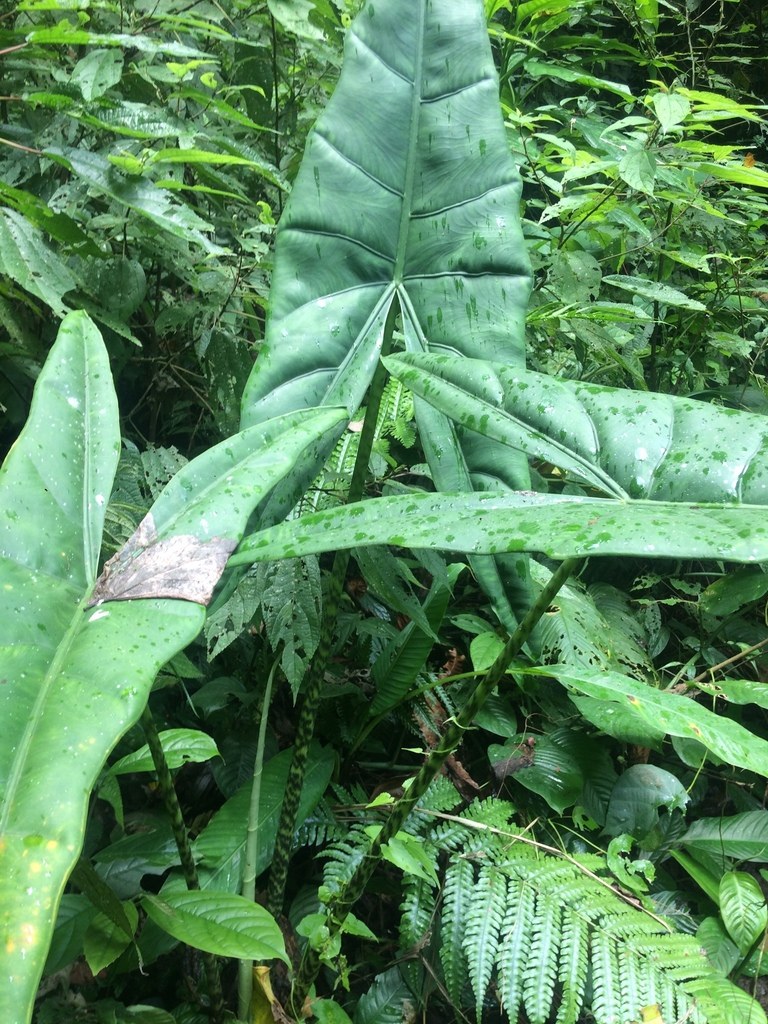
📷 Greg III Espera / iNaturalist (CC BY 4.0)
Field Guide · Alocasia
The genus that drops leaves like a grudge — and the handful of species worth that grudge.
The zebra-striped petioles do the talking; the arrow leaves are almost incidental. Zebrina is one of the more forgiving Philippine species if you give it strong light and a chunky mix — weak light and it stretches into a leggy, mite-prone mess. Watch the oldest leaf: when it yellows, check the corm before you check anything else. A healthy specimen pushes a new leaf every three to five weeks in season.
Best starterA small, slow Borneo species with thick, almost rubbery leaves that hold silver veins against near-black tissue. It wants less water than people give it and more air at the roots — soggy bark is the usual cause of death. Keep it warm (above 65°F) and it will sit happily in a 4-inch pot for a year. Sulks visibly in low humidity; recovers fast once corrected.
Slow and steadyThe so-called jewel Alocasia from Borneo, with leaves that flash burgundy and gunmetal under strong light. Smaller and slower than zebrina, faster than reginula, and noticeably more demanding about humidity — below 60% the new leaves come in warped. Worth the fuss for the color shift as leaves harden off. Mites adore it, so inspect weekly.
Collector's pickA hybrid (likely reginula × melo) that inherited the thick, sandpaper texture of melo and stayed small. The leaves look cast in metal and shrug off lower humidity better than most jewels. It's the Alocasia to try if you've killed three others — still not easy, just less theatrical about failure. Give it grit, not peat.
Most forgivingA Philippine endemic with stiff, lance-shaped leaves and deeply quilted texture. Stays under a foot, throws offsets readily, and tolerates a wider water range than the velvet types. The look is architectural rather than ornamental — closer to a small Anthurium than a typical Alocasia. Underrated and not particularly expensive for what it is.
Sleeper hit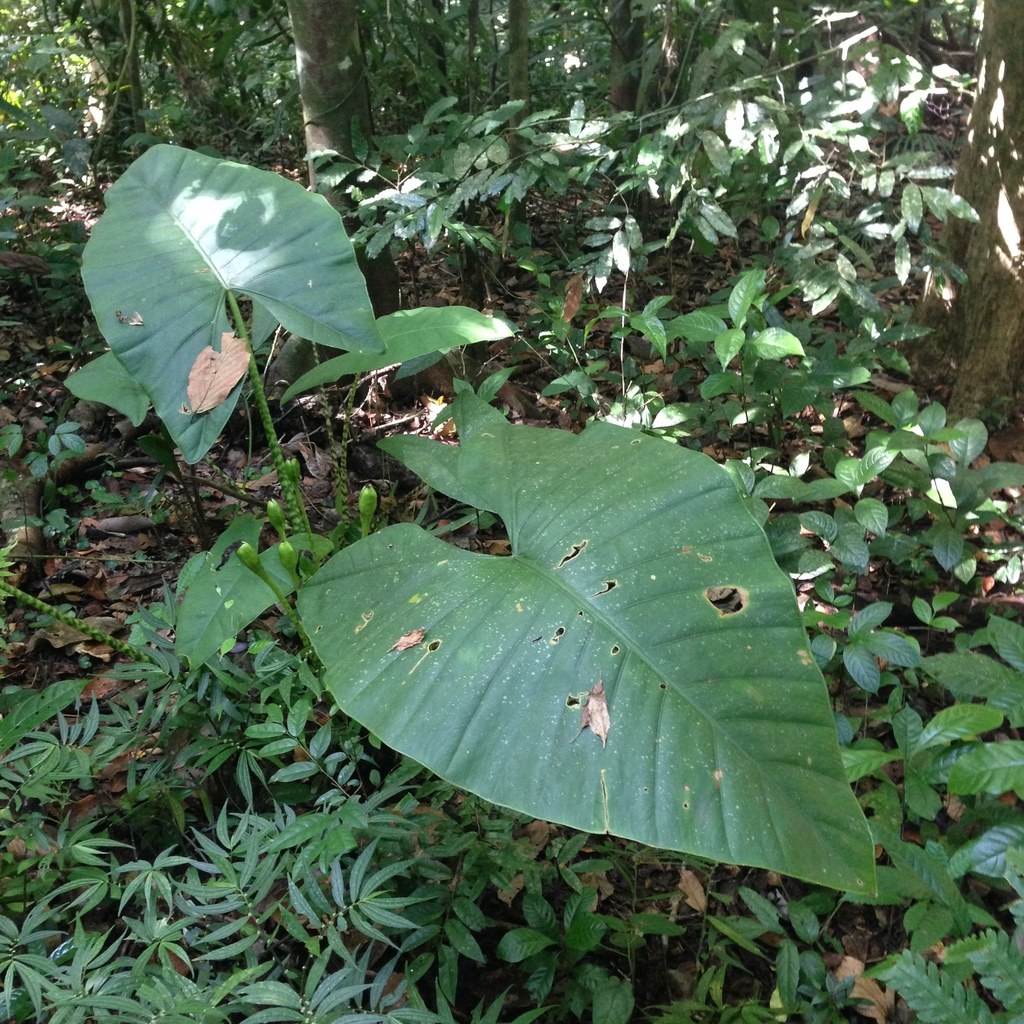
Alocasia roots want oxygen more than they want fertilizer. A mix that works across the genus: roughly 40% fine orthophosphate-free bark, 20% perlite or pumice, 20% coco chips, 10% sphagnum, 10% worm castings. The point is large air pockets that drain in under ten seconds and rewet evenly. Peat-heavy bagged soils compact within a month and start the rot cascade that ends with you holding a bare corm over the sink.
Light is where most collectors underdo it. These are understory plants, but understory in equatorial forest is brighter than a north window in Cleveland. Aim for 200–400 µmol/m²/s at the leaf, or roughly a foot from a decent LED bar for 12 hours. Strong light produces the short internodes, thick petioles, and deep coloration the species are bought for. Weak light produces the lanky, pale, mite-magnet version everyone complains about.
Airflow matters almost as much as humidity. A small clip fan moving air across the canopy reduces fungal spotting, hardens new leaves, and — critically — makes the leaf surface a worse environment for spider mites, which thrive in still, dry pockets. Run it 24/7. You should see the leaves twitch slightly, not flap.
Water when the top inch of the mix is dry and the pot feels light, then water thoroughly until it runs clear from the drainage. Alocasia hate both extremes: bone-dry corms abort leaves, waterlogged corms rot from the base up. In a chunky mix, that usually means every 5–8 days in summer, every 10–14 in winter. Use room-temperature water; cold tap water on a warm corm can trigger leaf drop within a day.
Humidity between 60 and 80% is the sweet spot. Below 50%, expect crispy edges and deformed new growth on the velvet and jewel species. A cheap ultrasonic humidifier on a hygrostat beats pebble trays and misting, neither of which move the needle. Don't seal them in a cabinet without airflow — high humidity plus stagnant air is exactly the rot/fungus condition you're trying to avoid.
Spider mites are the genus's true enemy. They show up as fine stippling on the upper leaf surface and webbing in the petiole crotches; by the time you see webs, the infestation is weeks old. Inspect undersides weekly with a 10x loupe. At first sign, shower the plant, then alternate weekly between a horticultural oil and a miticide with a different mode of action (Avid and Floramite rotate well) for three cycles to break the egg-to-adult timing. Treating once does nothing.
Sooner or later an Alocasia of yours will drop every leaf. This is not always death. The genus stores energy in underground corms and will shed top growth in response to cold, transplant shock, root damage, pest pressure, or simply a bad week of light. If the corm is firm and pale when you unpot, the plant is dormant, not dead.
Recovery protocol: rinse the corm, trim any black or mushy tissue back to clean white, dust the cuts with cinnamon or sulfur, and pot into barely-damp long-fiber sphagnum in a clear cup with drainage holes. Keep it at 70–75°F under moderate light. New roots usually appear in two to four weeks; a leaf follows in four to eight. Resist the urge to water heavily — sphagnum that's wet enough to squeeze water from is too wet.
The other common mistake is repotting a sulking plant into a larger pot of fresh, heavy soil. Don't. A struggling Alocasia wants a smaller volume of airy media, not more substrate to stay wet around a weakened root system. Size up only when you see roots circling the current pot and the plant is actively pushing new leaves. Treat the genus like it's always one bad week from going underground, and you'll keep more of them alive.
The Field Guide from Leaf People.