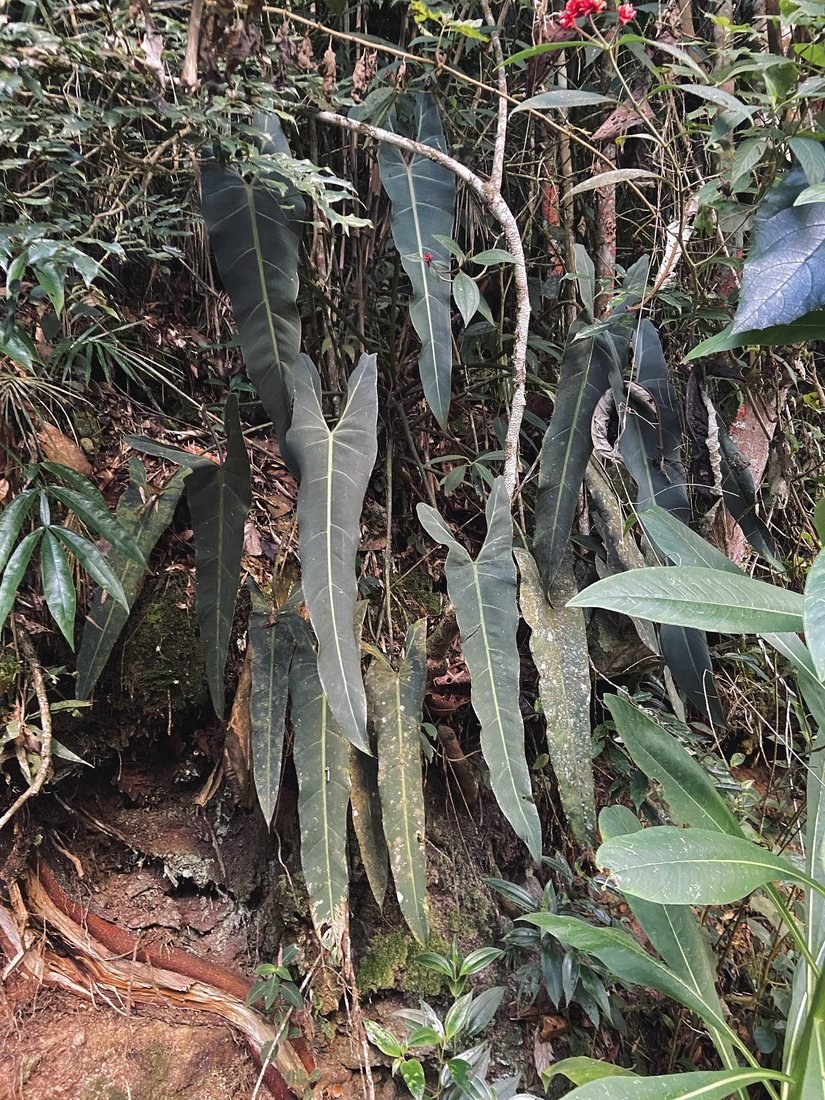
📷 Alexandre Magno / Wikimedia Commons (CC BY 4.0)
Field Guide · Philodendron
The most expensive Philodendron in cultivation is a slow, sulky climber from a single Brazilian valley — here is what you are really paying for, and what to grow alongside it.
Endemic to a tiny pocket of Atlantic forest in Espírito Santo, Brazil, and critically endangered in the wild. Mature leaves are long, narrow, and held downward on a thin petiole — almost ribbon-like, with a soft sheen rather than velvet. Juvenile plants look nothing like the adult; expect a few years of awkward, broader foliage before the strap form arrives. Every legitimate plant in the trade descends from a small number of cultivated parents, which is most of what the sticker price reflects.
The grailFrom the Orinoco basin, with elongated leaves that flush deep burgundy underneath against a matte green top. The shape echoes spiritus-sancti enough that growers often pair them, and it climbs eagerly on a damp pole. Wants warmth and steady moisture but tolerates ordinary household humidity once established. A good way to scratch the strap-leaf itch for the price of a dinner out.
Smart substituteBright orange petioles, long arrow-shaped blades, and a vigorous climbing habit make this one of the easiest large-leaf Philodendrons to keep happy indoors. Give it a thick moss pole and the leaves will double in size within a year. Standard plants are inexpensive; the variegated form is not, and is prone to reverting under low light. Sturdy, fast, and forgiving of beginner mistakes.
Easy entryOriginally collected in French Guiana and long misidentified, with an odd three-lobed blade that looks like a cartoon antler. Slower than billietiae but faster than spiritus-sancti, and far less expensive than either when you account for size. Likes the same airy mix and warm root zone as the rest of the South American climbers. A genuinely strange leaf shape that rewards patience.
Collector's pick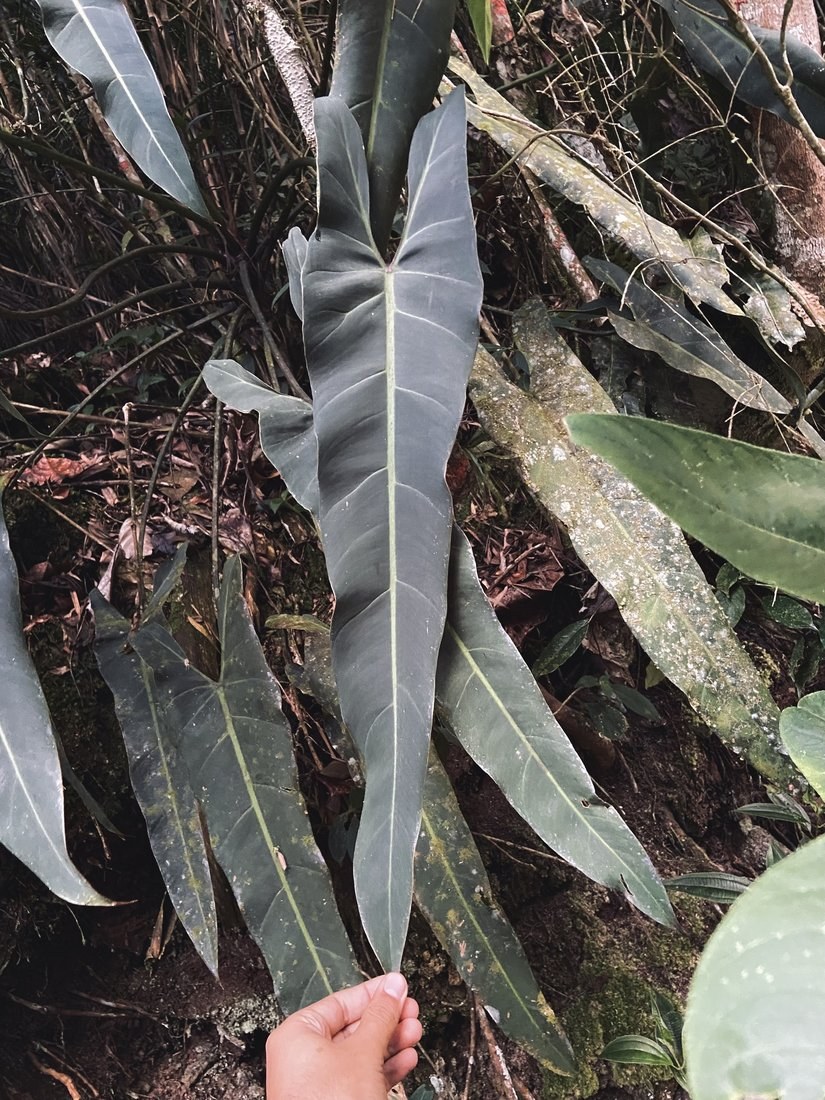
Before substrate and light, it helps to be honest about the transaction. A rooted Philodendron spiritus-sancti cutting with two or three juvenile leaves typically trades for the price of a used car. That number is not about rarity in your house — it is about rarity on the planet. Fewer than twenty wild individuals have been documented in the Atlantic forest of Espírito Santo, and Brazilian export of wild material is illegal. Every plant you can legally buy is a tissue-cultured or vegetatively propagated descendant of a handful of cultivated mother plants held by a small number of growers, mostly in Europe, the US, and Southeast Asia.
What that means in practice: you are paying for a slow-growing clone with a thin supply chain, not for a plant that will look like the photographs anytime soon. Juvenile leaves are broader and shorter than the adult strap form, and most plants take three to five years of stable climbing growth before they begin to mature. If a seller shows you a plant with adult-form leaves at a low price, assume mislabeling until proven otherwise. Provenance matters. Ask where the cutting came from, ask for photos of the mother plant, and be skeptical of any seedling-grown spiritus-sancti — the species is not commonly grown from seed in the trade, and what is sold as seed-grown is often something else entirely.
One more piece of honesty: this is not a beginner plant, and it is not a difficult plant. It is a moderately fussy climber that punishes inconsistency. The expense raises the stakes of ordinary mistakes, which is the real reason people lose them.
Use an airy, chunky mix. A workable recipe is roughly equal parts orchid bark, perlite or pumice, and coco chips, with a small fraction of sphagnum to hold moisture against the roots. The goal is a substrate that drains within seconds of watering and dries unevenly, so the root zone stays oxygenated. Pure sphagnum works for unrooted cuttings but holds too much water long-term in a finished pot. Avoid peat-heavy houseplant mixes outright — they compact, go anaerobic, and rot the fine feeder roots that this species relies on.
Light should be bright and indirect, in the range most growers describe as 200 to 400 µmol·m⁻²·s⁻¹ at the leaf, or a few feet back from an unobstructed east or filtered south window. Direct midday sun bleaches the blade; deep shade produces stretched, weak growth that never matures. Spiritus-sancti is a climber, and the leaf form you are paying for only develops once the plant is attached to a vertical support and pushing aerial roots into damp moss. A thick, well-watered moss pole — not a thin coir stake — is not optional if you want adult leaves in your lifetime. Train the stem onto the pole early and keep the moss consistently moist.
Water when the top inch of the mix is approaching dry, then water thoroughly until it runs from the bottom. In a chunky mix and a warm room that usually means every four to seven days; in a cool room in winter it can stretch to ten. Do not water on a schedule — water on a finger check. Tap water is fine for most growers as long as it is not heavily softened; rainwater or filtered water is a small upgrade, not a requirement.
Humidity in the 60 to 75 percent range is comfortable. Below 50 percent for long stretches, new leaves emerge smaller and sometimes deformed; above 85 percent without airflow invites bacterial leaf spot, which on a plant this expensive is genuinely upsetting. A small clip fan running on low near the plant solves most fungal problems before they start. Temperatures between 68 and 82 °F suit it; sustained exposure below 55 °F causes root damage that often shows up weeks later as yellowing and collapse.
The mistakes that take these plants down are predictable. Overpotting into a large container of dense mix is the most common — keep the pot only slightly larger than the root mass. Letting the moss pole dry out for weeks is the second; the plant will survive but will refuse to mature. Moving a freshly imported or freshly unboxed plant straight into low humidity and bright light is the third — acclimate slowly, in a covered bin or tent, for two to three weeks. And finally, fertilize lightly. A balanced liquid feed at a quarter to half the label rate every second or third watering is enough; this is not a plant that grows its way out of problems by being pushed.
The Field Guide from Leaf People.