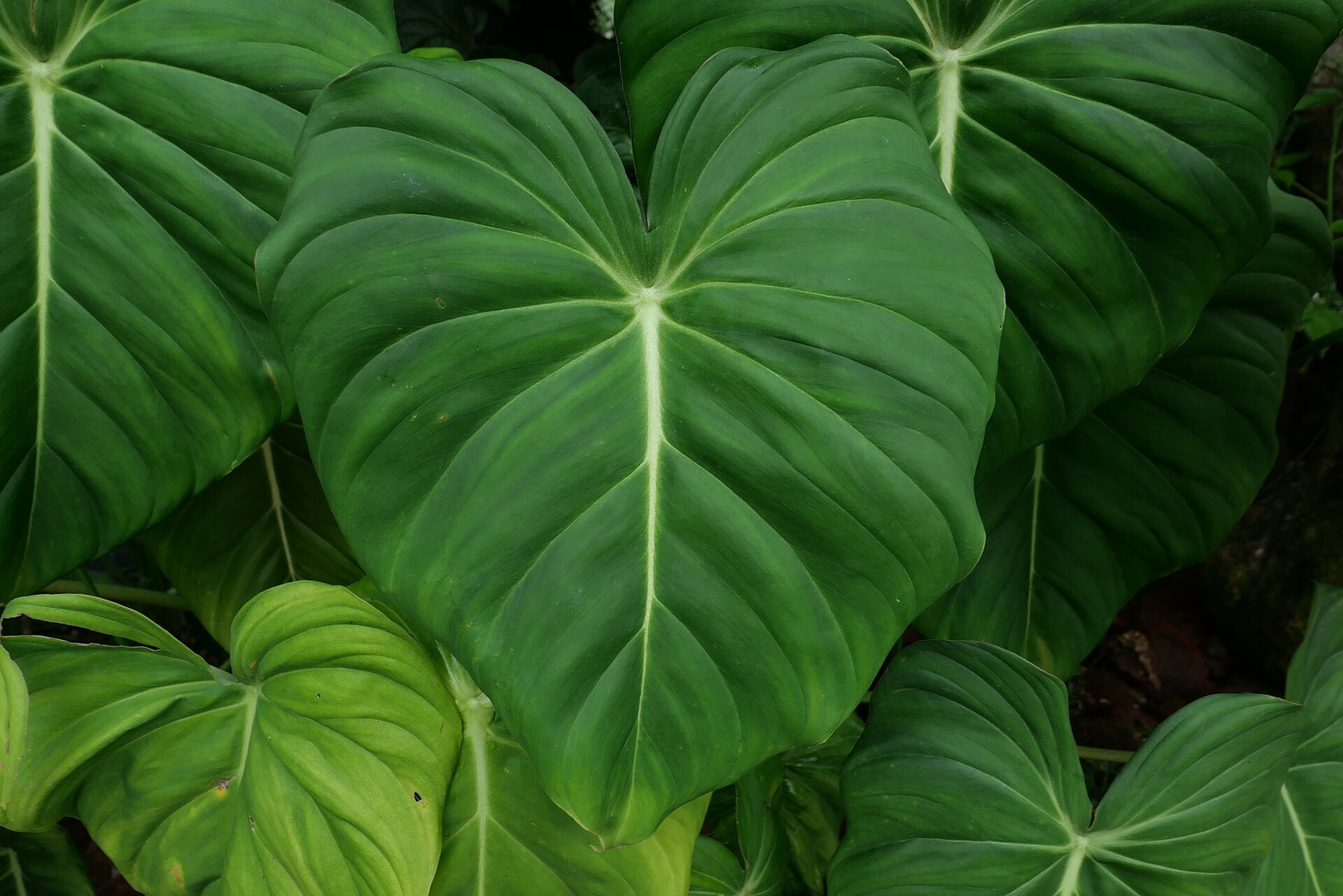
📷 TheFloracle / Wikimedia Commons (CC BY-SA 4.0)
Field Guide · Philodendron
Heart-shaped, ribbed, ground-hugging — pastazanum rewards collectors who think horizontally instead of vertically.
Native to the Pastaza region of Ecuador, pastazanum produces broad, deeply lobed cordate leaves on long, stiff petioles that emerge from a thick rhizome creeping along the substrate. Leaves stay matte to semi-gloss with prominent primary veins and a slight quilted texture. Given a long, shallow planter it will march sideways for years, throwing 18–24 inch leaves once settled. The easiest of the desirable crawlers and the right place to start.
Best overallOften confused with pastazanum but distinct: ruffled, winged petioles and a more elongated, asymmetrical leaf with subtle silver overlay on new growth. Slower than pastazanum and fussier about wet feet, but stunning at size. Works well in the same long, shallow tray setup. Buy from a seller who can show the petiole — mislabeling is rampant.
Collector pickThe silver-painted crawler from Ecuador, with irregular pewter markings spilling across a heart-shaped blade. Smaller in scale than pastazanum — leaves top out around 14 inches indoors — but the variegation pattern carries it. Wants slightly higher humidity (65%+) to keep edges clean. A natural companion plant in a pastazanum bed.
Best variegationThe velvet-leafed benchmark: matte heart-shaped blades with bright white primary veins, held low over a creeping rhizome. Slower than pastazanum and more prone to rot in dense mixes, but the texture is unmatched in the genus. Bright indirect light deepens the velvet; direct sun bleaches it within a week. Worth the patience.
Most iconicA pastazanum × gloriosum hybrid that splits the difference: faster than gloriosum, more textured than pastazanum, with a soft sheen and prominent venation. Tolerates household humidity better than either parent and tends to push leaves in steady succession once rooted. A sensible second crawler if pastazanum has clicked for you.
Easy hybrid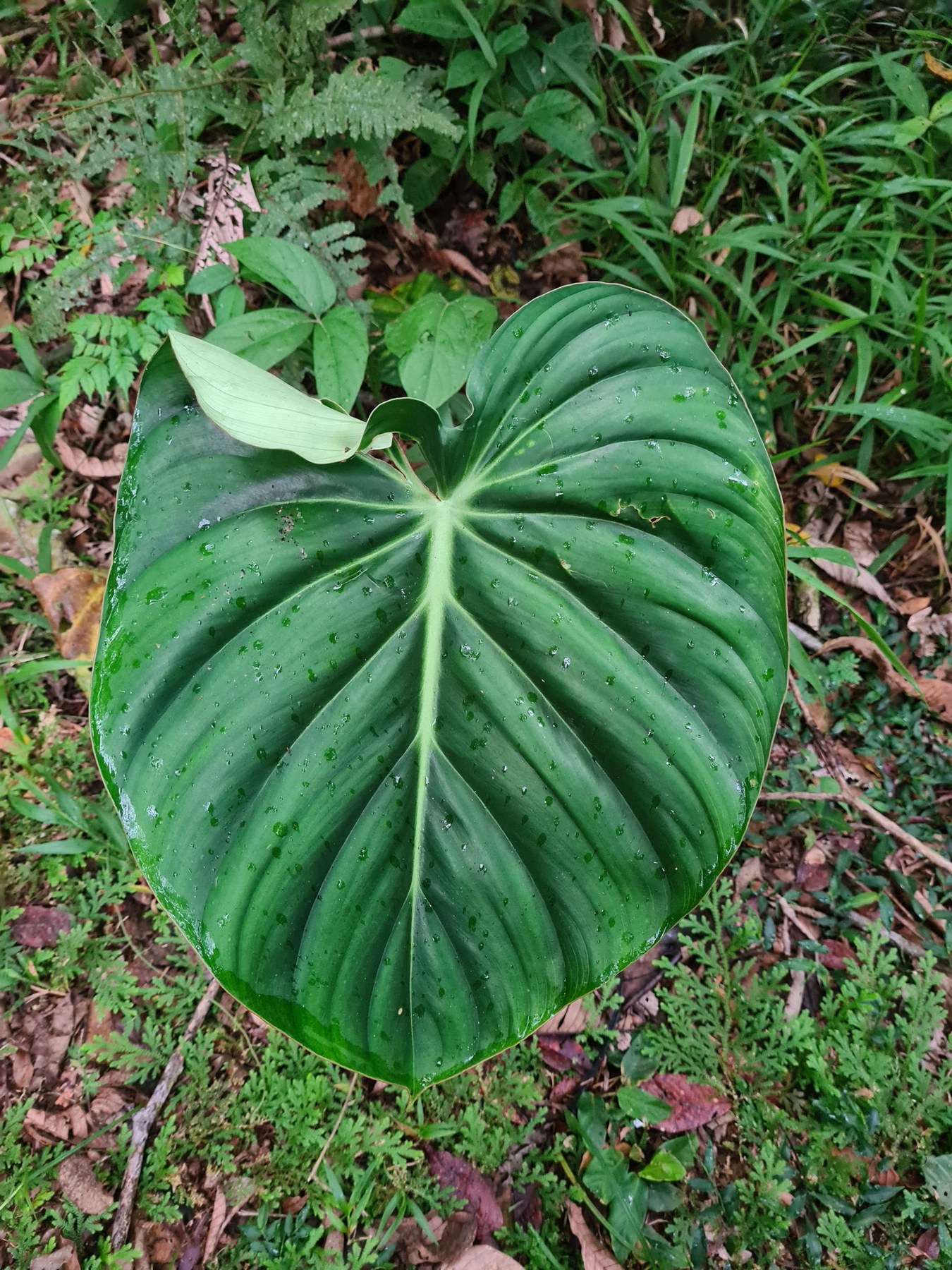
Most Philodendron advice assumes a climber — a moss pole, a vertical run, roots gripping into damp sphagnum. Crawlers want the opposite. The rhizome is the engine, and it travels horizontally along the surface of the substrate, putting down feeder roots as it goes. Plant one in a tall pot and you are wasting two-thirds of the container; the rhizome will hit the rim within a season and stall.
Use a long, shallow planter — a window box, a bonsai tray, a propagation flat with drainage. Six to eight inches deep is plenty. Lay the rhizome on top of the mix with the growth point aimed at empty real estate, and pin it lightly with a bent wire or a chopstick until new roots anchor it. Bury only the bottom third. A rhizome buried fully will rot before it grows.
Give it room ahead. A healthy pastazanum will cover 18 inches of linear space per year once it settles, and each new leaf is larger than the last until it reaches mature size. Planning for that pace up front saves a repot later, which crawlers resent.
The mix needs to drain fast and stay airy at the surface, because that is where the rhizome lives. A working blend: 40% orchid bark, 30% coarse perlite or pumice, 20% coco chips, 10% worm castings. Some growers add a handful of charcoal. The point is structure — chunks the rhizome can grip without sitting in a wet sponge. Straight peat or a dense aroid mix packed around the rhizome is the fastest way to lose one of these plants.
Light should be bright and indirect: an east window, a few feet back from a south window, or under a decent grow light at 150–250 µmol. Pastazanum tolerates a wider light range than gloriosum but will produce smaller leaves in low light and yellow in direct sun. If new leaves come in noticeably smaller than the last, push the light up before changing anything else.
Water when the top inch of mix is dry but the deeper layer still holds moisture. With a shallow planter that usually means a thorough watering every five to seven days in summer, less in winter. Humidity in the 55–70% range is the sweet spot — high enough that leaf edges stay clean, low enough that you are not fighting bacterial spotting. Airflow matters more than absolute humidity; a small clip fan on low does more good than a humidifier alone.
Burying the rhizome. The single most frequent killer. The growth point and the upper surface of the rhizome need air. If you cannot see the rhizome from above, you have planted it too deep.
Treating it like a climber. No pole, no totem, no sphagnum wrap. Crawlers do not climb and trying to train them upward stresses the petioles and stalls new growth.
Cutting too aggressively for propagation. A rhizome cutting needs at least one active growth node and ideally one mature leaf to support it while new roots form. Slicing off a bare segment and hoping for the best usually ends in rot. Cut with a sterile blade, let the wound callous for 24 hours, and lay the cutting on damp sphagnum or perlite in a covered tray until roots appear.
Confusing it with plowmanii at purchase. The two get swapped constantly, often unintentionally. Check the petiole: pastazanum has a smooth, rounded petiole; plowmanii has a ruffled, winged one. The leaves can look nearly identical on juveniles, but the petiole does not lie. Pay plowmanii prices only for a plowmanii petiole.
The Field Guide from Leaf People.