📷 B. Phalan / iNaturalist (CC BY 4.0)
Field Guide · Philodendron
These five species will teach you how philodendrons think before you spend serious money on the ones that punish mistakes.
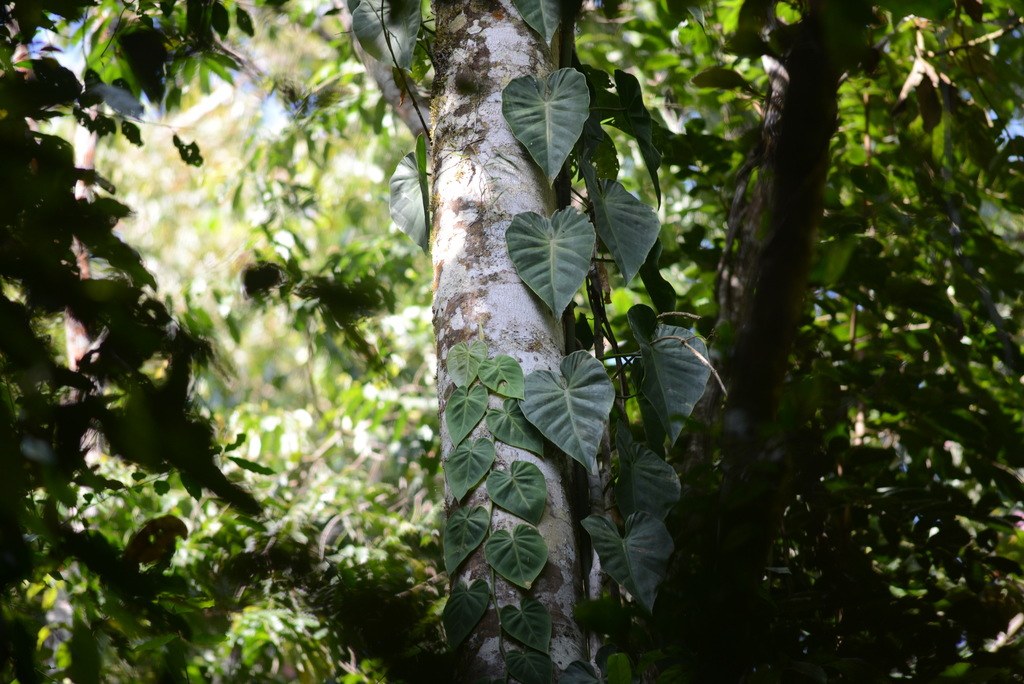
The heartleaf is the genus in miniature: fast-growing, forgiving of missed waterings, and honest about its needs via leaf droop before any real damage sets in. It tolerates lower light than almost any aroid you'll grow, though it elongates noticeably under weak bulbs — a useful early lesson about light quality versus survival. The petioles run from green to burgundy depending on light exposure, and the leaves shift from a warm bronze at emergence to deep green at maturity. Master its rhythm and you understand roughly how every hemi-epiphytic philodendron behaves.
Best foundationGloriosum is a terrestrial crawler, not a climber — the rhizome moves horizontally across the substrate surface, and forcing it vertical causes rot at the base. Leaves open a deep matte green with cream-white venation that brightens as the leaf hardens off over several weeks. A mature leaf in good humidity will reach 60 cm across indoors with patience. It's one of the more instructive plants in the genus precisely because its crawling habit demands a wide, shallow pot and well-aerated mix rather than the tall totem setup that suits climbers.
Crawler to knowYoung melanochrysum leaves emerge an iridescent near-black with pale veining, then mature to a long, pendulous dark green with a faint bronze sheen and a texture somewhere between velvet and leather. It climbs hard once it finds a pole or slab, and the leaf size increases dramatically with each node if you give it consistent humidity above 65% and a rough surface to attach aerial roots. The gap between a juvenile cutting and a mature specimen is wide enough that buying established plants is worth the premium. This is the species that tends to convert casual growers into serious collectors.
Gateway velvetPink Princess is a chimeric variegated form of P. erubescens, meaning the pink sectors are not stable across every leaf — some come out fully pink (reverting to albino tissue), some fully green, and the ideal half-and-half balance requires culling all-green or all-pink growth promptly. The deep burgundy-green base leaf color and dark stems make the pink sectors visually striking in a way that photos actually undersell in person. It grows more slowly than a typical erubescens, which is typical of variegated aroids diverting energy from photosynthesis. Don't buy any plant sold as 'PPP' without seeing photos of the specific plant — that label gets applied liberally.
Variegation 101Squamiferum is distinguished by its deeply lobed, almost oak-leaf-shaped foliage and — unusually — fuzzy red petioles covered in soft bristle-like scales that give the species its name. It climbs at a measured pace and tolerates moderate humidity better than most velvet-leaf species, making it more adaptable to living room conditions without a cabinet or greenhouse. The lobed form reads differently than the more common heart-shaped or entire-leaf species and makes it a useful visual contrast in a collection. It's widely available, inexpensive as a rooted cutting, and rarely throws care tantrums — a combination that's harder to find than it sounds.
Textural contrast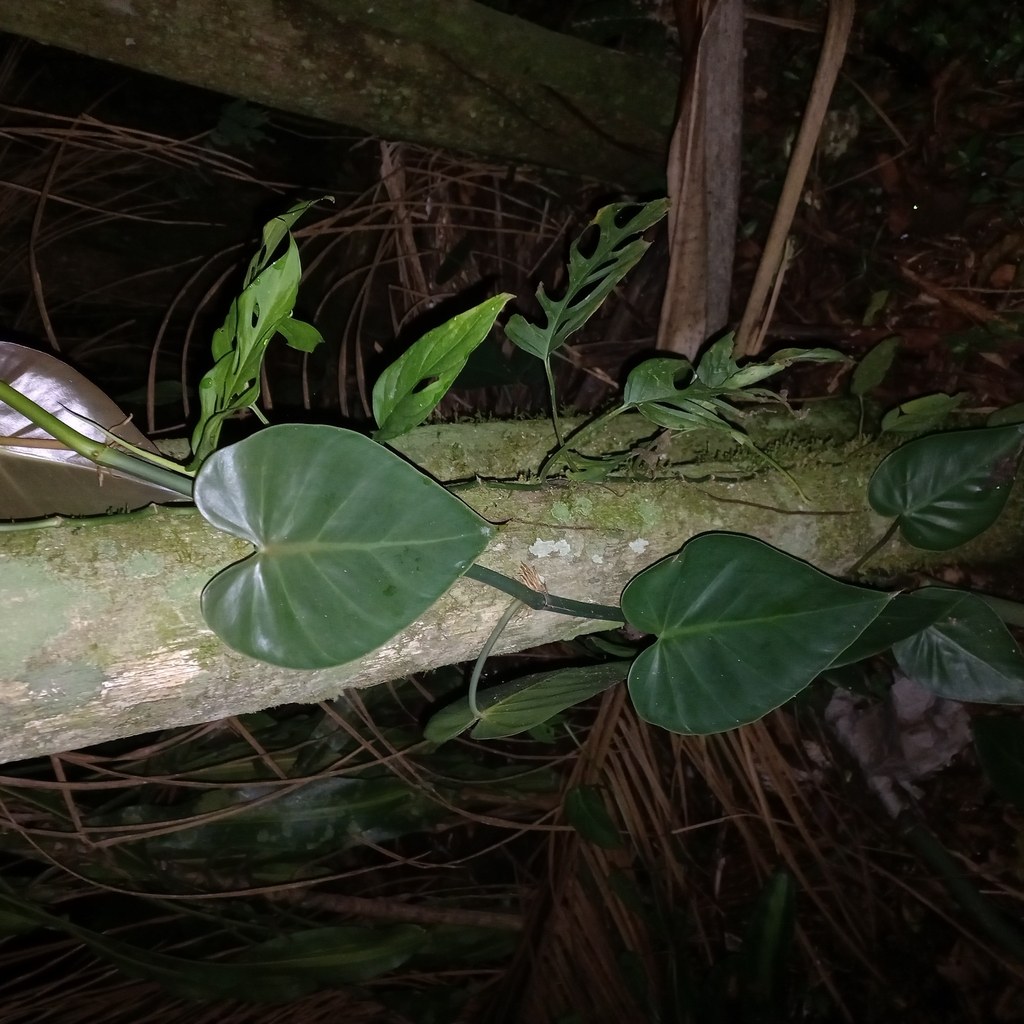
Philodendrons want airy, fast-draining media — not the dense peat-heavy mixes sold as generic 'indoor potting soil.' A reliable starting mix: roughly 40% high-quality potting mix, 30% perlite or pumice, and 30% orchid bark in the 1–2 cm chip size. This keeps oxygen moving around roots between waterings and prevents the anaerobic breakdown that invites Pythium and other root rots. Adjust the ratio wetter or drier depending on your ambient humidity: in a dry apartment you might drop perlite to 20%; in a humid greenhouse cabinet you might push bark to 50%.
Terrestrial crawlers like gloriosum need wide, shallow containers — a 30 cm azalea pot beats a tall standard pot of the same volume. Climbers do well in standard nursery pots but benefit from a moss pole or coco coir slab once they show aerial roots actively reaching. Attaching roots to a textured surface triggers the morphological shift toward larger, more mature leaf forms — this is not a myth, and you'll see the difference within three or four leaves of good contact.
Repot when roots circle the base or begin pushing out drainage holes, not on a fixed calendar. Most philodendrons in active growth can be upsized once a year in spring, but a small plant in a pot that's too large will sit in wet media between waterings and rot before it roots out the volume. Size up by one pot increment at a time.
Bright indirect light is the standard advice and it's correct, but 'indirect' doesn't mean dim. In practice, these plants want to be within 1–2 meters of an unobstructed east or west window, or 60–90 cm from a south-facing window with a sheer curtain. A lux meter reading of 1500–3000 lux for 10–12 hours covers most of these species in active growth. Below 800 lux you'll see stretched internodes, smaller leaves, and sluggish growth that makes the plant more vulnerable to overwatering.
Water when the top 3–5 cm of substrate has dried out, and water thoroughly until runoff drains freely from the bottom. Dump the saucer after 30 minutes. The velvety species — melanochrysum, gloriosum — are slightly more sensitive to dry spells than the glossy-leaf types, but both directions of error matter: dry roots stop nutrient uptake, wet roots rot. A wooden chopstick inserted to the pot's midpoint tells you more about moisture levels than finger-testing the surface alone.
Humidity sits between 60–80% for most of these species to perform well. Below 50%, velvet-leaf varieties will show crispy leaf margins and slower growth, though they won't die quickly. The glossy-leaf species like hederaceum and squamiferum handle 40–50% without visible protest. A small ultrasonic humidifier directed at the plant's canopy — not the soil — combined with good airflow from a fan running at low speed prevents the stagnant moisture that breeds bacterial leaf spot and fungus gnats.
Yellow leaves with a soft, mushy petiole base almost always mean overwatering in a mix that isn't draining fast enough — fix the substrate before adjusting watering frequency. Yellow leaves on a plant in dry, well-aerated media usually signal nitrogen deficiency or root bound conditions. The two look similar from a distance and have opposite fixes, so always check the roots before blaming the watering schedule.
New leaves that emerge small, pale, or with poorly defined venation often indicate low light rather than a nutrient problem. Move the plant closer to the light source and give it four to six weeks before concluding anything. Fertilizing a light-starved plant accelerates the problem by pushing weak growth.
Brown leaf edges on velvet species can come from low humidity, fluoride or salt accumulation in the substrate, or a cold draft. Flushing the pot thoroughly with plain water every two to three months removes mineral buildup in any mix. Keep these plants away from air conditioning vents and exterior windows that drop below 15°C at night — most tropical philodendrons stall below that temperature and sustain cellular damage below 10°C.
The Field Guide from Leaf People.