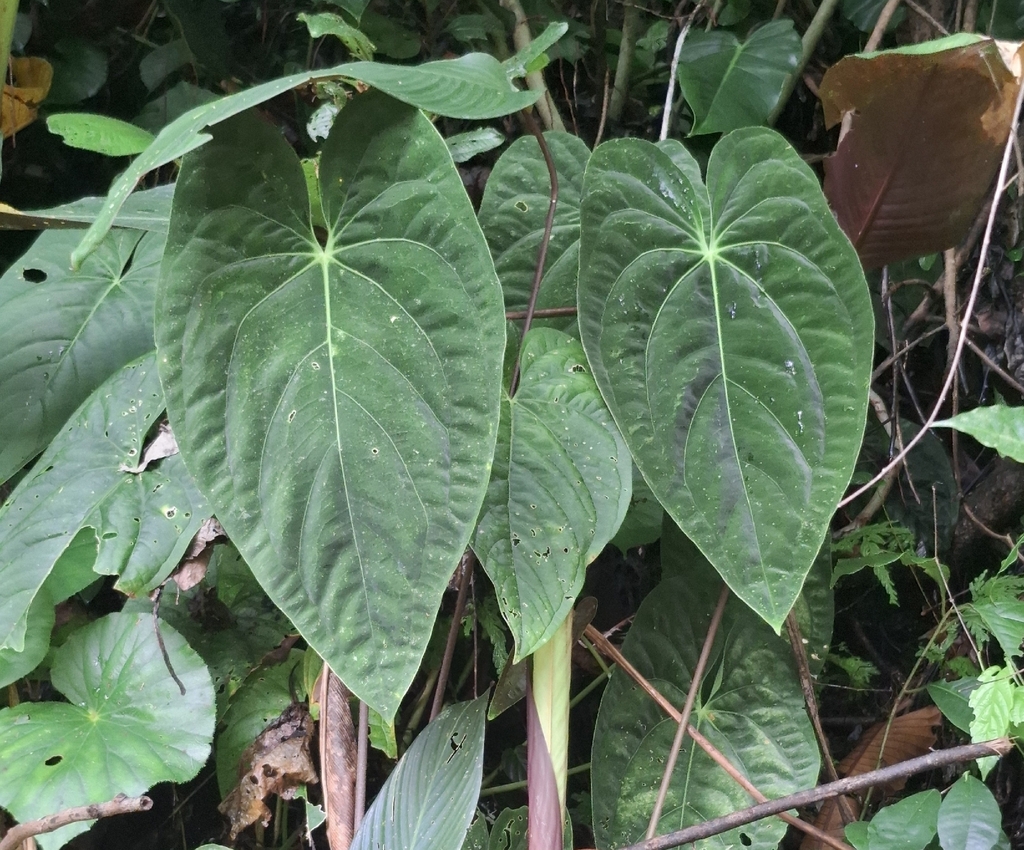
The bidding on a mature Anthurium papillilaminum closes at 11:47 p.m. Eastern on a Sunday, because that's when the auction host's audience is most awake and least sensible. The plant — four leaves, one still hardening, mother stock from a Panama-trip grower in Florida — has just crossed eight hundred dollars. In the comments, a half-dozen collectors are typing in real time, and two of them know each other from the same Discord. One of them will pay.
Across town, or across the country, somebody else is closing on a similar plant by DM. No audience. No countdown. A photo, a price, a Venmo handle, and the quiet understanding that if you flinch, the seller has three other names in the queue. Both transactions happen tonight. Both will be cited next week as "market price." Neither of them is, exactly.
Two markets pretending to be one
The rare-aroid trade looks like a single ecosystem from the outside — the same species moving between the same two hundred or so serious buyers — but it runs on two fundamentally different price-discovery mechanisms, and they produce different numbers for the same plant on the same day. Public auctions, whether on a livestream, a bidding app, or a comment-thread free-for-all, are designed to surface the highest price a motivated bidder will tolerate in a compressed window. Private DM sales are designed to surface a price that two parties find quietly acceptable, usually with no one else watching.
Collectors who have only ever bought one way tend to assume the other is irrational. Auction loyalists call DM pricing "hobbyist guesswork." DM buyers call auction prices "a tax on adrenaline." Both are partly right. The interesting question isn't which format is correct — it's what each one is actually measuring, and what the seller's choice of format tells you about the seller before you've even talked about the plant.
An auction tells you what two excited people will pay tonight. A DM sale tells you what one calm person will accept tomorrow.
What an auction is actually pricing
An auction prices the plant plus the event. The leaf you're bidding on is only half of what's on offer; the rest is the live theater of winning it, the screenshot you'll post, the bragging rights with the three other people you know were also watching. This is why the same Philodendron spiritus-sancti that moves quietly between collectors at, say, the low four figures for a rooted cutting can spike absurdly when a well-followed grower puts a mother plant on a Saturday-night livestream with a charismatic host calling the action.
Auctions also price information asymmetry in a particular way: they reward the bidder who is most confident, not the bidder who is most correct. The person who has actually grown Anthurium dressleri from a sib cross and watched half the seedlings revert to plain green knows what the upside and downside of a young plant looks like. The person who has only seen the species on Instagram does not. In a sealed negotiation, the experienced grower's caution drags the price down. In a public auction, the inexperienced bidder's enthusiasm drags it up. Auctions tend to set ceilings. They rarely set floors.
Watch enough of them and you start to notice the shape of the curve. Bidding climbs steadily to roughly what the plant is "worth" by community consensus, pauses, and then either dies or detonates. The detonation is two specific bidders who have decided, for personal reasons, that they are not losing this one. That final fifteen percent is not market price. It's a duel.
What a DM sale is actually pricing
A DM sale prices the relationship as much as the plant. When a grower in Hawai'i messages a known collector in Germany about a spare Anthurium forgetii × papillilaminum before listing it anywhere public, the number that gets agreed isn't a market price in any clean sense. It's a price that reflects shipping risk, phyto paperwork, the fact that they've traded three times before without drama, and the grower's confidence that this buyer will not flip the plant on a Discord market channel next month.
Private sales tend to be quieter, more conservative, and stickier. A seller who moves most of their stock by DM has a list — sometimes literal, often mental — of buyers they trust, and prices on that list move slowly. A plant that goes for twelve hundred to a regular this spring will probably go for thirteen or fourteen next spring, even if auction comps for the same species have doubled. The premium the seller gives up is, effectively, the cost of not having to deal with strangers.
This is why DM pricing is the better signal of where a species is settling, even though auction pricing is the louder signal of where it peaks. Settling matters more if you're trying to decide whether to add a third Philodendron lynamii to your collection. Peaks matter more if you're trying to flip one.
Reading the seller by the venue
The format a seller chooses is one of the cleanest tells in the hobby. A grower who runs frequent public auctions is usually optimizing for volume, attention, and the highest possible realized price per unit. That isn't a moral failing — it's a business model — but it tells you what they care about. Expect tighter packaging timelines, more uniform plant sizes, and less patience for buyers who go quiet for a week. Expect, also, that the very best stock sometimes never reaches the auction; it left by DM to a relationship buyer the morning before.
A grower who works almost entirely by DM is usually optimizing for plant placement and reputation among a smaller circle. They will often charge less than the auction comp, ask more questions about your setup, and remember if you killed the last thing they sold you. They are also harder to access. The price you don't pay in dollars you pay in time, patience, and the slow work of becoming someone they actually want to sell to.
The hybrid sellers — public listings for the broad catalog, DMs for the heat — are the most common and the most worth studying. What they choose to put on the auction block versus what they release privately is a map of how they read their own inventory. A clean, four-leaf verrucosum on the public feed and a luxurians to a friend tells you which one they think will appreciate.
Where the comp data actually lives
New collectors price plants by searching sold listings on the obvious marketplaces and assuming those numbers describe reality. They don't, quite. Public sold-comps overrepresent two populations: plants common enough to move on open platforms, and plants whose sellers needed a public sale badly enough to accept platform fees and buyer-protection friction. The deeper market — the one that moves a true Anthurium magnificum wide-form, or a verified Philodendron billietiae × atabapoense from a named grower — happens in DMs and closed groups, and the prices there are mostly invisible to outsiders.
If you want a real picture, you have to triangulate. Auction closes give you a ceiling and a sense of which species are currently fashionable. DM whispers, gathered slowly from people who actually trade, give you the floor and the trend line. Conversations at a chapter show or an IAS sale give you the unglamorous middle, which is where most plants actually change hands. Any one source on its own will lie to you in a different direction.
The honest case for each format
Auctions are, for all their theater, the most democratic way a new buyer can access a serious plant. You don't have to know anyone. You don't have to have a history. You bring money and you bid, and if you win, the plant ships. For someone breaking into the hobby beyond the big-box Monstera albo tier, an auction is often the only door that opens at all.
DM sales reward the long game. If you spend three years being a careful buyer — paying promptly, posting honest grow-on updates, not flipping, asking smart questions — you will eventually find that plants come to you before they hit any public listing, often at numbers the auction crowd would not believe. That access is the real currency of the hobby, and it compounds. The collectors with the deepest collections of Anthurium section Cardiolonchium in private hands almost never bought their best plants in public.
Neither format is going anywhere. The auction kings will keep producing the highlight reels, and the DM growers will keep quietly moving the actual rarities to the actual growers. The useful posture, as a buyer, is to know which conversation you're in, what it's measuring, and what the person on the other side of it is really selling you. The plant is only ever part of it.