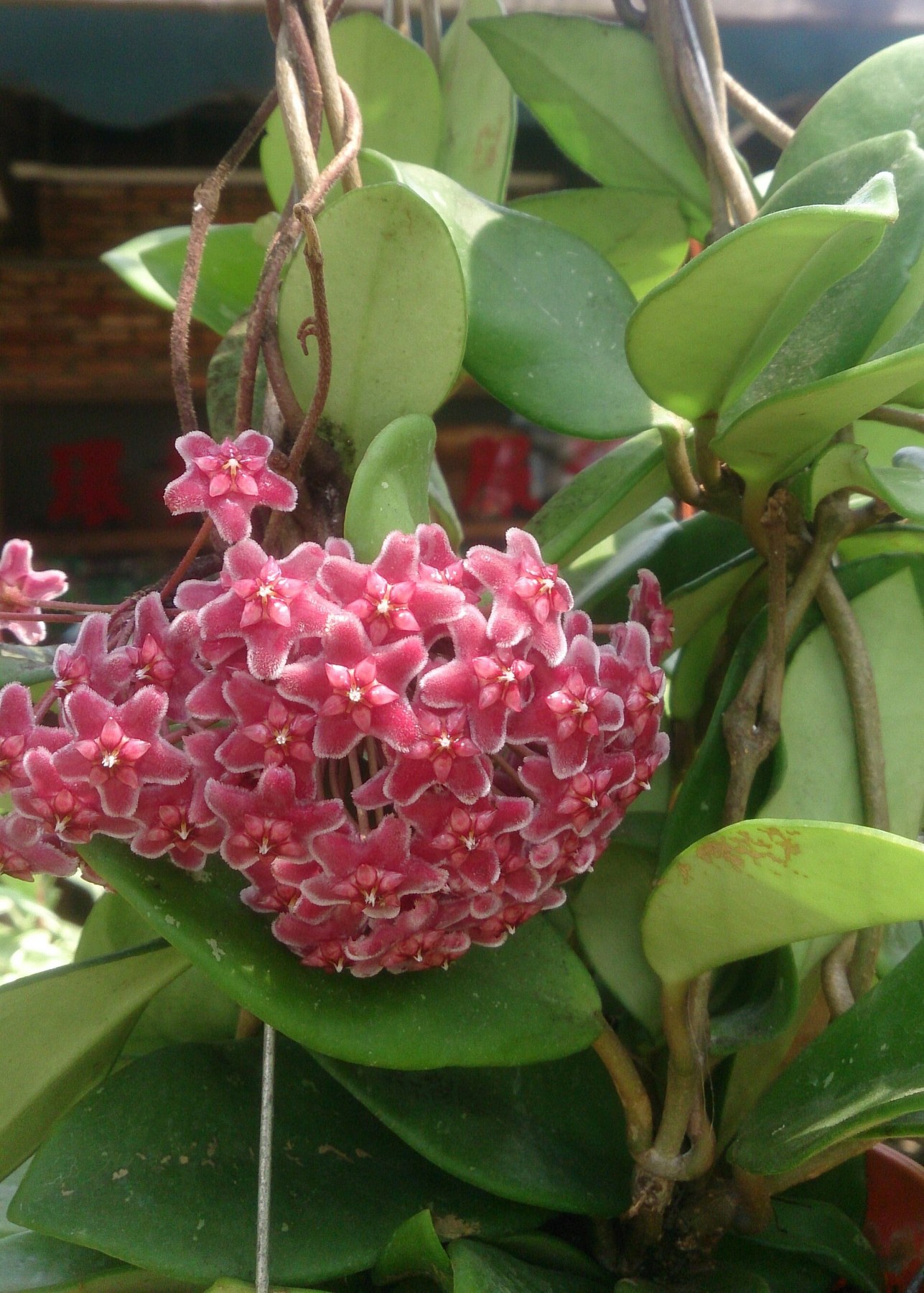
📷 Mokkie / Wikimedia Commons (CC BY-SA 3.0)
Field Guide · Hoya
The trick isn't making it flower once — it's keeping the woody spur alive so it blooms three, five, ten times from the same point.
The cultivar most collectors meet first, and still the benchmark for reliable spur reblooming. Mature umbels carry 20–30 reflexed flowers in deep wine, fading nearly black with age. Vigorous on a trellis, tolerant of imperfect watering, and quick to set new peduncles once it hits a sunny window. If you only grow one pubicalyx, grow this.
Most reliableDistinguished by heavier silver splash across the leaf surface, sometimes nearly full silver under strong light. Flowers are pale dusty pink with a darker corona, less dramatic than 'Royal Hawaiian' but produced freely once established. Leaves color up best with a couple hours of direct sun. A good choice if you want foliage interest between blooms.
Best foliageShorter internodes than the type, which makes it the easiest pubicalyx for a small grow shelf. Flowers are a saturated brick red with a near-black corona, smaller umbels but more frequent flushes. Builds woody spurs quickly, often reblooming within six weeks of the previous flush. Worth tracking down if bench space is tight.
Best compactThe darkest commonly available pubicalyx, with corollas that read true black in low light and oxblood under a flash. Slower to first bloom than 'Royal Hawaiian' but persistent once it starts. Wants brighter light than the others on this list — an unobstructed east window minimum. A connoisseur's pick rather than a beginner's.
Darkest bloomA Philippine selection with heavy silver flecking and pale pink, strongly fragrant flowers — the scent is closer to buttered caramel than the type's chocolate. Peduncles are long and woody, ideal for stacking reblooms over multiple years. Grows fast and benefits from a real trellis rather than a hoop. Underrated.
Best fragrance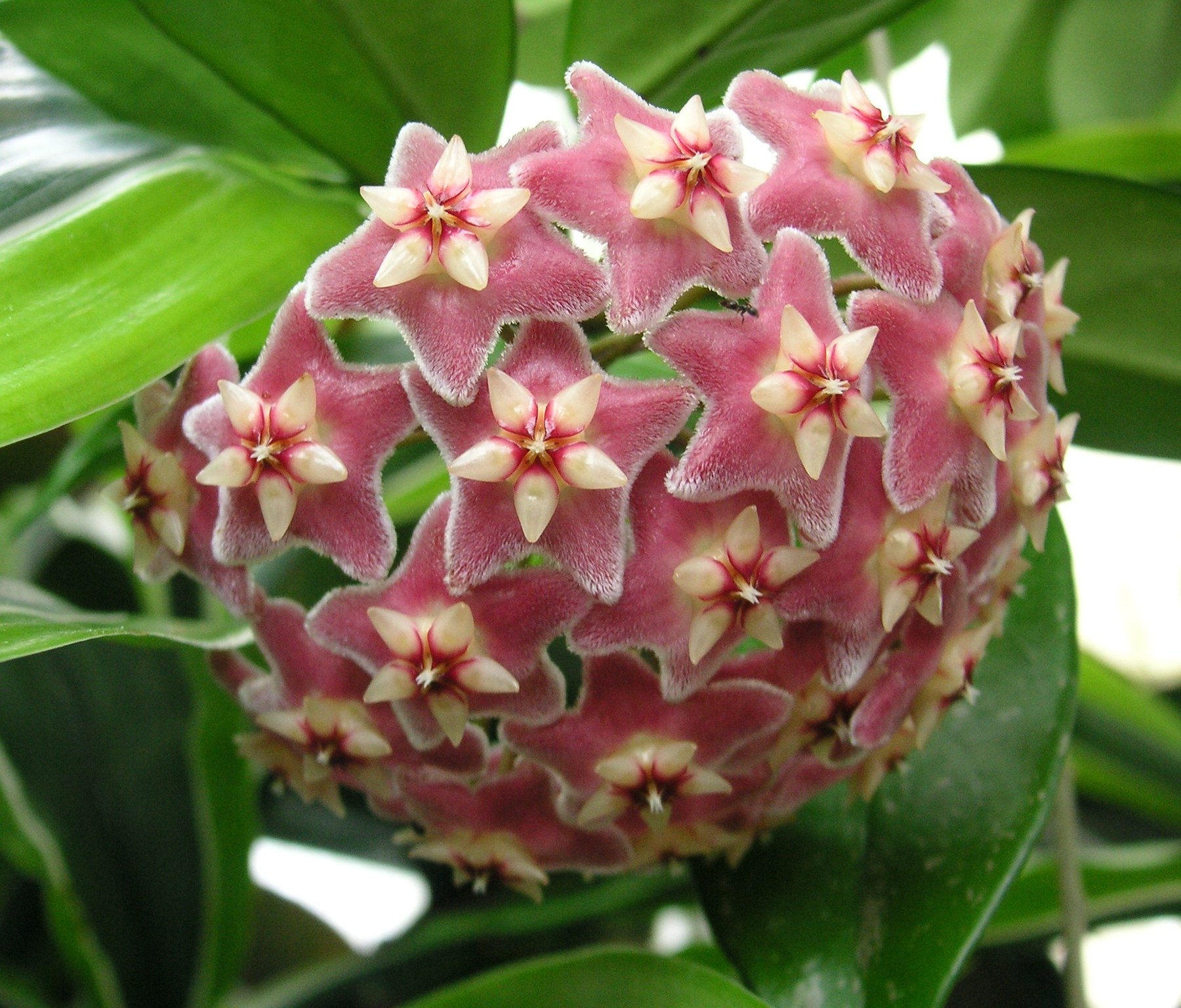
Hoyas flower from a peduncle — a short woody stalk that emerges from a node and persists after the flowers drop. New growers see the spent umbel, assume the structure is finished, and cut it off. That cut ends the spur. The same peduncle is supposed to bloom repeatedly, sometimes for a decade, each new umbel forming at the swollen tip where the previous one detached.
Hoya pubicalyx is among the most generous repeat-bloomers in the genus. A healthy plant in a stable position will push a new umbel from the same peduncle every six to ten weeks during the warm half of the year. After three or four flushes, the spur thickens visibly — a half-inch nub of corky tissue that becomes a permanent feature of the vine. Lose it and you wait months for a new node to mature and initiate.
Rule one, then: never cut a peduncle, even a brown shriveled one. Dormant spurs frequently reactivate. Rule two: don't move the plant once a peduncle is initiating buds. Pubicalyx is less bud-blast prone than carnosa or bella, but a hard rotation under a peduncle in active development will still abort the umbel.
The single biggest driver of reblooming is light intensity at the spur itself. Pubicalyx in a low-light corner will hold its peduncles but produce one umbel a year, maybe. The same plant under 200–400 µmol PPFD for ten to twelve hours — a bright east or shaded south window, or a decent shop light at 12 inches — will cycle through flushes all summer. If you have a meter, aim for daily light integrals around 12–18 mol/m²/day.
Watering rhythm matters almost as much. Pubicalyx stores water in its semi-succulent leaves and resents soggy media, but it also won't initiate buds if it's chronically thirsty. The pattern that works: water thoroughly, let the substrate dry until the top two-thirds feels dry to a chopstick, water again. A mild dry period in late winter — stretching the interval by a week or so for six to eight weeks — often triggers a heavier spring flush, mimicking the dry season in its native range across the Philippines.
Humidity is less critical than people claim. Pubicalyx blooms in average household air around 45–55% RH. What it does want is airflow. Stagnant air around the peduncle correlates with bud blast and with mealybugs colonizing the developing umbel — the single most common reason a promising bloom cycle fails. A small clip fan on low, aimed past (not at) the plant, solves both.
Mix for drainage and structure, not moisture retention. A working recipe: two parts orchid bark (medium grade), one part perlite or pumice, one part coco chips, and a handful of horticultural charcoal. Skip peat and skip standard houseplant mixes — both stay wet too long around the fine roots and rot the basal nodes where future peduncles emerge.
Feed lightly but consistently during active growth. A balanced fertilizer at quarter strength every watering beats a monthly full dose. Some growers swap to a higher-phosphorus formula to push bloom; in practice, a balanced feed plus adequate light produces just as many umbels without the salt buildup. Flush the pot with plain water every fourth or fifth watering to keep the root zone clean.
The mistakes that cost spurs, in order of frequency: cutting peduncles after bloom, repotting a plant in active bud development, moving the plant to 'show off' a forming umbel, overwatering in winter when the plant slows, and missing an early mealybug infestation tucked into the spur's crevices. Inspect peduncles weekly with a loupe during bloom cycles — a cotton swab of 70% isopropyl handles small populations before they reach the buds.
One last thing: patience. A seedling or fresh cutting of pubicalyx usually needs to put on three to five feet of vine and reach a certain root mass before it blooms at all. Rushing that timeline with hormones or stress tricks tends to produce a single weak umbel and a setback. Give it a trellis, a bright window, and two years. After that, the same peduncles will pay you back for as long as you keep the plant.
The Field Guide from Leaf People.