📷 zebedeugalinha / iNaturalist (CC BY 4.0)
Field Guide · Hoya
Forgiving vines that still earn their place on a serious shelf — splash, sheen, wax, and bloom.
The old reliable, but the cream-edged sport keeps it interesting. New growth flushes pink under good light before settling to cream and green, and mature plants throw the classic pink-and-red porcelain umbels. It tolerates a missed watering, a cool windowsill, and the kind of dry winter air that finishes off finickier Hoya. Give it a trellis and it climbs; let it trail and it behaves.
Most forgivingH. pubicalyx is the species that convinces people they can grow Hoyas. Vines push a foot at a time in summer, the dark leaves carry random silver splash that intensifies with brighter light, and the near-black flowers smell like cheap perfume at night — in a good way. Cuttings root in water, in sphagnum, in almost anything. Hard to kill, fast to bloom, cheap to acquire.
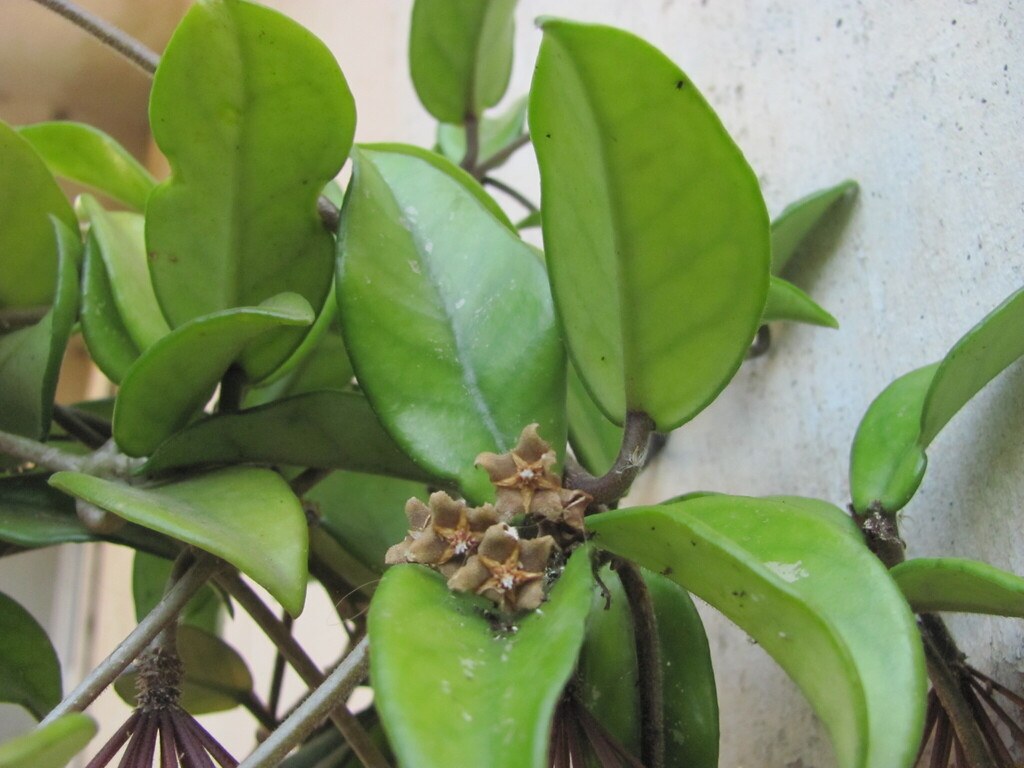
Best valueEveryone meets it first as the single-leaf valentine in a 2-inch pot, which is a shame because a rooted, vining kerrii is a genuinely handsome plant. The leaves are thick, waxy hearts that store water for weeks, so it shrugs off neglect better than almost anything in the genus. It's slow — expect patience before the first peduncle — but the white-and-red flowers are worth the wait. Bright light is non-negotiable if you want vines instead of a stalled cutting.
Hardest to killThe Hindu rope: leaves folded and twisted along the stem like a braided cord. It grows slowly, which means a 6-inch pot stays a 6-inch pot for years, and it blooms reliably from the same spurs season after season — never cut those off. Treat it more like a succulent than a tropical: bright light, a gritty mix, and water only when the leaves start to feel slightly soft. Strange-looking and weirdly satisfying.
Most sculpturalA small-leafed species that blooms young, blooms often, and perfumes a whole room with cinnamon at dusk. Where carnosa wants to climb a pole, lacunosa stays tidy in a 4- or 5-inch pot and trails modestly over the rim. It likes a touch more moisture and humidity than the waxier species but isn't fussy about it. The flowers are fuzzy white half-spheres, and the scent alone justifies the shelf space.
Best bloomer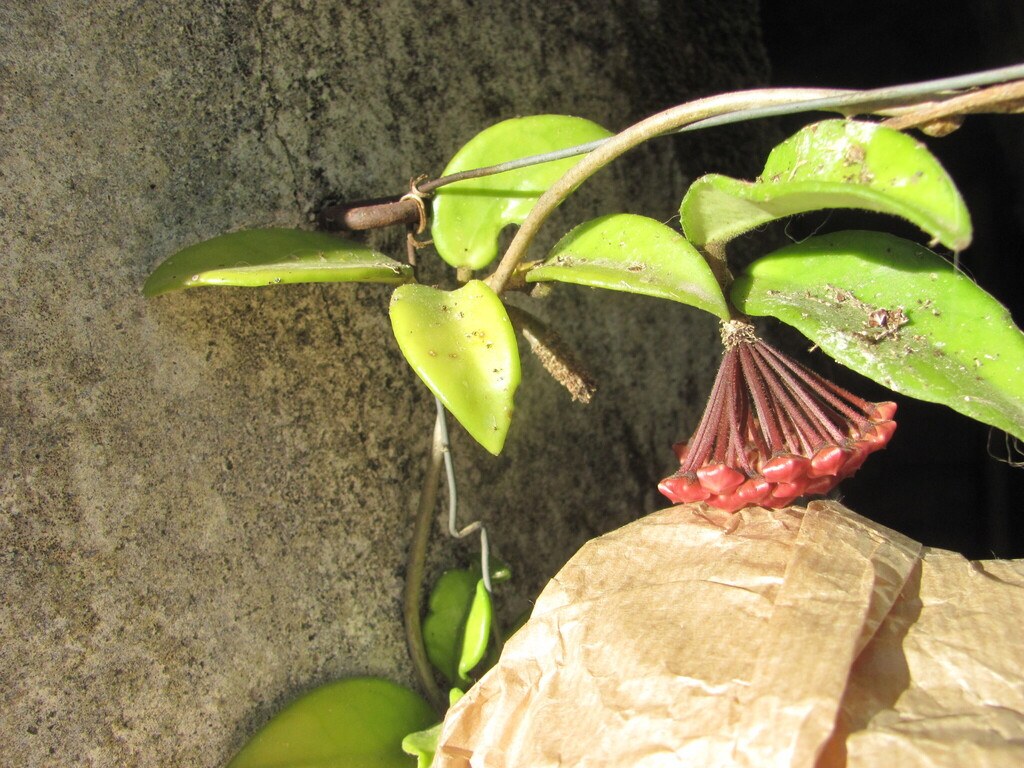
Almost every Hoya problem traces back to mix. These are epiphytes — in habitat they grip bark, moss, and the crotches of trees, with roots that expect air between waterings. Pack them into peat-heavy houseplant soil and the fine roots suffocate, then rot, then the vine collapses from the base while the leaves still look fine. By the time the leaves wrinkle, it's usually too late.
Build something chunky. A workable starting point: 60% orchid bark (fine to medium grade), 20% perlite or pumice, 10% coco chips, 10% sphagnum or a quality potting soil for a little water retention. Adjust toward more bark for thick-leaved species like kerrii and the rope carnosa, and slightly more sphagnum for lacunosa and other thinner-leaved types.
Pot small. Hoyas bloom better slightly root-bound, and a 4-inch plant in a 4-inch pot dries on a predictable rhythm. Terracotta is your friend if you tend to overwater; plastic or glazed ceramic is fine if you don't. Skip the decorative cachepot with no drainage — standing water at the root ball is how beginners lose plants they were otherwise growing well.
Light is the lever that controls everything else. An east window, an unobstructed north window in summer, or a few feet back from a south or west exposure all work. Under grow lights, aim for roughly 150–250 µmol PPFD at the leaf for 12 hours. Too little light and the vine grows but never blooms; too much direct sun and the leaves bleach to a tired yellow-green and scorch at the tips.
Water when the mix is dry most of the way through — finger test, weight test, or a wooden skewer all work. Then water thoroughly, until it runs from the drainage holes, and dump the saucer. The waxy, succulent-leaved species (kerrii, 'Compacta', pubicalyx) tolerate a week or more between drinks; thinner-leaved ones want a shorter cycle. In winter, stretch the interval; growth slows and cold wet roots rot fast.
Humidity matters less than the internet claims. Every plant on this list grows fine at 40–50% ambient. Push to 60% if you can and growth speeds up, but don't mist — wet leaves invite fungal spotting on carnosa and friends. Airflow from a small fan does more good than a humidifier in most rooms.
Cutting off old peduncles. Hoyas bloom from spurs — short, stubby peduncles that look dead between flushes. They aren't. The same spur reblooms for years, often dozens of times. Snip it off and you've thrown away next season's flowers. Learn to recognize them and leave them alone, even when the plant is repotted or pruned hard.
Chasing the bloom with fertilizer tricks. A starved Hoya won't bloom, but a flooded one won't either. Use a balanced fertilizer at quarter to half strength every second or third watering during active growth, and stop in winter. Light and maturity drive flowering far more than any phosphorus-heavy 'bloom booster.'
Repotting too often. A Hoya that looks pot-bound on the surface is usually fine. Roots circling the pot, mix still draining well, plant pushing new growth — leave it. Bump up one pot size only when the mix has broken down to mush or the plant dries within a day of watering. Annual repotting is a houseplant habit, not a Hoya one.
Buying a single kerrii leaf and expecting a vine. That heart-shaped cutting in the gift-shop pot is almost always a leaf without a node. It will sit there, alive and green, for years and never grow. If you want a real plant, buy one with at least one node and a visible growth point — it costs a little more and rewards you with an actual vine.
The Field Guide from Leaf People.