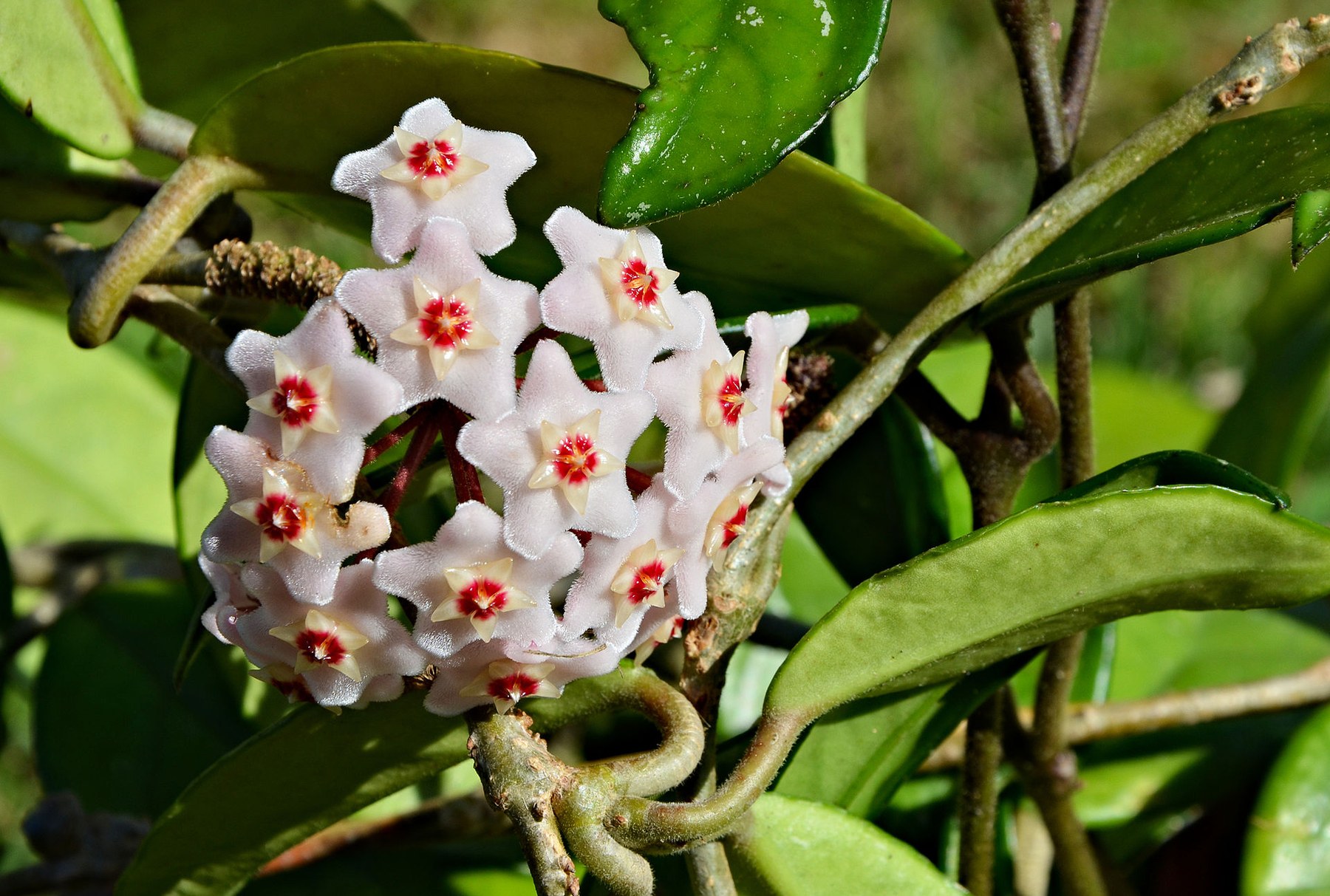
📷 JLPC / Wikimedia Commons (CC BY-SA 3.0)
Field Guide · Hoya
The curled, contorted Hoya carnosa 'Compacta' looks like a mistake of botany — and rewards the patient with wax-pink umbels that smell of chocolate at dusk.
The original Hindu rope: leaves folded in on themselves along a shortened internode, stacked like green dreadlocks down a wiry stem. Slow to start, then suddenly long. Blooms cream-pink in tight 20–30 floret umbels with a faint chocolate-vanilla scent. The benchmark every sport is measured against.
The originalA carnosa sport with creamy white leaf margins and a green center, sometimes flushing pink under bright light and cool nights. New growth often emerges almost entirely pink before hardening off. Vigorous for a variegate, and reliably floriferous once peduncles harden. Holds variegation better than its reputation suggests.
Best variegateThe inverse pattern of Krimson Queen — green margins surrounding a cream or pink interior. Slower than the Queen and more prone to throwing all-white shoots that need pruning back to chlorophyll. Worth the patience for the marbling, which no two leaves repeat. Blooms identical to straight carnosa.
Collector's pickHeart-shaped, deeply quilted leaves with sunken venation that catches light like hammered metal. A carnosa through and through in scent and umbel shape, but the foliage stands on its own without flowers. Tolerates lower humidity than most sports and grows briskly under a single shop light.
Most forgivingVariegated cream and green with pink stems and pink-flushed young leaves — the splash everyone wants on social media, and a genuine carnosa underneath. Color depth depends on light intensity and a moderate nitrogen diet; overfed plants go green. Blooms freely once mature on the same peduncles, year after year.
Best for color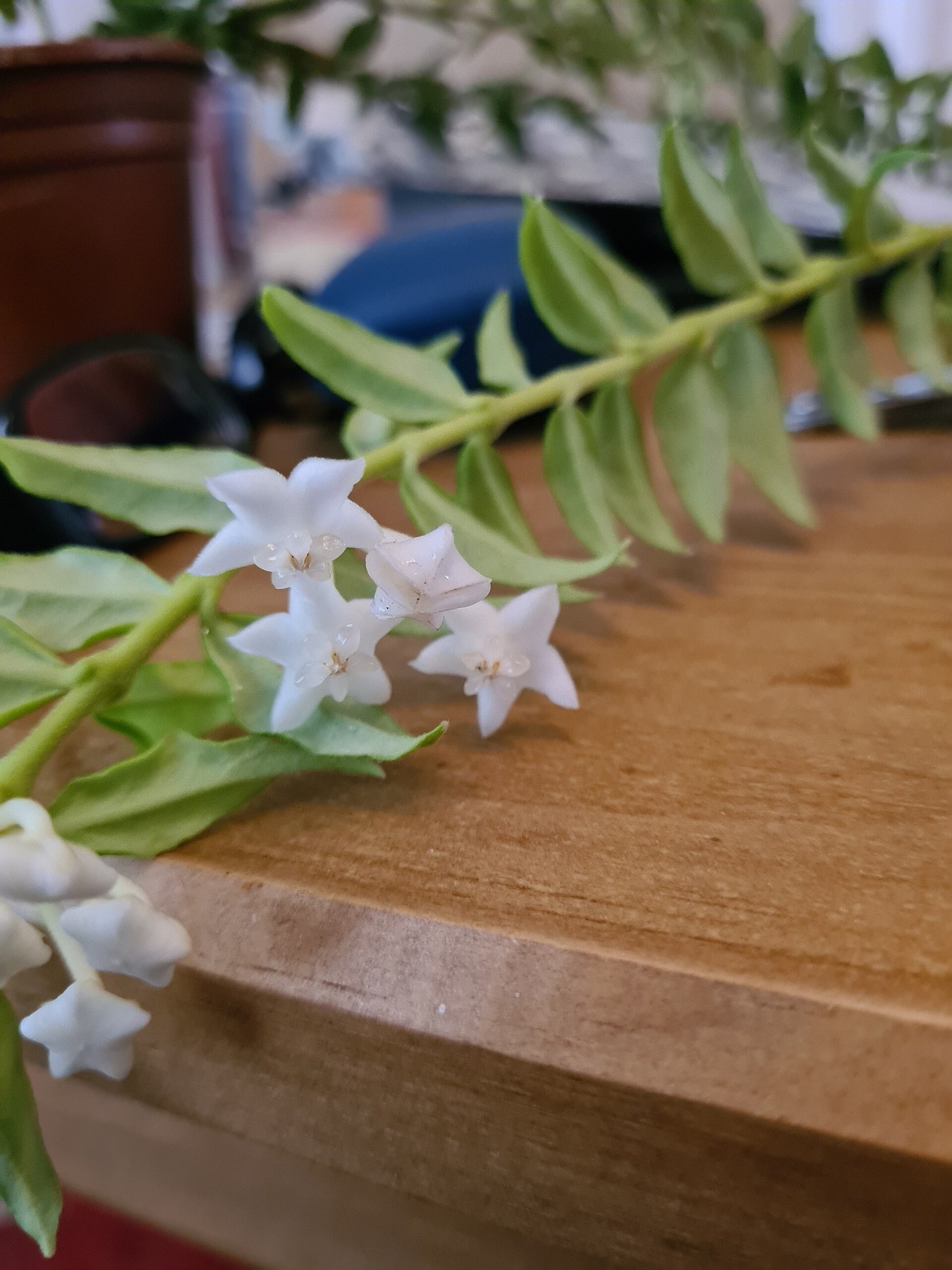
Every Hoya carnosa form, contorted or not, is an epiphyte that happens to tolerate soil. Treat it as such. A working mix is roughly one part orchid bark, one part perlite or pumice, one part coco chips, and a small fraction (10–15%) of peat or fine coir to hold a little moisture between waterings. The mix should rattle when dry and feel barely damp after a soak — never sodden.
Pot small. A carnosa in a four-inch pot will outbloom the same plant overpotted into a six-inch every time. Roots want to fill the container and dry quickly between drinks. Terracotta is forgiving for heavy-handed waterers; plastic or glazed ceramic is fine if you let the medium tell you when it's time. Repot only when the rootball lifts out as a solid mass, and step up just one size.
One nuance for the rope forms specifically: the compressed internodes mean a single vine carries more leaf mass per inch than a standard carnosa, so the root system works harder. If a Hindu rope sulks for a year after purchase, check the roots before blaming anything else — nursery plants are often shipped in dense peat that suffocates once it dries and rewets a few times.
Hoyas bloom on light. Bright indirect is the minimum; a few hours of gentle direct sun — east window, filtered south, or under a strong LED at 200–400 µmol — is what triggers peduncles. Leaves should feel firm and slightly waxy; if they're thin and floppy, the plant is stretching for more light. The variegated sports (Krimson Queen, Princess, Tricolor) need more light than straight carnosa to compensate for reduced chlorophyll, not less.
Water deeply, then wait. The standard cycle: soak until it runs from the drainage holes, let the top two-thirds of the medium dry, water again. In an airy mix that's typically every 7–12 days indoors, longer in winter. Hindu rope's folded leaves trap water in the creases, which can rot the growing tip — water at the root zone, not over the crown.
Now the rule that separates collectors from killers: never cut the spur. Hoyas bloom from woody peduncles that persist for years and reflower from the same point. The bare stub sticking off your vine is not dead; it's next season's flowers. Cut it and you reset the clock by two to three years. Same applies to moving a budding plant — shifting light angle mid-cycle is the most common cause of blasted buds.
Carnosa and its sports tolerate household humidity (40–50%) better than almost any other hoya, which is half the reason they've been windowsill plants for two centuries. Push to 60% and growth accelerates noticeably, but don't bother with a cabinet — these are not Hoya clemensiorum or imbricata. What they do need is moving air. Stagnant warm humidity on waxy leaves invites sooty mold and mealybugs, the two problems that follow this genus everywhere.
Feed lightly and often during active growth: a balanced fertilizer at quarter strength every second or third watering, with a bloom-booster (higher P, lower N) in late spring if you want to nudge a stubborn plant into flower. Heavy nitrogen produces lush green leaves and no umbels — and on variegates, it bleaches the pink and cream back to plain green within a few months.
Common failures, in order of frequency: overpotting into water-retentive soil; cutting peduncles; moving the plant during bud development; underlighting variegated sports and watching the white sectors brown; and missing the first mealybug in a leaf crease until it's a colony. Inspect new growth weekly with a loupe. A cotton swab and 70% isopropyl handles small outbreaks; systemic imidacloprid is the nuclear option for an infested collection.
One last thing worth saying plainly: a mature carnosa is a thirty-year plant. The grandmother's Hindu rope in the macramé hanger isn't a meme — it's the natural state of a well-kept specimen. Buy a small one, pot it tight, give it light, and leave it alone. The blooms come when the plant decides, usually around year three, and then every year after that on the same handful of spurs.
The Field Guide from Leaf People.