📷 no rights reserved / iNaturalist (CC BY 4.0)
Field Guide · Begonia
The genus that rewards restraint — get the substrate and humidity right, and the rest is patience.
The spiral at the base of each leaf is unmistakable — a silver band coiling around a darker eye. It's a rex hybrid descended from B. rex crosses bred in the 19th century, and it remains one of the more forgiving rex types if you give it air movement. Leaves bleach in direct sun and rot in stagnant wet, but at 60–70% humidity it pushes a new leaf every few weeks. Worth owning before chasing rarer rexes.
Best starter rexNot rhizomatous, but worth including because collectors who like rexes often want one upright Begonia and this is the one. Leaves are deeply divided into 12–17 narrow leaflets, like a green hand. It tolerates lower humidity than most rexes and will hit 1.5 meters indoors with enough light. A useful counterweight to a shelf of crawling rhizomatous types.
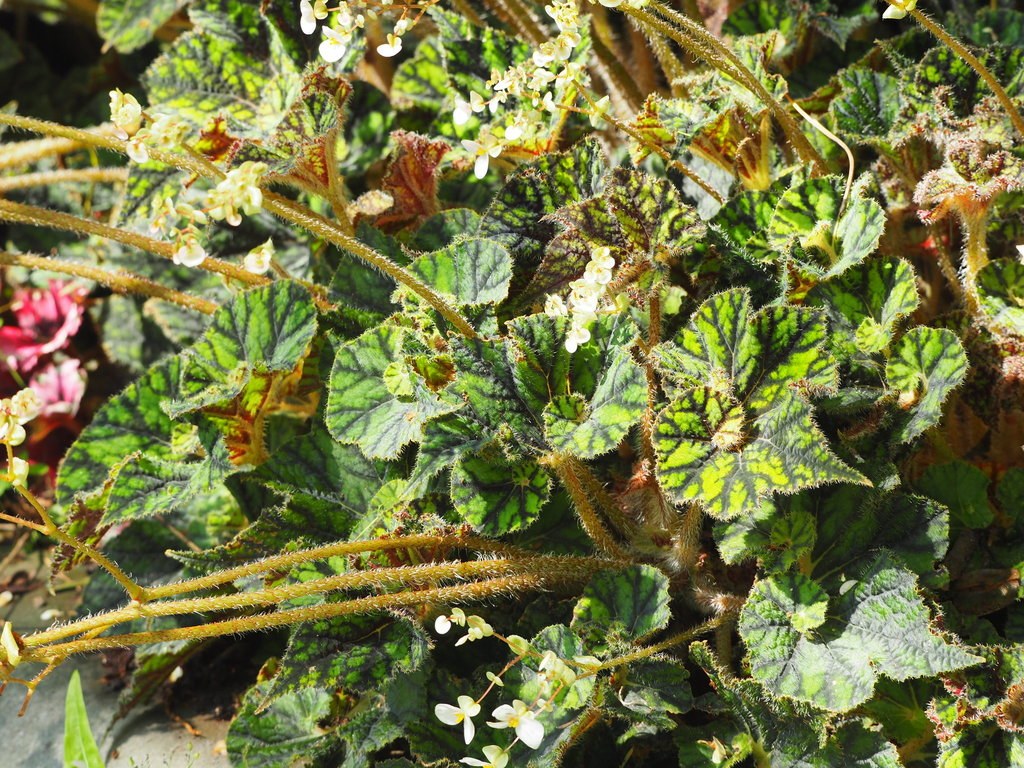
ArchitecturalThe Iron Cross Begonia, named for the chocolate-brown markings on bright green, bullate leaves. Native to southern China and northern Vietnam, it's tougher than it looks and handles brief humidity dips that would crisp a rex. The texture comes from raised bullae over the leaf surface — don't mist it directly or you'll get spotting. A clean, slow grower that resents being moved.
Most durableA collector favorite with deeply lobed leaves covered in red trichomes that catch light like fiber optics. The parentage on the maternal side is B. sizemoreae, a Vietnamese species; the pollen parent has never been confirmed. It wants a terrarium or cabinet — 75%+ humidity, gentle airflow, and a chunky mix. Outside those conditions it sulks fast.
Cabinet candidateBrazilian species whose name means "changes with the sun" — leaves shift from olive to bright lime depending on light intensity. The surface is heavily bullate and slightly hairy, and it creeps along the substrate rather than mounding. Easier than most South American rhizomatous species because it tolerates a wider humidity range, roughly 55–80%. A good second rhizomatous Begonia after masoniana.
Underrated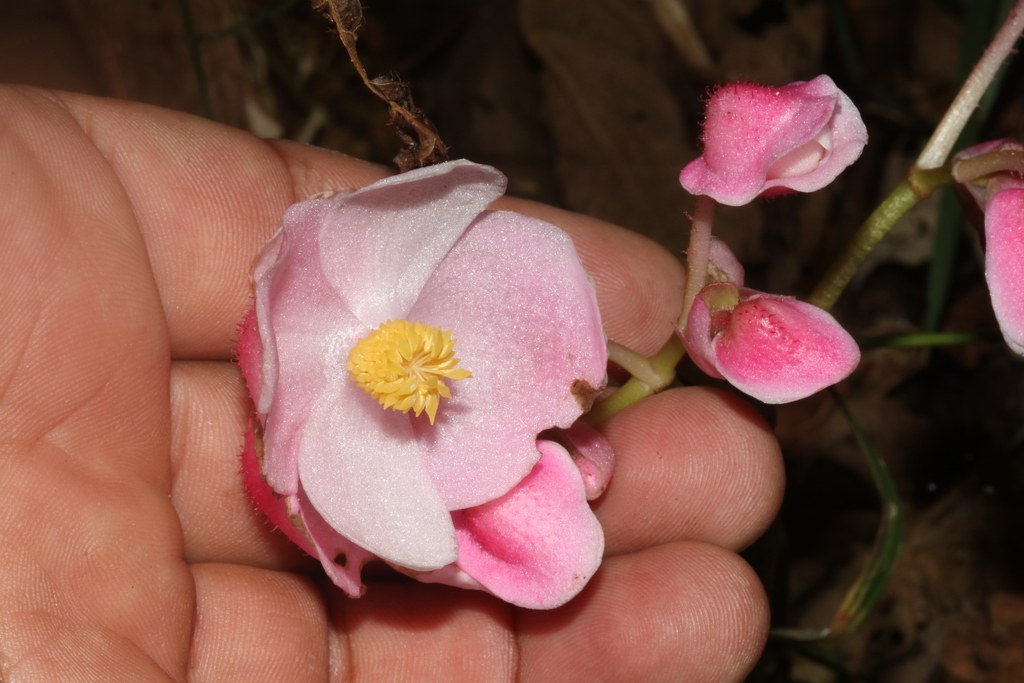
Rhizomatous Begonias have shallow, fibrous root systems that run horizontally just under the soil surface. They rot in dense, water-retentive mixes faster than almost any aroid. Build a substrate that drains in seconds but holds some moisture in the particles themselves: roughly 40% fine orchid bark, 30% perlite or pumice, 20% coco coir or peat, and 10% worm castings. Some growers add a handful of charcoal for the rhizome zone. The goal is air around the rhizome and consistent — not constant — moisture at the roots.
Use shallow, wide pots. A 4-inch azalea pot or a bulb pan suits a rhizomatous Begonia better than a standard nursery pot, because the rhizome wants to crawl sideways. Terracotta is fine if your humidity is high; in dry rooms it wicks moisture out too aggressively and the rhizome shrivels. Plastic or glazed ceramic, with generous drainage, is the safer default.
Rex Begonias sold at big-box stores almost always arrive in dense peat. Repot within a few weeks of purchase. Don't bury the rhizome — it sits on top of the substrate, with roots anchored below. Burying it is the single most common way new growers kill an otherwise healthy plant.
Bright indirect light, no direct sun past mid-morning. Rex leaves have thin cuticles and metallic pigmentation that scorches in an hour of harsh western exposure. An east window, a north window with supplemental LED, or a shelf two feet back from a south window all work. Under grow lights, aim for 80–150 µmol/m²/s at leaf height — enough to keep variegation crisp without bleaching the silvers.
Water when the top inch of substrate is dry to the touch, then water thoroughly until it runs out the bottom. Rhizomatous Begonias hate two things equally: sitting wet and going bone dry. The rhizome itself stores some water, so brief dryness is recoverable; sustained sogginess is not. Bottom-watering is fine and reduces the chance of water sitting in the leaf bullae.
Humidity is where most rex Begonias quietly fail. Below 50% they drop older leaves, edges crisp, and new growth comes in small. Aim for 60–75% with steady airflow from a small clip fan. A grow tent, a converted IKEA cabinet, or even a humidified plant shelf works. A bathroom with a window can carry B. masoniana and tougher rhizomatous types, but rex hybrids and species like U401 really do need an enclosure in most homes.
Misting the leaves. Water sitting in the bullae or on hairy leaf surfaces invites Botrytis and bacterial leaf spot. Raise ambient humidity instead — humidifier, enclosure, pebble trays grouped under a fan. If you must mist, mist the air around the plant, not the foliage.
Overpotting. A small rhizomatous Begonia in a 6-inch pot stays wet for days and the rhizome rots from below. Pot up one size at a time, and only when roots are visibly circling the current pot.
Ignoring airflow. High humidity without air movement is a fungal incubator. A quiet USB fan running 24/7 across the shelf does more for Begonia health than any fertilizer. Powdery mildew on rexes is almost always an airflow problem disguised as a humidity problem.
Fertilizing a stressed plant. Begonias respond well to dilute, regular feeding — roughly ¼-strength balanced fertilizer every second or third watering during active growth — but only when roots are healthy. Feeding a plant that's dropping leaves usually accelerates the decline. Fix the roots and the environment first; the leaves follow.
Chasing rarities too early. B. chlorosticta, B. dracopelta, and the wilder Vietnamese species are stunning and miserable to keep without a cabinet. Learn the genus on masoniana, soli-mutata, and an 'Escargot' first. The rare ones are the same plants with tighter tolerances — earn the intuition on the forgiving species and the expensive ones stop dying.
The Field Guide from Leaf People.