The first time an Anthurium warocqueanum throws a spathe in a home collection, the grower usually misreads it. A pale green hood unrolls from a node, a slim finger of cream emerges, and the assumption is flower. It is not, in the sense most gardeners mean. It is an advertisement, a landing pad, a thermogenic furnace, and a calendar all at once, wrapped around a column of dozens to hundreds of true flowers too small to notice individually.
To pollinate one on purpose — to make seed of a species you grew yourself, or a cross nobody has tried — you have to learn to read that machine. The vocabulary is small. The timing is brutal. And the work, once you understand what is happening on the spadix hour by hour, is some of the most satisfying in the hobby.
The parts, plainly
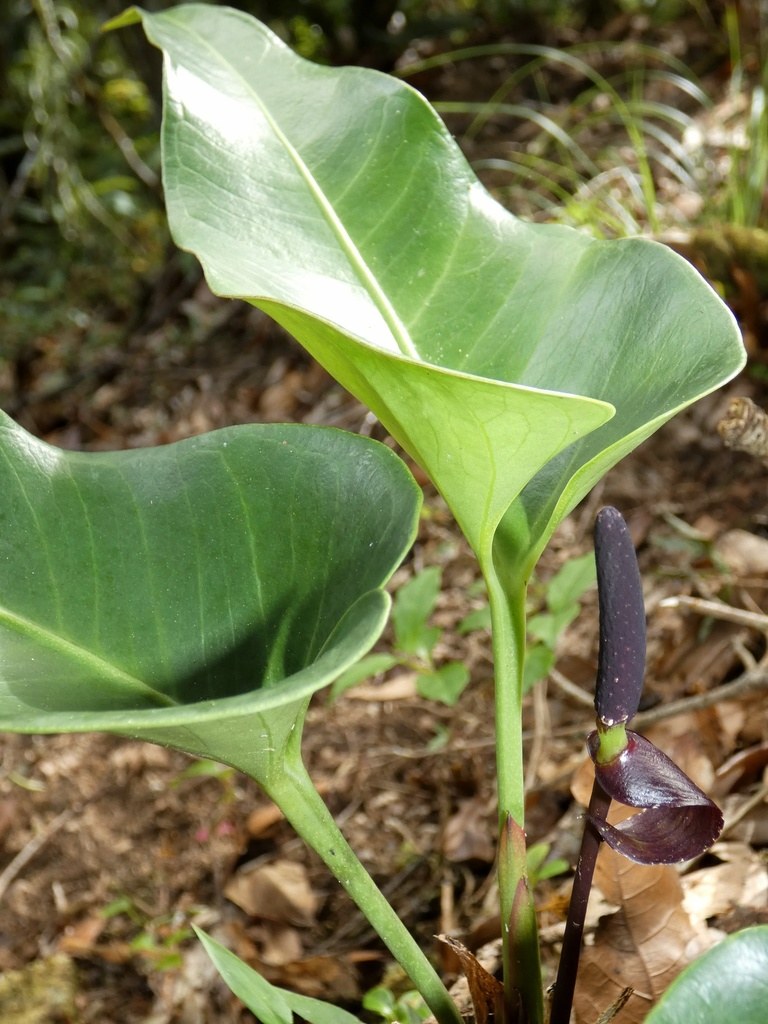
Three words do most of the work. The spadix is the central column, a fleshy axis covered in tiny flowers. The spathe is the modified leaf — sometimes hooded, sometimes flat, sometimes the color of raw liver — that wraps or backs the spadix. The peduncle is the stalk that holds the whole assembly out from the stem. In a Spathiphyllum on a hotel lobby table, the white sail is spathe and the pale finger is spadix; the same architecture scales up to the meter-long, carrion-stinking Amorphophallus titanum and down to a thumbnail-sized Anthurium bloom.
The flowers themselves sit on the spadix in a pattern that matters enormously for breeders. In most Philodendron, the spadix is divided into zones: sterile male flowers near the top, fertile male flowers below them, a narrow sterile band, and female flowers at the base, often hidden inside a chamber formed by the closed lower spathe. In Anthurium, the flowers are perfect — each one has both male and female parts — and they spiral up the spadix in tidy diamonds you can count. In Monstera, the spadix is a single fertile zone, no chambers, no theatrics.
Knowing which arrangement you are dealing with tells you what to expect. A Philodendron bloom is a sealed event with a narrow access window. An Anthurium is open, slow, and forgiving. A Monstera is in between, and a Hoya — which is not an aroid at all and uses pollinia like an orchid — is a different problem entirely. People conflate them on forums constantly.
An aroid inflorescence is a clock with two alarms, and missing either one means waiting another year.
Why the spadix gets hot
Thermogenesis is the part that surprises new growers. A Philodendron bipinnatifidum spadix can reach 46°C in a 4°C night, burning stored starch through a cyanide-resistant respiratory pathway. Symplocarpus foetidus, the eastern skunk cabbage, melts through snow. Amorphophallus heats and stinks on the same schedule. The point is not warmth for its own sake. The point is to volatilize scent compounds — esters, indoles, dimethyl disulfide, p-cresol — and broadcast them across a forest understory at the exact moment a specific beetle is awake.
For most cultivated aroids, the pollinator is a scarab in the genus Cyclocephala or Erioscelis. The beetle is drawn in by heat and smell during the female-receptive evening. The spathe constricts behind it, often trapping it overnight inside the floral chamber where female stigmas are wet and ready. The next evening, the male flowers above shed pollen onto the beetle's back, the spathe loosens, and the beetle flies out dusted, looking for the next hot, stinking column. The plant has effectively rented a bee for 24 hours.
None of this happens in a Brooklyn apartment. There are no Cyclocephala in your grow tent. Which is why, if you want seed, you become the beetle.
Reading the two-phase clock
Almost every aroid worth pollinating is protogynous: female-receptive first, male pollen-shedding second, with the phases deliberately offset to prevent self-pollination. The window between them is the entire game.
In Philodendron, female receptivity usually lasts a single evening, sometimes stretched across two. The lower spathe is loose, often slightly gaped, and a sugary droplet — stigmatic exudate — beads on the female flowers inside. Twelve to thirty-six hours later, the same spadix releases pollen from its fertile male zone as a fine cream or yellow dust, while the lower spathe has already begun to tighten and the stigmas have dried. By the time you see pollen, that bloom's own female phase is over. You cannot self a single Philodendron inflorescence in the usual way; you need a second bloom, on the same or different plant, that is one day behind.
Anthurium runs the same play slower and in public. The spadix changes color in a slow wave from base to tip as the female phase moves up — A. forgetii goes from green to a warmer brown-gold — and pollen sheds weeks later from the same wave, top to bottom or bottom to top depending on species. You have time to think. You also have time to forget, which is its own failure mode.
Collecting and storing pollen
When a spadix is shedding, the pollen is obvious: tap the column gently over a piece of dark paper or a watch glass and a fine drift comes off. For Philodendron, this happens at night, often after 9 p.m., and the pollen is viable for hours to a few days at room temperature. For Anthurium, shedding is gradual and pollen can be brushed off with a small sable artist's brush across several evenings.
To bank pollen — essential, because your female windows almost never line up with your male ones — collect into a small gelatin capsule or a 0.6 ml microcentrifuge tube with a pinch of silica gel beads sealed in a separate twist of tissue. Store in the refrigerator for short-term work, in the freezer at −20°C for months, or in a frost-free deep freeze for longer. Label everything: parent, date, time of shed, spadix number. A year from now, when the cross finally lines up, you will not remember which tube came off the Philodendron spiritus-sancti.
Pollen handled warm and humid clumps and dies. Pollen handled dry and cold lasts. Treat it like a reagent, not a souvenir.
Making the cross
The actual pollination is unceremonious. For an Anthurium, wait until the spadix is in clear female phase — sticky to the touch with stigmatic fluid, often a different color from its dormant state — and dab pollen across the entire receptive zone with a brush, a fingertip, or the cut end of another spadix if you have a fresh donor. Repeat the next evening if the female phase is still active. Tag the peduncle with the date and the pollen parent in pencil on a jeweler's tag.
Philodendron is harder because the female flowers are inside the closed lower spathe. Some growers cut a small vertical slit in the lower spathe with a clean scalpel during the female evening, brush pollen onto the visible stigmas, and let the spathe close back over the wound. Others wait for a slightly gaped natural opening and use a thin paintbrush. Either way, work fast, work clean, and do it in the evening when the plant expects company. Seal nothing with tape — the spathe needs to senesce naturally.
If the cross takes, you will know within two to four weeks: the spadix swells, the spathe browns and drops, and the column begins its slow transformation into an infructescence. Anthurium berries take six to twelve months to ripen, going from green to white to red, pink, purple, or near-black depending on species. Philodendron fruit ripens faster, often in months, and the spadix splits to reveal a paste of tiny seeds embedded in pulp. Both want to be sown fresh; aroid seed loses viability quickly and does not enjoy drying.
What it teaches you about the plant
Spending three months stalking a single Anthurium bloom changes how you look at the rest of the collection. You start noticing peduncle length as a species character — long and arching in A. clarinervium, short and tucked in A. crystallinum. You notice that your Philodendron gloriosum never blooms because it never gets the photoperiod cue it would get in Chocó. You start to understand why A. warocqueanum is so rarely successfully selfed in cultivation: the female phase is brief, the spadix is small, and most growers never see it happen because it happens at 11 p.m. on a Tuesday.
You also start to understand the market. Seed-grown Anthurium from a documented cross is a different object from a tissue-cultured clone or an unrooted cutting off Instagram. It carries a small piece of the breeder's attention — the night they stayed up, the tube of pollen in the door of the fridge, the pencil tag fluttering on a peduncle for a year. That is what an inflorescence is for, in the end. Not for us. But we can learn to use it, and the plants do not seem to mind.