A flask of Philodendron spiritus-sancti plantlets sat on a folding table at a Florida show last spring, each one labeled, each one priced at a fraction of what a single mature plant had commanded two years earlier. The seller wasn't apologetic about it. He was matter-of-fact, the way a fishmonger is matter-of-fact about the morning's catch. Around him, collectors did the math in their heads and then did it again.
The arithmetic of rarity has been quietly rewritten over the last five years, and tissue culture is the pen. Labs in Thailand, the Netherlands, Florida, and increasingly Vietnam and Indonesia have taken species that used to move hand-to-hand among a few hundred serious growers and turned them into SKUs. The question isn't whether this is happening. It's what it actually changes — and, more interestingly, what it leaves untouched.
What the lab actually does
Tissue culture, in the form most relevant to aroid collectors, means meristem or nodal explants placed on sterile agar with a hormone cocktail — typically a cytokinin like BAP to push lateral shoots, sometimes followed by an auxin stage to coax roots. The plantlets multiply on a roughly six-to-eight-week cycle. A single mother explant of a well-behaved philodendron can yield hundreds of clones within a year. Anthuriums are slower and fussier; some velvet species sulk in vitro for reasons no lab tech has fully explained.
The economic implication is straightforward. A species that took a decade to spread through cuttings — node by node, hobbyist to hobbyist — can be saturated in eighteen months once a lab commits to it. Philodendron pink princess was the first widely-felt example. Monstera Thai constellation was the second. Philodendron Florida beauty, gloriosum in commercial volume, and most recently the spiritus-sancti clones moving out of Asian labs have all followed the same curve.
What the lab does not do, despite the marketing copy, is produce a plant indistinguishable from a seed-grown or division-grown specimen. The tissue-cultured juvenile arrives genetically identical to its source but morphologically infantile, often with weak vasculature, occasional somaclonal variation, and a long road before adult leaves emerge. This matters more than collectors initially admit.
A flask doesn't erase rarity. It relocates it — from the species itself to the specific plant in front of you.
The first price collapse, and the floor underneath
When a lab-grown wave hits, the visible price drops fast. Thai constellation ran past two thousand dollars for a rooted cutting in 2020; by 2023 a tissue-cultured plug was under fifty in most US markets. The collapse is real, and it's permanent for that tier of the plant.
But there's a floor, and the floor is older than the lab. Mature, well-grown, established specimens of the same cultivar held their value remarkably well. A four-foot Thai constellation on a moss pole, with stable variegation across a dozen adult leaves, still commands what a small used car costs. The reason isn't scarcity in the old sense. It's time. Tissue culture compresses propagation; it does not compress growth.
This bifurcation — cheap plugs, expensive adults — is the single most important market shift of the decade, and most collectors I talk to still haven't fully internalized it. The premium migrated from access to maturity. The lab can give you the genetics tomorrow. It cannot give you five years of node spacing, root mass, and proven variegation stability.
Somaclonal variation, or why two flasks aren't the same
Tissue culture isn't xeroxing. The hormonal stress of repeated subculture, combined with the chaotic cellular environment of callus-mediated propagation, produces somaclonal variants at rates that surprise people outside the industry. Most variants are invisible or deleterious — slightly off leaf shape, weaker growth, reversion in variegated lines. A few are commercially interesting.
The pink princess market is the cautionary tale. Early tissue-cultured batches included a meaningful percentage of plants with poor pink expression or full reversion to green. Later, the inverse problem emerged: heavily pink, near-albino sports that looked spectacular and grew like invalids. Both came out of the same labs, often the same protocols. Buyers learned, expensively, that 'TC pink princess' described a process, not a phenotype.
The lesson generalizes. When you buy a lab plant of a variegated or pigmented cultivar, you are buying a probability distribution, not a guaranteed expression. This is why pictured-plant sales — the specific individual, photographed, tagged, shipped — carry a premium that flat-rate TC plug sales never will.
What labs can't culture, or won't
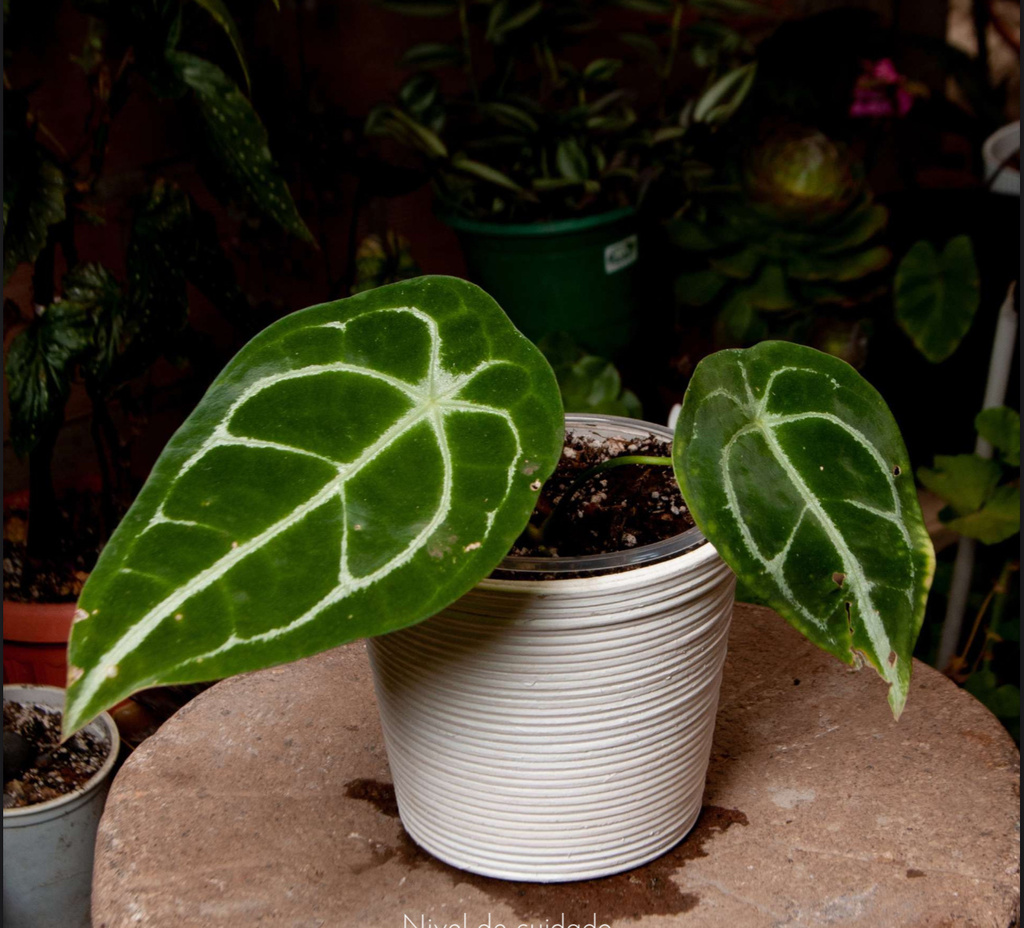
Plenty of species resist the flask. Anthurium dressleri has been cultured, but the velvet, the bullate texture, the deep blackish-green that collectors actually want — those are partly environmental and partly the result of slow growth on the right substrate. A lab plug of dressleri is a true dressleri genetically and a disappointment aesthetically until it grows out. Two years, minimum, in a careful collection.
Other species are economically unattractive to labs. Many Anthurium section Cardiolonchium species — luxurians, papillilaminum, the various warocqueanum forms — propagate slowly enough in vitro that the unit economics don't beat skilled seed production. Hoyas with slow multiplication rates get skipped. Begonias in the rex-cultorum world get cultured aggressively; the rhizomatous species and the truly rare Begonia from Sulawesi and Borneo collections largely do not.
The result is a market in which the rarity premium hasn't vanished. It has concentrated. Species that resist the lab, or that lab-grow poorly, retain or even increase their old-school scarcity value. Collectors who used to chase spiritus-sancti now chase Anthurium forgetii x papillilaminum crosses, Philodendron patriciae from verified provenance, and the slow velvet anthuriums that no Thai lab has bothered to scale.
Provenance becomes the new scarcity
When genetics are cheap, story becomes expensive. This is the quiet reorganization underneath the visible price charts. A Philodendron verrucosum from a known Ecuadorian collector, with documentation, carries a premium over an identical-looking TC plant — not because the genetics differ meaningfully, but because the buyer is paying for a chain of custody.
I think this is healthier than it sounds. The old rare-plant market ran on rumor and DM screenshots. The provenance market, when it's honest, rewards growers and collectors who actually visit habitats, document species, and propagate ethically from confirmed material. It also exposes the murkier corners — mislabeled imports, hybridized plants sold as species, lab plants relabeled as wild-collected for a markup.
The collectors I respect most have stopped asking 'is it rare?' and started asking 'where exactly did this plant come from, and who grew it out?' The lab made the first question almost meaningless. The second question is harder to answer, and worth more.
The collector's calculation
So what should you actually pay for a tissue-cultured plant? The honest answer is: whatever the plug is worth as a gamble plus the cost of the years you'll spend growing it out. For common cultivars — pink princess, Florida ghost, the standard Monstera variants — the gamble is small and the grow-out is forgiving. Buy the plug. Save the money.
For pigment-dependent or variegation-dependent cultivars, the calculation flips. A photographed adult with stable expression is worth several times the plug price, and the difference is not irrational. You are buying out of the probability distribution. You are buying a known phenotype.
For species where the lab hasn't reached scale — most velvet anthuriums, slow hoyas, the rarer Philodendron from sections Macrobelium and Schizophyllum — the old market still applies. Pay attention to the grower. Pay attention to the substrate the plant has been in. Pay attention to whether the seller can answer a basic question about origin without hedging.
What doesn't change
The flask doesn't change the plant once it's on your shelf. A tissue-cultured gloriosum grown for three years in chunky aroid mix under thirty thousand lux equivalent and seventy percent humidity becomes the same magnificent crawler that a division-grown gloriosum becomes under the same conditions. The lab gave you a head start on access. It didn't give you a shortcut on cultivation.
This is the part the market keeps forgetting and rediscovering. Rarity in plants has never been only about genetics. It's about the conditions under which a plant becomes itself — the years, the light, the patience, the willingness to repot at the right moment and leave it alone at the right moment. Tissue culture democratized the starting line. It did nothing to the race.
Which is, when you think about it, exactly what a serious collector should want. The plants are easier to obtain and harder to grow well than ever, in the sense that growing well is now the only thing that distinguishes a collection. The flask emptied the auction houses of their old mystique. It handed the prestige back to the growers. That seems, on balance, like a fair trade.