In late 2021, a friend in Quezon City sent me a phone video of a Anthurium papillilaminum seedling — four leaves, a thumb-sized root ball, the velvet still adolescent — and told me, half-laughing, that someone in Bangkok had wired him the equivalent of a used motorcycle for it. He wasn't bragging. He sounded a little spooked. The plant left his house the next morning in a courier bag lined with damp sphagnum, and within a week he'd sold three more at numbers that, two years earlier, would have bought a mature specimen with provenance and a tag.
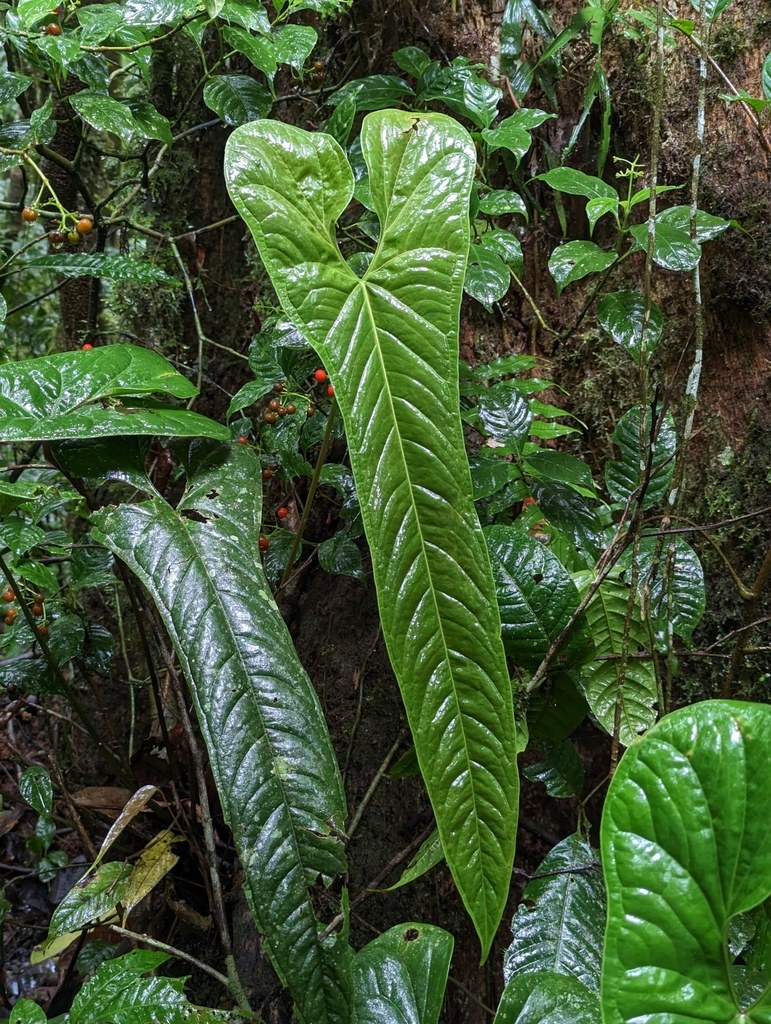
By the spring of 2024, that same grower was selling papillilaminum seedlings for roughly a fifth of the 2021 peak, and the Bangkok buyer had stopped answering messages. Nothing had changed about the plant. The leaves still pulled down to the substrate in that slow, heavy way velvet anthuriums do. The veins still silvered in raking light. What had changed was everyone around it.
How the fever started
The conditions were unusually specific. A pandemic put a lot of people indoors with disposable income and a sudden interest in keeping things alive. Instagram and TikTok pushed velvet-leaf anthuriums — papillilaminum, luxurians, forgetii, the various warocqueanum clones — into feeds where they read as luxury objects: dark, sculptural, photogenic under a ring light. At the same time, Southeast Asian growers who had been quietly producing high-quality seed-grown stock for a decade suddenly had global reach through Facebook groups and WhatsApp brokers.
Then came the hybrid wave. Papillilaminum × luxurians, luxurians × dressleri, the various forgetii crosses, every permutation of long-petioled velvet with bullate velvet — these were genuinely interesting plants, and a handful of breeders in Florida, Hawaii, and the Philippines were doing serious work. But the market couldn't tell a careful F2 selection from a flask of unproven seedlings, and prices stopped tracking quality. They tracked story.
By mid-2022, a sticker-sized A. dressleri seedling with no provenance was changing hands for four figures. Mature, ringed-petiole warocqueanum — the kind that takes seven years to produce — was clearing five. Tissue-cultured plants of dubious identity were being sold as the parent species. The hobby's older collectors, the people who had been quietly trading cuttings since the nineties, mostly stopped posting.
The boom wasn't really about anthuriums. It was about a small, expert hobby being briefly mistaken for an asset class.
What the buyers were actually buying
A lot of the money in 2021 and 2022 wasn't going to plants. It was going to identification claims. The genus is famously promiscuous in cultivation; seedlings from open-pollinated mothers in Florida greenhouses can carry pollen from anything flowering down the bench. A seller saying "pure papillilaminum, Panama locality" was usually selling a story attached to a leaf, and the story was the premium.
The honest sellers knew this and said so. The dishonest ones learned to photograph leaves at angles that flattered the bullation and to crop out the petiole, which is often where a hybrid gives itself away — a papillilaminum petiole is D-shaped and sharply geniculate; a luxurians cross softens that geometry in ways an experienced eye catches immediately. Buyers who couldn't read petioles were buying on faith, and faith scales badly.
There were also genuine masterpieces moving. Ree Gardens material out of Hawaii, certain Ecuagenera clones, NSE Tropicals stock with documented parentage — these held value because the provenance was real and the growers were known quantities. The problem was that the broader market priced unknown seedlings as if they were Ree clones, and that gap was where the correction was always going to happen.
The break
It didn't crash in a day. The first sign, in late 2023, was that auction posts on the bigger Facebook groups started ending without bids. Then the resale market for mid-tier hybrids — the papillilaminum × luxurians that had been a reliable thousand-dollar plant — softened to half that, then a third. Sellers who had been flipping imports week to week found themselves sitting on inventory they'd paid 2022 prices for, watching 2024 buyers shrug.
Southeast Asian export volume kept climbing even as Western demand cooled, which compressed prices further. A Thai nursery that had been shipping twenty plants a month to US buyers in 2022 was shipping eighty in 2024, at lower per-plant margins, and the math stopped working for the middlemen who had taken on inventory risk. Several well-known reseller accounts went quiet. A few admitted, publicly and with some grace, that they'd overextended.
The plants themselves were fine. Better than fine, in many cases — three years of intense breeding pressure produced some genuinely beautiful new selections, and growers who'd reinvested in lights, humidity, and substrate had stock that was healthier than anything on the market in 2019.
Who actually got hurt
Not the established collectors. Most of the people I know with serious anthurium rooms bought their foundation plants before 2020, propagated steadily, and treated the boom as an opportunity to thin the collection at favorable prices. A friend in Portland funded a new grow room entirely by selling divisions of a single A. luxurians mother during the peak. She kept the mother.
The people who got hurt were the newer buyers who came in during 2021 and 2022 treating plants as appreciating assets. They bought at the top, often on credit, often from sellers whose identification was wishful. Some of them are still holding dressleri seedlings they paid four figures for that would clear maybe four hundred dollars today, if the ID even holds up under a mature leaf.
Small importers got squeezed worst. The model of buying ten plants from a Southeast Asian grower, holding them through quarantine, and flipping for a fifty percent markup depended on a market that absorbed inventory faster than it grew. When that reversed, the people with rent on a greenhouse and a thousand dollars of phytosanitary paperwork per shipment found themselves losing money on every box.
What the correction revealed
The boom obscured a lot of slow, useful work. There are growers in Ecuador and Colombia doing careful in-situ documentation of Anthurium section Cardiolonchium species — the velvets — and the price spike briefly made that work look like prospecting. It isn't. It's botany, and it's the reason anyone can grow these plants at all without stripping wild populations.
The correction also exposed how thin the identification infrastructure is. There is no real registry for Anthurium hybrids the way there is for orchids. Cultivar names propagate through Instagram captions. "Dark Phoenix," "Michelle," various numbered crosses — these names mean something to the breeder who coined them and progressively less to every subsequent buyer. A correction in prices is healthy. A correction in naming discipline would be more useful, and it hasn't really happened.
One quiet positive: tissue culture, which the hobby treated as a dirty word during the boom because it threatened scarcity, is now being discussed more honestly. A well-flasked warocqueanum from a verified mother is a genuinely good plant, and at sustainable prices it puts species in the hands of people who will actually grow them well.
What's next
Prices on foundation species — warocqueanum, papillilaminum, luxurians, forgetii, regale, dressleri — appear to have settled at roughly two to three times their 2019 levels, which is probably about right given how much more is known about growing them and how many more serious hobbyists exist. The froth has come off the unproven hybrids and the speculative seedlings. That's the market doing its job.
The next interesting movement will probably be in the less-photographed sections of the genus. Anthurium section Pachyneurium — the bird's-nest types — has some extraordinary species that the velvet wave entirely skipped. So does section Polyneurium. Collectors who got their education during the boom are starting to look past the obvious bullate velvets toward plants that don't photograph as well but reward long-term cultivation.
And the velvets themselves will keep doing what they've always done: grow slowly, throw a new leaf every few months, occasionally produce a spadix, and reward the small number of people who treat them as plants rather than positions. The market correction was, in the end, a return to that population. The people who were already there barely noticed.