The plant arrived in circulation the way most rare anthuriums do: quietly, through a narrow channel of tissue culture labs and specialist collectors, with a name that most buyers mispronounced and few stopped to consider. Anthurium kunayalense. The epithet points directly to Guna Yala, the semi-autonomous comarca on Panama's Caribbean coast, homeland of the Guna people, a strip of mainland jungle and some 365 coral islands pressed between the Darién and the sea. The species was collected and described from that territory. Its name is not decorative.
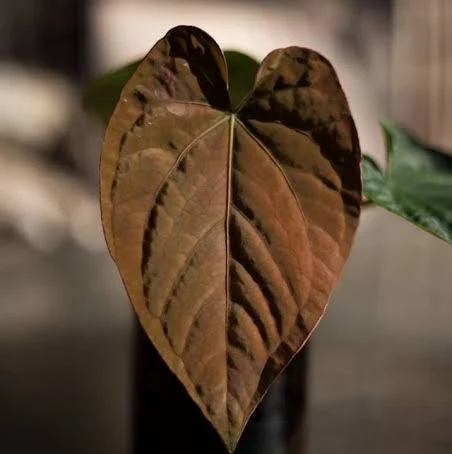
Collectors who keep kunayalense know it as a grower of real quality: velvet-textured leaves the color of deep forest shadow, silvery primary venation that catches light at a low angle, a manageable size that makes it viable in a humid cabinet or a well-run grow tent. It photographs well, which has not hurt its spread. But the name is worth sitting with before we get to substrate and VPD targets — because plant names, especially names tied to inhabited places and living cultures, carry freight that the hobby rarely pauses to unload.
What the Epithet Actually Says
Botanical nomenclature is a Latin-rooted system built in the eighteenth century by Europeans who were, almost without exception, moving through other people's lands and collecting other people's ecological knowledge with varying degrees of acknowledgment. The practice of naming a species after a place — a toponym — is one of the more straightforward gestures in that system. Anthurium kunayalense says: this plant comes from Kuna Yala, which is the older Spanish-influenced rendering of what the Guna now officially call Guna Yala, the name restored after a formal process of cultural reclamation that the Panamanian government recognized in 2011. The scientific epithet preserves the older orthography, as botanical names do — they are fixed at publication — but the place itself has moved forward.
That gap between the frozen Latin binomial and the living culture it gestures toward is not unique to this species. Dozens of anthurium epithets reference places: Anthurium panamense, Anthurium colombianum, Anthurium costaricense. National names sit lightly; no one feels the politics in panamense. But kunayalense is narrower and more specific. It names not a nation-state but an indigenous comarca, a jurisdiction with its own governing authority, its own language, its own borders negotiated against the Panamanian state. The precision of the name is the point. It is not vague tropicalism. It is an address.
The original collection and formal description would have been carried out by botanists working in or through Guna Yala with whatever permissions and relationships applied at the time. The scientific literature gives the species its coordinates; the name does the rest. Every time a collector writes kunayalense on a label, they are, however unconsciously, citing an indigenous territory as a source.
A plant name is a kind of address. Anthurium kunayalense points to a specific territory, a living people, and a political fact.
Guna Yala, Briefly
The comarca sits on the northeastern coast of Panama, running from the Darién border roughly northwest, with jurisdiction extending into the forested mountains of the Serranía de San Blas above the coastal plain. The Guna have one of the more formally recognized indigenous autonomy arrangements in Latin America, backed by treaties negotiated in the early twentieth century after a period of significant resistance. They govern internal affairs, restrict outside land ownership, and have maintained unusual continuity of language and material culture partly because the islands and the forest have been difficult to develop and easy to defend.
The mainland forest — the part relevant to a botanical collector — is lowland and premontane Caribbean rainforest, exactly the habitat that produces the velvet-leaved, low-light-adapted anthuriums that collectors prize. High humidity, filtered light under a dense canopy, consistent warmth, thin organic soil over rocky substrate: the conditions that make kunayalense want to grow the way it does in cultivation. Understanding the origin doesn't just add context; it tells you something functional about what the plant expects.
The Guna are also among the more prominent indigenous groups in debates about bioprospecting and traditional ecological knowledge. They have, in various contexts, pushed back against the extraction of biological material from their territory without benefit-sharing or consent. A collector in a grow tent in Minnesota is not a pharmaceutical company, and the chains of custody between a botanical collection event and a tissue culture lab and a hobbyist's shelf are long and murky. But the conversation exists, and it applies.
How the Plant Moves
Anthurium kunayalense reached the hobby through tissue culture, which is the dominant route for any anthurium that achieves significant distribution. TC labs — several operating in Thailand, a few in Eastern Europe, some in Latin America itself — can produce hundreds of uniform plantlets from a single explant, which drives prices down and spreads genetics widely. The original wild material, presumably a legally collected specimen, fed into that pipeline at some point. By the time a collector buys a plug, the provenance is several steps removed and rarely documented on the invoice.
This is not a problem unique to kunayalense or to anthuriums. It is the standard condition of the ornamental plant trade, which moves material across borders at a scale that makes individual tracking essentially impossible. CITES appendices govern the most endangered species; most anthuriums, including kunayalense, are covered by CITES Appendix II, meaning trade is regulated but permitted with documentation at the export level. Whether that documentation is consistently rigorous is a different question.
What this means practically for a collector is that buying a TC plug of kunayalense from a reputable importer is legal and, in most assessments, ecologically benign — TC production reduces pressure on wild populations. It does not resolve the deeper question of whether the Guna have any relationship to, or benefit from, the commercial life of a plant named for their homeland. That question has no easy answer and no current mechanism for resolution in the hobby.
The Velvet Anthurium Section, Briefly Explained
Anthurium kunayalense belongs to the informal grouping collectors call velvet anthuriums, a trait-based cluster rather than a strict taxonomic section. The relevant botanical section is Cardiolonchium, which encompasses many of the large-leaved, velvety, often pendulous-cataphylled species that collectors pursue most aggressively: crystallinum, magnificum, regale, warocqueanum, dressleri. Kunayalense sits in that company by habit and appearance, though it is less frequently discussed than the flagship species.
The velvet texture comes from papillate epidermal cells — tiny surface projections that scatter light and give the leaf that matte, almost tactile quality that reads so differently from the glossy surface of a standard houseplant. In kunayalense, the effect is pronounced: the adaxial surface has a deep, even nap, and the primary veins stand out in silver-gray against the dark green ground. The leaf shape is cordate, the sinus reasonably open, the petiole terete. Nothing flashy in the structure, but the surface quality is the draw.
Compared to crystallinum, kunayalense is somewhat less widely grown and commands a modest premium at the specialist level, partly because supply has historically been thinner. As TC production has expanded, that premium has compressed. The plants available now as plugs are consistent in quality, which was not always true of early hobby material.
Growing It: What the Origin Tells You
Caribbean lowland forest means: no dry season of consequence, consistent temperatures between roughly 20–28°C, high ambient humidity, and light that arrives filtered through multiple canopy layers. Anthurium kunayalense in cultivation wants exactly that. A grow tent or cabinet with a target humidity of 75–85%, temperatures that don't swing below 18°C at night, and bright indirect light — a position that receives good ambient light but no direct sun — will make this plant comfortable.
Substrate should be open and fast-draining. A mix of fine orchid bark, perlite, and a small amount of coco coir holds moisture without staying wet. Anthuriums in section Cardiolonchium are susceptible to root rot if kept in dense media; the roots want oxygen as much as water. Water when the top third of the medium has dried, and never let the pot sit in a saucer of standing water. Airflow matters — a small fan running continuously prevents the stagnant humidity that encourages bacterial and fungal issues.
Feed lightly during active growth with a balanced fertilizer at quarter to half the label rate. These are not heavy feeders in the way a monstera or a fast-growing philodendron is. Overfertilizing shows as tip burn on the velvet surface, which is cosmetically permanent on that leaf. Patience is the main technique: kunayalense pushes new leaves slowly, and each one is worth waiting for.
What It Means to Name a Plant for a Place
The ethicist and historian of science Projit Mukharji has written about how natural history names function as a kind of slow-motion territorial claim — the act of naming something in Latin, in a European system, for a European audience, enacts a particular kind of authority over what was named. That argument applies most sharply to colonial-era collections, but the underlying dynamic did not end when formal colonialism did. Botanical collection in indigenous territories continues; the naming conventions continue; the question of who benefits from the knowledge generated continues.
Naming a species after a place rather than a collector or patron is, in one reading, an act of geographic honesty. It says: this thing comes from here. It resists the impulse to commemorate the collector at the expense of the source. In another reading, it is a form of soft extraction — the culture and the landscape become a label on a commodity that circulates in markets the culture has no access to and receives no return from. Both readings are true simultaneously, which is what makes the name worth sitting with.
None of this makes Anthurium kunayalense a plant with a moral charge that collectors should avoid. It makes it a plant with a story that collectors should know — and knowing it is part of what distinguishes a serious hobbyist from someone who just buys whatever photographs well. The Guna named their homeland. A botanist borrowed that name. Tissue culture labs replicated it ten thousand times. Now it lives in grow tents on several continents, and the least a grower can do is understand what it carries.
The Label on the Shelf
There is a small, unglamorous act that serious collectors perform: they label every plant, properly, with the full species name. Not 'velvet anthurium.' Not a hash of letters on a paint-pen stick. Anthurium kunayalense, written out. This habit is about record-keeping and plant ID, but it also does something else: it makes you say the name, repeatedly, until it becomes familiar enough that you might eventually look it up.
Looking it up leads to Panama. Panama leads to the Caribbean coast. The Caribbean coast leads to the Serranía de San Blas and the comarca below it and the people who have governed that territory through negotiation and resistance for a century. That chain of attention is not activism; it is just curiosity pursued far enough to reach something real. The hobby is full of collectors who know their plants at the level of care parameters and market value. Fewer know them at the level of the forest they came from, the culture that lived in that forest, and the complex transaction by which a wild plant becomes a labeled plug in a cart on a specialty website.
Anthurium kunayalense is a beautiful plant. The velvet surface, the silver veins, the slow deliberate growth that makes each new leaf feel earned — these are real qualities, and they are enough reason to grow it. But the name is also real, and it points somewhere specific, to a living people in a particular place, which is more than most plant labels manage. That is worth knowing before you write the tag.