Almost everyone owns, or has killed, a Monstera without ever meeting the genus. The plant on the windowsill is one performance in a long life the vine would rather be living up a tree, and the holes everyone loves are a late act, not an opening scene. Get to know the genus and the houseplant on your shelf starts to look like a stranger you thought you knew.
There are roughly fifty species of Monstera, all native to the American tropics, from southern Mexico down through Central America and into Brazil. They belong to the arum family (Araceae, known as the aroids) — the same group as the peace lily and the philodendron — and they climb. What sets them apart in the popular imagination is a single trick: leaves that grow holes.
What Makes a Monstera a Monstera
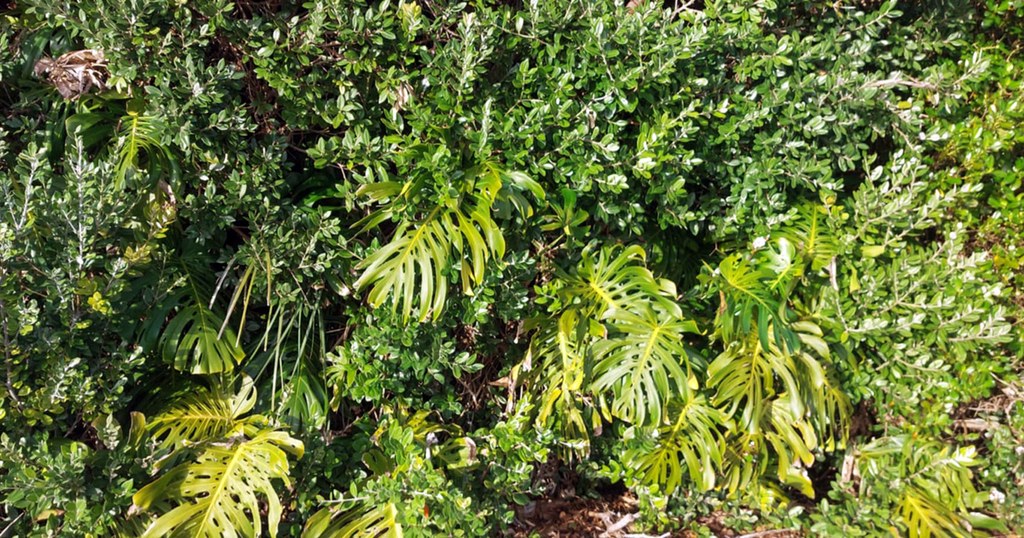
The defining feature is fenestration — the natural holes and splits that open up in the leaves as the plant matures (from the Latin *fenestra*, meaning 'window'). It comes in two flavors, and telling them apart is the first thing a serious grower learns to do at a glance. In some species the openings are splits that run from the interior all the way out to the leaf edge, cutting the blade into fingerlike lobes; the Swiss cheese plant, Monstera deliciosa, does exactly this. In others the openings are enclosed holes — true windows sitting in the middle of an otherwise solid leaf — as in adansonii and the famously perforated obliqua.
Nobody is entirely sure why a leaf would give up surface area, since more leaf usually means more food-making. The two leading ideas both come back to life in a rainforest. One holds that the gaps let light slip through to the plant's own lower leaves, so an upper leaf isn't shading out its neighbors below. The other holds that holes let wind and heavy rain pass through rather than battering or tearing a large leaf high in the canopy. Both may be partly true; the genus is not obliged to pick one.
The holes everyone loves are a late act, not an opening scene, and the vine would rather be climbing a tree.
One Plant, Two Lives
The strangest thing about Monsteras is how completely they change as they grow, and this trips up nearly every new owner. Many species begin life as small, entire leaves — 'entire' just means solid, with no holes or splits at all. Some start even more humbly, as a shingling juvenile: leaves pressed flat against a tree trunk, overlapping like roof shingles or wallpaper, the plant hugging the bark as it feels its way upward toward light.
Then it climbs, and it transforms. The leaves swell, the holes arrive, and the mature plant can look like an entirely different species from its younger self. This is why dubia startles people: as a juvenile it is a flat, silver-mottled shingler that looks nothing like a Monstera, then it grows up into a large, fenestrated adult. The take-home for a grower is simple — the plant you buy is often a teenager, and what it becomes depends on what you give it to climb.
The Famous Ones
Monstera deliciosa is the plant most people mean when they say 'Monstera' — the big split-leaf houseplant, often nicknamed the Swiss cheese plant. The species name is a promise it can actually keep: in the right conditions it fruits. The fruit is a long green cone (technically the *spadix*, the fleshy flower spike that aroids produce) that ripens scale by scale over many months and, when fully ripe, tastes like a fruit-salad mix of banana and pineapple. Underripe, it is best left alone — the unripe flesh is loaded with calcium oxalate, needle-like crystals that leave a fierce burning sting in the mouth.
The other household name is adansonii, the true Swiss-cheese vine — a smaller, faster climber whose leaves fill with enclosed oval holes rather than edge splits. It is one of the friendliest Monsteras to grow and, partly for that reason, one of the most misidentified, as the next section explains.
The Unicorn and the Trap
Monstera obliqua is the genus's holy grail and its most notorious source of disappointment. In its most sought-after form it is more hole than leaf — a paper-thin blade so riddled with windows that barely a lattice of green remains. It is genuinely rare in cultivation, slow to grow, and difficult to keep, and it spreads mainly by thin runners rather than by beefy stems.
Here is the trap, stated plainly: the overwhelming majority of plants sold as obliqua are actually adansonii. An affordable, robust, generously holed plant labeled 'obliqua' is almost certainly the common vine wearing a fancier name. Real obliqua is thin as tissue, temperamental, and rare enough that a casual purchase at a casual price is a near-certain sign it is something else. There is no shame in growing adansonii — it is a lovely plant — but it is worth knowing which one you actually have.
Variegation Mania
Variegation is the loss of green in patches of a leaf, showing up as white or cream or yellow, and in Monsteras it launched a genuine mania. Monstera albo — properly the variegated form of deliciosa — throws leaves marbled and sectored with pure white. It is unstable, meaning each new leaf is a gamble; the pattern is not reliably passed on, and this unpredictability is a large part of what drove the pandemic-era houseplant frenzy. Its calmer cousin is the Thai Constellation, a stable cultivar produced through tissue culture (plants grown from cells in a lab) whose creamy speckling shows up more evenly and dependably from leaf to leaf. Yellow-toned variegates exist too, sold under names like Monstera aurea.
The white comes with a bill. Those pale patches contain little or no chlorophyll, the green pigment a plant uses to make food from light, so a heavily white leaf is a leaf that can barely feed itself. A stem that reverts — reverts meaning it starts producing all-green leaves again — will often outgrow the variegated parts, while a stem that pushes an entirely white leaf has made something beautiful and doomed. Growing these well is partly a matter of managing that balance and cutting back to keep both colors in play.
Silvers, Shinglers, and the Care Baseline
Beyond the fenestration stars there is a quieter set worth knowing. siltepecana is prized for its juvenile leaves, which are silvery green with darker veining and only develop their holes as the plant climbs and matures. dubia, met earlier, is the shingler that hugs a surface flat before growing up. Both reward anyone who gives them something to climb and the patience to watch the leaves change.
As aroids go, Monsteras are among the more forgiving, and the care baseline is short. Give bright indirect light — bright enough to read by, without harsh midday sun on the leaves. Pot in a chunky, airy mix (regular potting soil cut with bark and perlite) so the roots get air and never sit soggy. Keep humidity moderate and let the top of the soil dry between waterings. The single most-skipped step is support: give the plant a moss pole or a wooden plank to climb. Left to trail or crawl along the floor, a Monstera keeps its leaves small and mostly holeless. Climbing, with maturity and good light, is what coaxes the fenestration everyone bought the plant for in the first place.
Where to Start
For a first Monstera, begin with an all-green deliciosa or adansonii. Both are inexpensive, quick to respond, and honest about their needs; grow either on a pole and you will watch the juvenile-to-adult transformation happen in your own living room, which is the best possible introduction to the genus.
One honest caution before you chase the pretty ones: the variegated Monsteras are needy and slow. They grow less vigorously than their green counterparts, sunburn and brown more readily, and demand more attention to stay balanced between white and green. They are worth it for growers who enjoy the fussing — but they are a poor first date with the genus, not a starter plant.