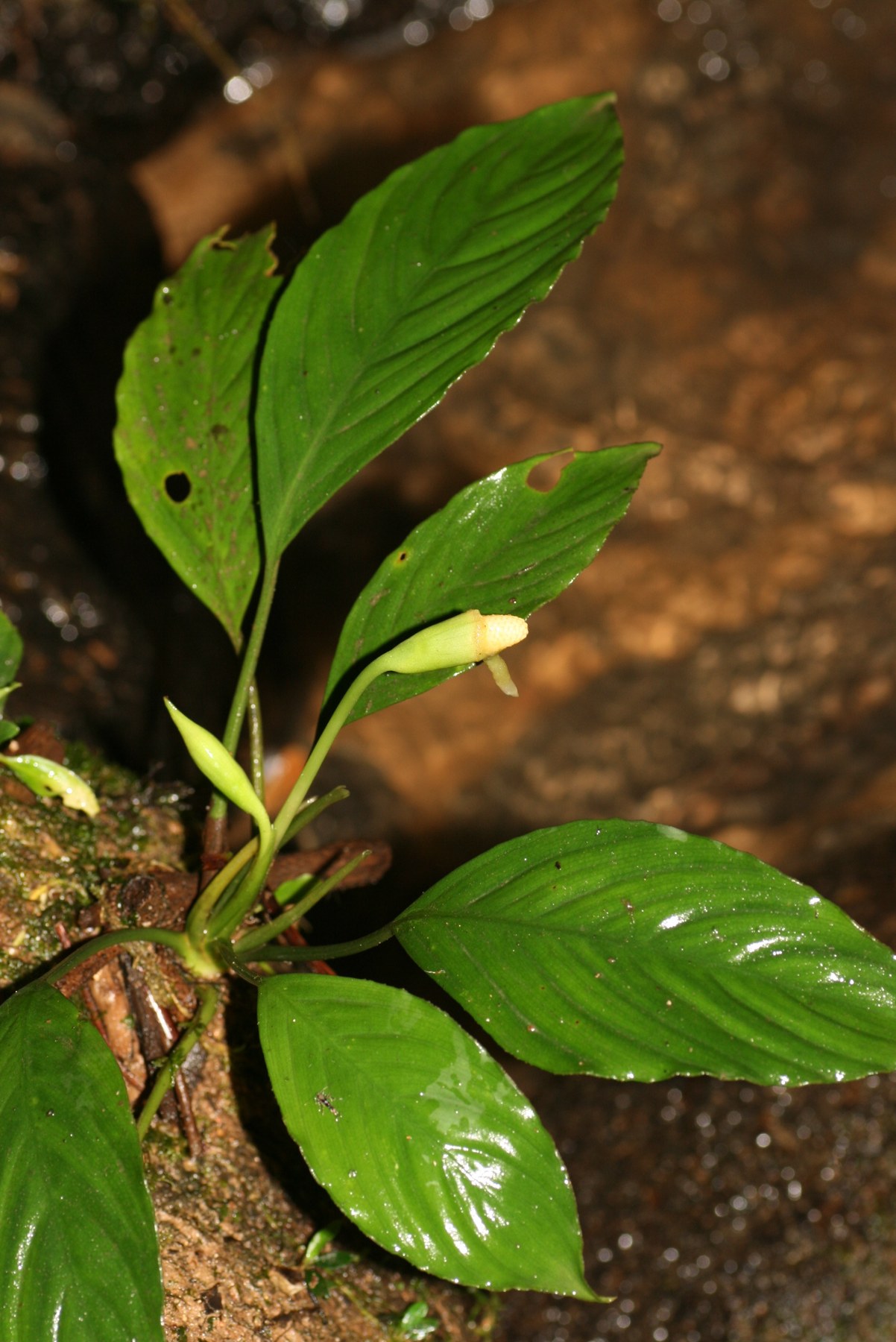
📷 Dr. Alexey Yakovlev / Wikimedia Commons (CC BY-SA 2.0)
Field Guide · Schismatoglottis
Small, patterned, terrestrial — the genus that quietly outshines its louder cousins once you know what to look for.
The gateway Schismatoglottis and still one of the prettiest. Lanceolate leaves carry a broad silver-grey midrib stripe against deep green, held on short petioles in a tidy clump. It tolerates lower light than most of the genus and forgives the occasional dry spell, which makes it a sane starting point. Mature clumps offset readily and look best in a wide, shallow pot.
Best starterA workhorse from New Guinea and the Moluccas, calyptrata throws plain green, slightly puckered leaves and spreads by short stolons into a dense colony. It is the species most often grown as a tropical landscape filler in Singapore and Hawaii, which tells you how tough it is. Indoors it asks for warmth and steady moisture and rewards you with constant new growth. Not flashy — useful.
Most forgivingOften sold simply as "Silver Schismatoglottis", this is the one collectors keep coming back to. The entire leaf surface is brushed pewter with a darker green margin and midrib, and the texture has a faint quilted depth in good light. It wants more humidity than wallichii — 70% and up keeps the silver clean — but it is not a terrarium prisoner. A slow grower that earns its space.
Collector's pickA Bornean species described relatively recently and still uncommon in cultivation. Narrow, elongated leaves with a soft matte finish and a pale central feather make it read almost like a miniature Anthurium warocqueanum from across the room. It needs the standard Bornean understory setup — warm, humid, airy mix, no stagnant water — and resents being moved around. Worth the patience.
RarityA Philippine species with strongly bullate, almost hammered leaf surfaces and a compact habit that stays under 30 cm. The texture is the point: side light raked across the leaf shows every quilted cell. It is fussier about substrate than wallichii and will rot fast in heavy mix, so keep it open and barely moist. Still semi-obscure on the market.
Texture freak
Schismatoglottis are terrestrial understory aroids from leaf-litter slopes and streamsides, mostly in Borneo. That habitat is the whole care brief: a thin, fast-draining layer of organic debris over constantly moving water and air. Translate that into a chunky, airy mix — roughly 40% fine orchid bark, 30% perlite or pumice, 20% coco husk chips, and 10% worm castings or composted bark fines works well. Sphagnum alone holds too much water against the rhizome and is a common cause of crown rot.
Use wide, shallow pots rather than deep ones. The rhizome runs horizontally just under the surface, and a tall pot leaves a column of wet, anaerobic media below the roots that nothing in this genus appreciates. Terracotta is fine if you can keep humidity up; otherwise plastic or glazed ceramic with several drainage holes will do. Repot when you see the rhizome trying to climb out of the pot, which for a happy plant is roughly every 18 months.
Bright indirect light, full stop. These are forest-floor plants that evolved under a broken canopy, so direct sun above maybe an hour of soft morning will bleach the silver patterning and scorch the margins. A north or east window, or 12–18 inches under a mid-output LED running 10–12 hours, is the sweet spot. If new leaves come in smaller and paler than the previous one, you are short on light, not water.
Water when the top inch of the mix is just barely damp — not bone dry, not wet. Schismatoglottis do not store water the way a Philodendron rhizome does, and they sulk quickly when fully desiccated, dropping older leaves to protect the growing point. Use room-temperature water, and if your tap is hard, switch to rainwater or RO; tip burn on the leaf margins is almost always a mineral issue, not a humidity one.
Humidity should sit between 65% and 85%. wallichii and calyptrata will cope down to 55% in a normal living room; the silver and bullate species genuinely need a cabinet or a well-humidified grow shelf to keep their leaf surfaces clean. Airflow matters as much as the number on the hygrometer — a small clip fan moving air across the leaves prevents the fungal spotting that closed, stagnant cabinets produce within weeks.
The first mistake is treating them like Philodendron. They are not climbers, they do not want a moss pole, and they will not tolerate the same wet-feet routine a hemiepiphyte shrugs off. If you are coming from velvet philos, dial the watering back by about a third and open the mix up.
The second is buying a silver or bullate species and parking it on an open shelf at 45% humidity. The plant will live, but every new leaf comes in smaller and duller than the last, and within a year you have a sad green stub of what you paid for. Match the species to the setup you actually have before you spend the money.
The third is fertilizer panic. Schismatoglottis are slow, light feeders. A quarter-strength balanced liquid fertilizer every third watering during active growth is plenty; full-strength weekly feeding burns the fine roots and shows up as crispy new-leaf tips. If a plant stalls, check light, root health, and water quality before reaching for more fertilizer — it is almost never the answer with this genus.
The Field Guide from Leaf People.