
📷 Marci Howdyshell / iNaturalist (CC BY 4.0)
Field Guide · Philodendron
Iridescent, copper-flushed, and tolerant enough to earn its place on any serious grower's shelf — micans is the heartleaf that actually repays attention.
The subject of this guide: a vining hederaceum with leaves covered in short trichomes that catch light and shift from bronze to deep olive as they mature. New growth emerges in copper-pink and stiffens into something closer to forest green on the upper surface, while the underside holds a warm burgundy flush. It climbs readily and produces leaves up to 10–12 cm wide when given a support and consistent feeding. Arguably the most textural of the common heartleafs, and far more interesting in a north window than it looks on paper.
Best overallA chimeric variegated form of the standard hederaceum with chartreuse-to-cream streaking through the centre of each leaf, highly variable from node to node. Growth rate is fast, and it tolerates lower humidity than most variegated plants — a genuine advantage in drier climates. The plain-green reversion shoots are easy to spot and should be cut early to keep the variegation pattern stable. A reliable choice if you want colour without the fragility of a more exotic variegated clone.
Best variegatedLess common than 'Brasil' but more refined — the variegation runs as a cooler, silvery-green median stripe rather than the warm yellow of its sibling. Leaves tend to sit slightly smaller, and the contrast sharpens as light intensity increases. Treat it identically to standard micans: airy mix, bright indirect light, and consistent moisture without saturation. Worth seeking out if the yellow of 'Brasil' reads as too bold against your other foliage.
Most refinedThe straight species, with smooth, glossy, uniformly mid-green heart-shaped leaves. It is the least demanding member of the complex and the most forgiving of irregular watering and lower light — genuinely useful in conditions where micans would sulk. Growth can be vigorous enough to fill a hanging basket in a single season if fed well. It lacks the textural drama of micans but earns its keep as a workhorse filler or a plant for a less-controlled environment.
Most forgivingA chartreuse mutation in which the entire leaf surface is a high-visibility yellow-green rather than any form of variegation — every cell runs the same hue. New growth is almost fluorescent and softens to a more muted lime with age. It is as easy as the standard green form and equally vigorous, making it useful for adding brightness to a predominantly dark-foliage collection. The colour intensifies under higher light and washes out in deep shade.
Most striking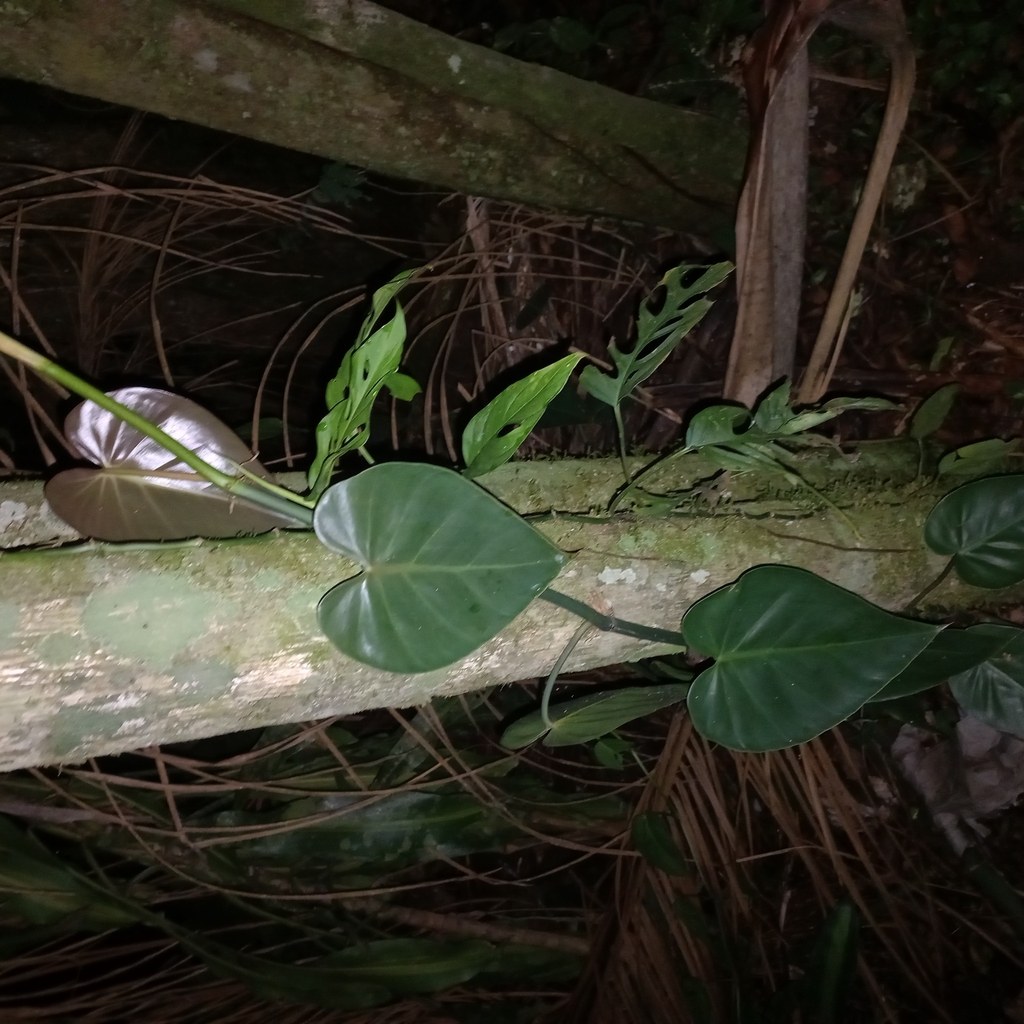
Philodendron hederaceum micans roots best in an open, well-aerated mix. A starting point: 40% high-quality peat or coco coir, 30% perlite, 20% orchid bark (fine grade), and 10% worm castings. The goal is a medium that holds some moisture but never becomes waterlogged — roots that sit in saturated substrate for more than a day or two will begin to collapse, and micans does not signal root rot early. By the time the leaves droop, damage is already significant.
Pot size matters more than most guides admit. Micans prefers to be slightly snug; oversized containers hold excess moisture around the root zone before roots have colonised the volume. Move up one pot size at a time — typically when roots are visible from the drainage holes and the medium dries out noticeably faster than it did a month prior. Terracotta is useful in humid climates or for growers who tend to overwater; plastic or glazed ceramic suits those who let media dry further between sessions.
Topdressing with a thin layer of worm castings every three to four months supplements liquid feeding and keeps the top of the medium from compacting and shedding water. Avoid any substrate amendment that retains water without draining freely — coconut chunks, horticultural charcoal, and pumice are all useful additions depending on your local water quality and ambient humidity.
Bright, indirect light produces the best leaf size and the most pronounced iridescence. An east-facing window with two to four hours of gentle morning sun is close to ideal. South or west windows work well if the plant is set back far enough to avoid direct afternoon rays — direct sun bleaches the velvet surface and causes irreversible pale patches within days. North windows slow growth noticeably; the plant survives but produces smaller leaves and less bronzing in new growth.
Supplemental grow lighting is worth the investment for northern-hemisphere winters. A full-spectrum LED panel positioned 25–35 cm above the canopy and run for 12–14 hours maintains near-summer growth rates and keeps the characteristic copper flush on new leaves. Without supplemental light, micans enters a slow period from November through February in most temperate climates — not dormancy, but noticeably reduced output.
Temperature tolerance is wider than many tropical aroids: comfortable between 16 °C and 30 °C, with best growth in the 20–27 °C range. Cold drafts from leaky windows or air-conditioning vents cause blackened leaf margins over several weeks. Keep the plant away from any point where temperatures drop suddenly rather than gradually.
Water when the top 3–4 cm of the medium are dry to the touch — not bone-dry all the way through, but no longer moist at the surface. In a well-draining mix and a correctly-sized pot, that typically means watering every five to nine days at room temperature during active growth, less in winter or in a cooler room. Bottom-watering works well for micans: set the pot in a tray of water for 15–20 minutes, allow full drainage, and empty the tray. It reduces the risk of fungal issues at the soil surface and ensures the lower root zone is evenly hydrated.
Humidity sits best at 55–70%. Below 50%, leaf margins dry and the trichomes lose their sheen over successive generations of growth. Above 70% with poor airflow, the dense velvet surface becomes a surface for fungal spotting — a small fan running on a low setting resolves this without dropping ambient humidity. Micans is more forgiving than a gloriosum or a verrucosum at lower humidity, but it does not thrive in the 40% range that many homes run in winter.
The single most common mistake: overwatering a newly propagated cutting before roots have formed. Stem cuttings placed in water or moist sphagnum will root in two to four weeks; placed into a heavy potting mix too early, the cut end rots before it can establish. A second common error is pruning too conservatively — micans responds to hard trimming with vigorous branching. Cutting a vine back to three or four nodes forces lateral growth and a fuller, bushier habit rather than a single long strand.
Yellow leaves in the middle of an otherwise healthy vine are almost always a watering issue — either too frequent or too irregular. Pale new leaves that fail to darken suggest low light or insufficient feeding; a half-strength balanced liquid fertiliser (roughly 10-10-10 or similar) applied every two to three weeks through the growing season addresses the latter. Micans is not a heavy feeder, but it will show deficiency if fertilised less than monthly during active growth.
The Field Guide from Leaf People.