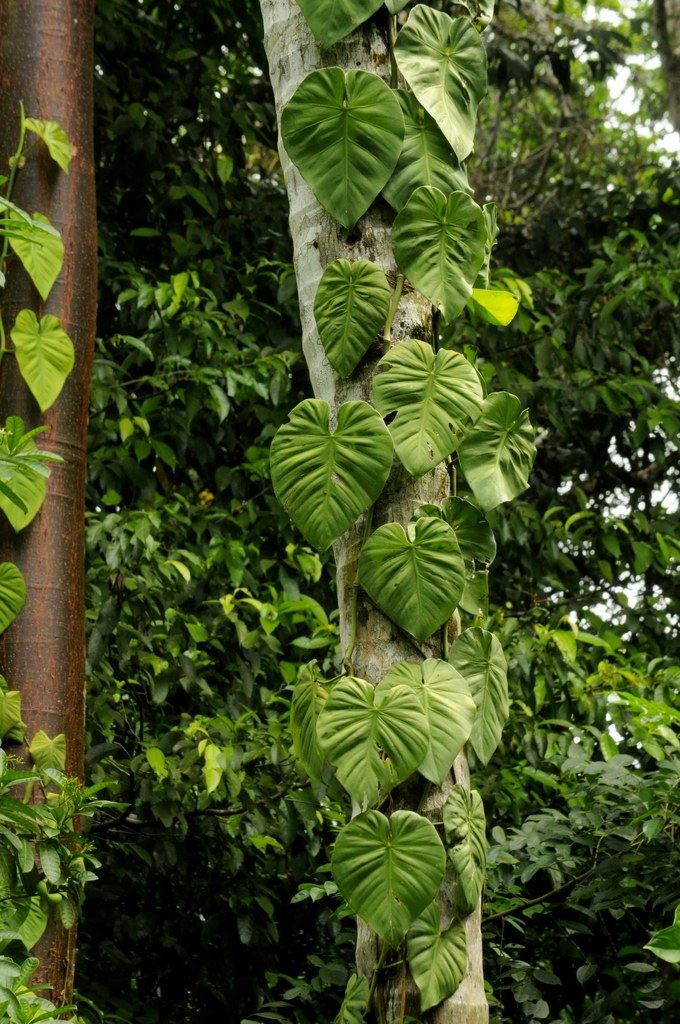
📷 cactusauria / iNaturalist (CC BY 4.0)
Field Guide · Philodendron
'Brasil' gets the headlines, but the heartleaf clan runs deeper than most collectors bother to explore.
The cultivar that converted a generation of beginners into collectors. Leaves are medium-green with a central splash of chartreuse to golden-yellow that varies leaf to leaf — no two are identical. Growth is fast under bright indirect light, and a single stem can reach three feet in a single season with consistent watering and a porous mix. It reverts under low light: give it a north window and the variegation narrows to a pale stripe; give it genuine brightness and the yellow section can consume half the blade.
Best all-aroundThe straight species — often labeled 'heartleaf philodendron' at every garden center — deserves more credit than its ubiquity suggests. Juvenile leaves are a rich chocolate-bronze on emergence, hardening to a deep, waxy green with age; the underside holds a faint reddish blush. It tolerates drier air and more irregular watering than most aroids, though it still performs best above 50% humidity. If you want a benchmark for what a healthy hederaceum looks like before adding the complication of variegation, grow one of these.
Most forgivingNew leaves emerge a saturated yellow-green that cools to a lime shade as they harden, giving a single vine the look of two or three distinct tones at once. The coloration is entirely chlorophyll-driven — no variegation, no instability — so it holds its character even in moderate light, though the neon intensity peaks under bright indirect conditions. It grows slightly slower than 'Brasil' and the petioles tend to run longer relative to blade size, giving it a more open, airy silhouette. Worth keeping away from direct sun, which scorches the pale leaf tissue faster than in darker cultivars.
Best color impactTechnically P. hederaceum var. hederaceum, Micans is distinguished by its velvety leaf surface — fine trichomes catch light and shift the leaf color from bronze-green in shadow to a warm iridescent copper in bright indirect light. The velvet texture places it in a different aesthetic register from the glossy-leaved cultivars; collectors who chase gloriosum or melanochrysum often come back to Micans as a fast, affordable proxy for that tactile quality. Petioles are slender and the growth habit is more pendant than upright, making it ideal for hanging baskets where the bronze undersides stay visible. It appreciates slightly higher humidity than the standard species form.
Best velvet feelA sport of 'Brasil', 'Rio' replaces the broad yellow center with a narrower silver-green stripe flanked by dark and mid-green zones — three distinct color bands on a single leaf. Introduced to the collector market around 2019, it remains pricier than 'Brasil' despite similar care requirements. Variegation is generally stable, though heavily variegated leaves with large silver sections photosynthesize less efficiently and should be balanced by keeping the plant in bright indirect light rather than compensating with fertilizer alone. A slower grower than its parent, but the tricolor patterning is more refined.
Best collector pick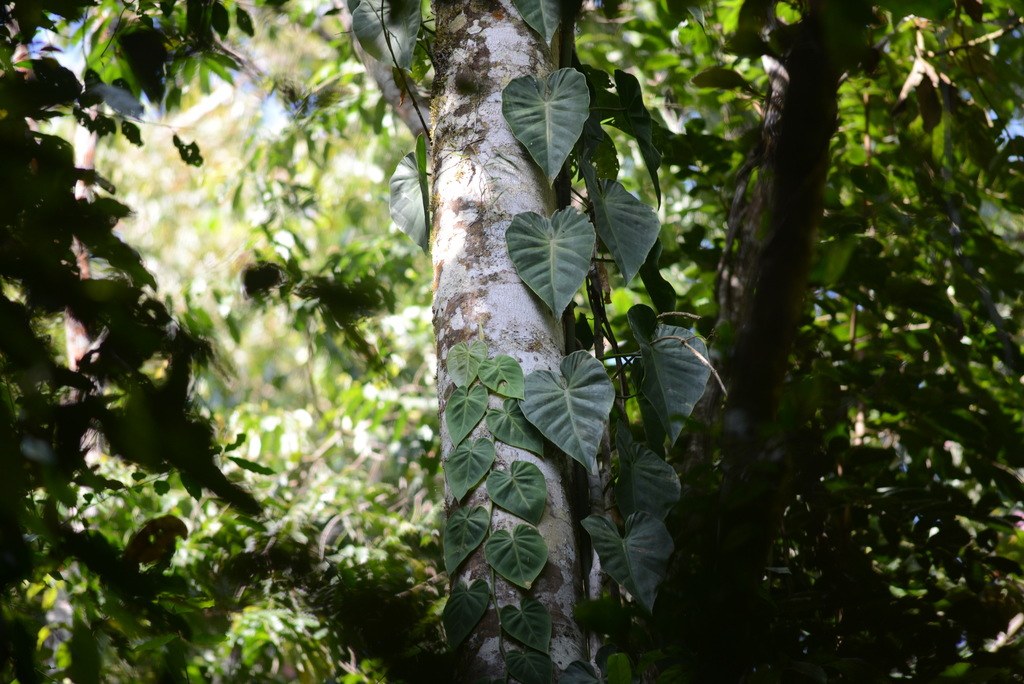
Philodendron hederaceum and its cultivars are terrestrial-to-hemiepiphytic climbers in their native Central and South American range, which means their roots need oxygen as much as moisture. A standard potting mix straight from the bag is too dense and too slow to dry — it holds water against the roots and creates the anaerobic conditions that invite rot. Amend heavily: a working ratio is roughly 40% potting mix, 30% perlite, and 30% orchid bark (fine grade). This gives the mix enough body to hold some moisture between waterings while draining freely through the bottom of the pot.
Terracotta pots help regulate moisture in high-humidity setups; plastic or glazed ceramic suits drier homes where the mix would otherwise dry too fast. Heartleaf variants are not deep rooters — they spread laterally and produce aerial roots along the stem that will grip a moss pole or coir totem if you offer one. Repot when roots circle the base or push through drainage holes, typically every twelve to eighteen months for fast-growing cultivars like 'Brasil' and 'Lemon Lime'. Do not jump more than one pot size; excess soil volume stays wet too long between waterings.
One consistent mistake: burying the stem base below the soil line to anchor a leggy plant. The buried section stays wet and is the first point of rot. Instead, trim and propagate a leggy stem — heartleaf cuttings root in water or moist perlite in one to three weeks at room temperature.
All hederaceum cultivars prefer bright indirect light — the kind you get within two to four feet of an east-facing window, or back from a south or west window filtered by a sheer curtain. The variegated forms ('Brasil', 'Rio') need more light than the all-green species to maintain vivid patterning; in dim conditions they push more chlorophyll into the blade and the variegated zones shrink or fade. 'Micans' is the most shade-tolerant of the group, though its iridescent copper color flattens in low light.
Water when the top two inches of mix are dry — roughly once a week in warm months, less in winter, depending on pot size, mix composition, and ambient humidity. The hederaceum group is more forgiving of a missed watering than many aroids, but chronic drought causes petiole collapse and leaf curl that takes weeks to correct. Chronic overwatering is more damaging: yellowing lower leaves and mushy petiole bases are the signs. When in doubt, check the mix at root depth before watering rather than on a schedule.
Humidity between 50% and 70% supports the fastest, largest leaf development. Below 50%, growth continues but leaves tend to stay smaller and edges may brown on 'Micans' and 'Rio' faster than on the plain species. A pebble tray provides negligible benefit; a small humidifier near the collection is more effective. Maintain airflow — stagnant humid air at the soil surface creates the conditions for fungus gnats and bacterial soft rot at the stem base.
Feed with a balanced liquid fertilizer (roughly 20-20-20 or similar NPK) at half the label dose every two to three weeks during active growth, spring through early fall. Resist the temptation to push growth with heavy nitrogen — it produces long internodes and soft, pale tissue that is more susceptible to pests. Variegated cultivars especially: excess fertilizer does not increase variegation, and the additional green growth can actually tip a 'Brasil' toward reversion if low light compounds the stress.
The most common mistake with this genus is underestimating how fast a single stem becomes a tangled mass without intervention. Pinching growing tips encourages branching and denser growth; propagating the cuttings gives you backup plants and material for trading. Node cuttings with one leaf root readily — place cut end in water or moist perlite, keep above 65°F, and roots appear within ten days to three weeks.
Spider mites are the primary pest threat, especially in low-humidity, warm interiors. Check the underside of leaves during each watering session. Early infestations respond well to a diluted neem oil spray or insecticidal soap applied weekly for three weeks. Fungus gnats indicate overwatering or overly organic substrate — let the mix dry further between waterings and consider a top dressing of sand or fine perlite to interrupt the gnat life cycle at the soil surface.
The Field Guide from Leaf People.