From a low dugout on the upper Rio Negro, the water looks almost solid — a deep mahogany brown that reflects the overhanging forest without a ripple of turbidity. There is no silt here. The river runs clear to depth, and the dark color comes entirely from dissolved organic acids, tannins leached out of decomposing leaves and the white-sand soils upstream. If you dip a glass, the water is transparent, faintly amber, with a pH that sometimes drops below 4.5 — more acidic than black coffee. Conductivity readings near zero. Nothing measurable in the way of calcium, phosphorus, or nitrogen. The river, by the numbers, is almost chemically empty.
And yet the forest growing out of it — rooted in pure quartz sand, flooded seasonally to canopy height, starved of nearly every nutrient a plant requires — is not empty at all. It is precise. Every adaptation is an answer to a specific deficit, and the aroids and epiphytes that colonize the flooded margins read like a catalog of botanical ingenuity. This is not the image most people carry of the Amazon: not the brown, churning, silt-laden rivers draining the Andes, not the famously fertile floodplain. It is something stranger, quieter, and considerably harder to understand.
Black Water, White Sand
The Rio Negro is the world's largest blackwater river — roughly 2,200 kilometers long, draining the northwest Amazon through Colombia, Venezuela, and Brazil before joining the main Amazon stem near Manaus in one of the most visually striking confluences on the planet: the dark, warm, slow-moving Negro running alongside the pale, cold, faster-moving Solimões for kilometers without mixing. The blackwater chemistry originates upstream, in the campinas and campinaranas — the white-sand savannas and scrub forests that blanket enormous stretches of the Guiana Shield and upper Rio Negro basin. Soil here is essentially beach sand: pure quartz, ancient, leached over millions of years until virtually every mineral ion has been washed out. What remains is silica and the organic acids produced by whatever vegetation manages to grow in it.
Those organic acids are the key. When leaf litter and root exudates decompose in waterlogged, low-oxygen, fungus-limited conditions, they release humic and fulvic acids rather than mineralizing cleanly. The acids stain the drainage water dark and — critically — bind to any mineral ions that do exist, making them unavailable to plants. The result is water that is simultaneously acidic and anoxic-adjacent in the sediments: a double barrier to conventional root uptake. Rivers draining this system carry the chemistry downstream. The Negro's pH averages around 4.0–4.5 through much of its length.
The contrast with várzea — the whitewater floodplain rivers like the Solimões and lower Madeira — could not be sharper. Whitewater rivers carry Andean sediment: young, mineral-rich silt deposited in new layers every flood season. Várzea soils are among the most fertile in South America. The plants that grow there are different species, following different rules, exploiting a completely different kind of abundance. Blackwater Amazonia is the opposite experiment, run by the same geological era.
The water is acidic enough to dissolve a calcium crystal, and the forests growing from it are among the most specialized on Earth.
The Igapó: Forest Under Water
The seasonally flooded forests of blackwater rivers have their own name: igapó. Unlike várzea, which receives a fresh mineral deposit with every flood, igapó forests flood with nutrient-poor, acidic water — sometimes for four to seven months of the year, to depths of ten meters or more in the lower Negro. The trees that survive this must tolerate prolonged root anoxia and do so without the compensation of post-flood fertilization. They are long-lived, slow-growing, and heavily sclerophyllous — thick, tough leaves that resist loss of precious nitrogen and phosphorus to herbivores and leaching alike.
Euterpe precatoria, Leopoldinia pulchra, and various Mauritia palms anchor the igapó canopy, their root systems adapted to weeks of submergence. Understory trees produce large, buoyant seeds adapted to water dispersal — ichthyochory is common, fish eating and distributing fruit during the flood pulse. The Amazon's remarkable fish diversity partially reflects this: the flooded forest feeds them, and they return the favor by moving seeds. The ecological loop is tight and invisible unless you are there in high water, watching a tambaqui — a large-bodied frugivorous fish — rise to take a fruit from a submerged Aldina latifolia branch.
For epiphytes and aroids, the flood pulse creates a vertical gradient of opportunity. Below the flood line, nothing but adapted aquatics and algae during high water. Above it, a compressed zone of intense competition for light, air roots, and mineral input from whatever dust and throughfall the canopy delivers. Philodendrons and anthuriums in igapó tend to grow higher, root more aggressively into bark, and run slender, efficient leaves rather than the massive velvety surfaces their upland cousins favor.
Campina and Campinarana: The Sand-Forest Paradox
Away from the river channels, on the interfluves, the white-sand landscape produces two related but distinct formations. Campina is open: a scrubby, low-statured savanna on pure quartz sand, exposed to full sun, prone to fire, sometimes indistinguishable at a glance from a Brazilian cerrado or a Caribbean coastal scrub. Campinarana — sometimes called caatinga amazônica, though the term invites confusion with the northeastern Brazilian dry forest — is the closed-canopy version: a short, dense forest growing on the same sand, its trees gnarled and root-dense, its canopy rarely exceeding fifteen meters, its interior dim and humid despite growing from substrate that drains almost instantly.
The paradox of campinarana is that it is simultaneously droughted and waterlogged. Rain percolates through quartz sand so fast that the surface dries within hours of a downpour, yet a hardpan of organic material — spodosol — sometimes forms at depth, creating a perched water table that drowns roots seasonally. Plants navigate between surficial drought and subsurface anoxia. The response is roots that hug the surface, forming dense mats in the thin organic layer that accumulates above the sand, and leaves engineered to minimize loss: small, thick, waxy, or otherwise armored.
Several Clusia species — the strangler relatives that also dominate Caribbean montane scrub — thrive in campinarana, their leathery leaves and CAM-capable metabolism suited to water-stress despite equatorial rainfall totals. More arresting are the carnivorous plants: Heliamphora and Utricularia species colonize the wet margins and seasonally flooded flats, supplementing their nitrogen from insects and microorganisms rather than soil. When soil offers nothing in the way of mineral nutrition, the plant becomes the soil's customer in the other direction.
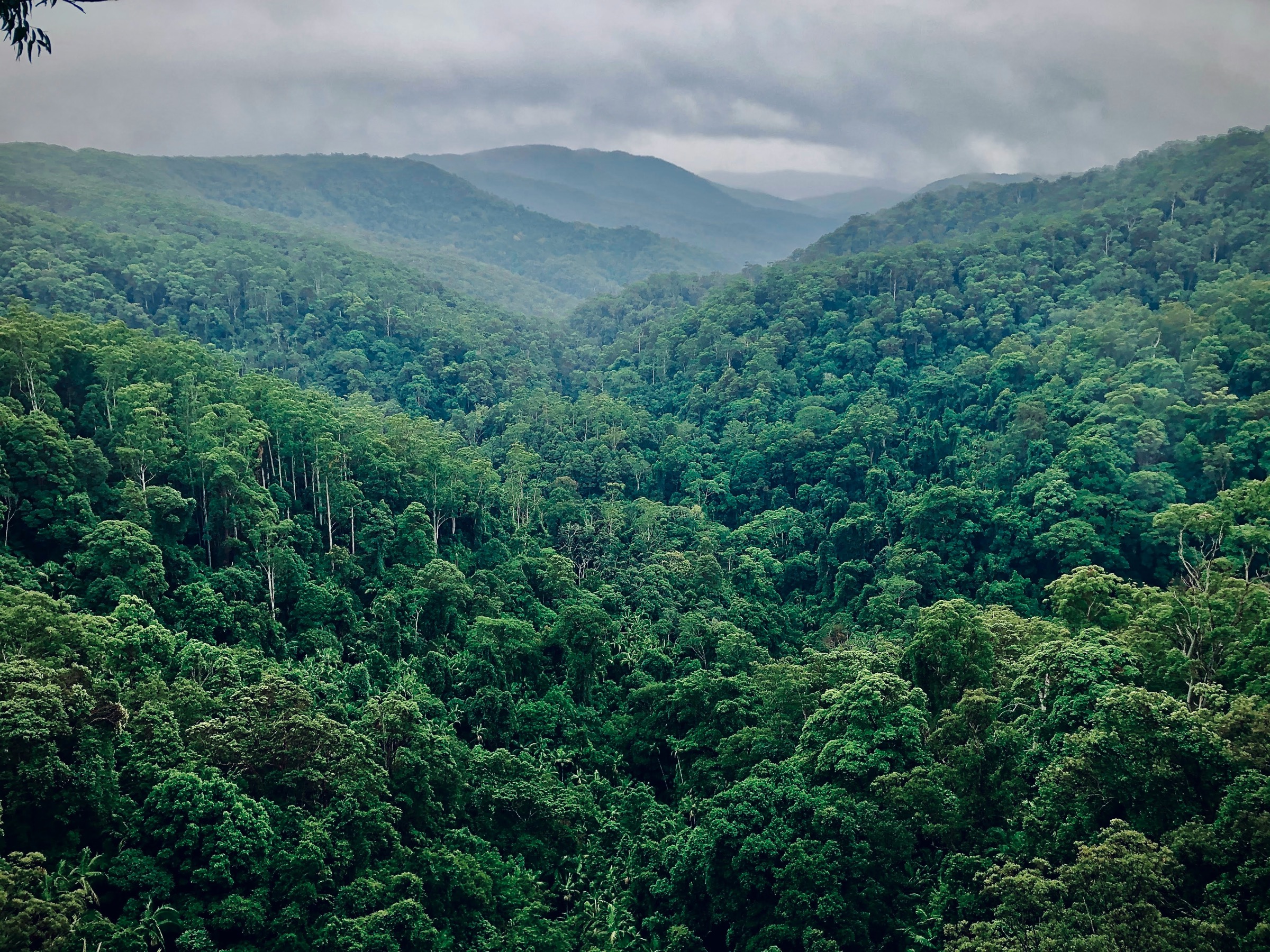
What the Aroids Do Here
Aroids in blackwater Amazonia are not the broad-leafed velvet giants of the Andean foothills. The nutrient logic is different. Where an upland Philodendron gloriosum can afford to build a massive, hairy, phosphorus-hungry leaf, its blackwater relatives trend toward efficiency: smaller laminae, thicker cuticles, greater investment in root architecture relative to leaf area. Philodendron sections Calostigma and Macrobelium include species endemic to campinarana and igapó margins, crawling over sandy soils or colonizing the gnarled trunks of white-sand forest trees.
Anthurium in igapó tends toward the section Urospadix, small-statured, dark-adapted, often growing in the angle of a submerged-in-flood-season branch crotch where a thin accumulation of bark and organic debris constitutes the entire rooting medium. These plants are not growing in poor conditions despite their adaptation — they are growing exactly where competition from larger, faster, nutrient-hungry species cannot reach them. The igapó margin is a refuge for slow specialists.
Hoyas appear less frequently in the flooded lowlands but are present in the campinarana on the Guiana Shield margins, particularly in Venezuela and southern Colombia, where the white-sand formations reach elevation. Some Monstera species traverse igapó edges, their aerial roots hanging into flood water during the high-water season — not drowning, simply waiting, metabolism reduced, the plant spending the wet months in a kind of arrested growth that resumes the moment the water drops.
Myrmecophily and Mineral Theft
In a forest where the soil offers almost nothing in the way of nitrogen or phosphorus, plants have found a second strategy beyond carnivory: partnership with ants. Myrmecophilous plants — those that house ant colonies, providing hollow stems, domatia, or food bodies in exchange for the nutrients the ants import and excrete — are disproportionately common in nutrient-poor tropical systems. The campinarana and igapó margins are no exception.
Tococa and Maieta species (Melastomataceae) grow with characteristic leaf-base pouches that house Azteca ant colonies. The ants defend the plant against herbivores and, critically, deposit nitrogen-rich debris inside the pouches — essentially fertilizing a plant that the soil cannot. Hirtella species do the same with different ant genera, and certain epiphytic ant-garden bromeliads and aroids in the upper igapó canopy participate in Camponotus-mediated nutrient cycling that functions as a closed-loop mineral economy entirely above the nutrient-poor ground.
The result is a forest that looks impoverished at the substrate level but is secretly running a sophisticated internal mineral economy — traded, hoarded, recycled, and almost never lost to leaching if the system remains intact. Clear a campinarana and the recovery time is measured in centuries, not decades. The thin organic mat above the sand blows or washes away. The ants disperse. The nutrient economy collapses. The sand returns to sand.
Why No One Pictures This Amazon
The popular image of Amazonia is the Solimões basin: brown water, roaring tributaries carrying glacial silt from Andean flanks, tall várzea forests flush with mineral wealth, diversity expressed in sheer biomass and canopy height. That image is not wrong, but it is less than half the story. The blackwater northwest — the upper Negro, the Vaupés, the Içana, the Uaupés, the Colombian and Venezuelan tributaries draining the Guiana Shield — covers an enormous area and holds a genuinely different ecological logic.
It is also, by tourist and scientific infrastructure alike, less visited. Manaus sits at the confluence, accessible, well-studied. The upper Negro basin in Colombia — around Mitú, along the Vaupés, in the department of Amazonas — is remote in the serious sense of the word: days by river, limited airstrips, very few permanent research stations. Much of the campinarana flora is still being formally described. New Philodendron and Anthurium species turn up in botanical surveys on a schedule that suggests the inventory is far from closed.
For a collector who has spent years understanding why substrate matters — why aroid roots need air, why mineral-rich soils rot fine roots, why slow growth is not a problem but a signal — the blackwater Amazon is not an abstraction. It is the explanation for why a campinarana Philodendron does better in a near-pure perlite mix than in a rich compost, why some anthuriums refuse to thrive in hard tap water, why patience with slow-growing epiphytes is not merely a virtue but a biological necessity. The forest is still writing the care guide.
Rivers That Teach Patience
There is a stretch of the upper Rio Negro, above São Gabriel da Cachoeira in Amazonas state and into the Colombian Vaupés, where the river widens over exposed granite and quartz outcrops and the water goes completely still in the dry season. The surface is so dark and so flat that it mirrors the surrounding forest with an accuracy that makes the boundary between water and reflection difficult to read. The forest behind is short, dense, and ancient-feeling — not ancient by European standards of old-growth, but ancient by the measure of what it has been through: millions of years of leaching, repeated Pleistocene climate shifts, floods that rearranged the sand flats every rainy season, and still the campinarana holds.
What grows there is not lush in any conventional sense. The trees are slow. The aroids are small. The soil beneath your feet, if you step off the granite onto the white sand, is warm and dry within centimeters of the surface and smells faintly of organic acids — tannins, the same compounds in the river. Everything is connected, chemically, from soil to leaf to river to fish to seed back to soil. It is one of the more complete ecological circuits in the tropics, and it runs almost entirely without mineral input from outside itself.
The draw of blackwater Amazonia, for a grower who thinks about roots and substrate and water chemistry, is that it answers questions you didn't know you were asking. Why do some of your slower aroids refuse to perform in amended potting mix but come alive in a bark-and-perlite chunk medium with distilled water? Because they evolved in a system where mineral richness was the enemy, where slow accretion of organic matter was the only capital available, and where patience — measured in months of flood, years of growth, decades of ant partnership — was the dominant survival strategy. The river is black and still, and it has been teaching the same lesson for a very long time.