The Lawai Valley on Kauai's south shore is one of those landscapes that makes the word 'lush' feel inadequate. A narrow river corridor opens into terraced gardens, the ridgelines pressing close on both sides, the air dense with moisture and the sound of water moving over stone. Standing in Allerton Garden on a clear morning, with Ficus macrophylla buttresses rising ten, twelve feet out of the ground like the flanges of some Gothic ruin, you understand at once why this place was chosen — and why what has been built here over the past six decades matters beyond any single visit.
The National Tropical Botanical Garden was chartered by the United States Congress in 1964, the only such institution in the country with that designation. That charter gave it both a mandate and a responsibility: to research, conserve, and document tropical plants, with particular urgency around species native to Hawaii and the Pacific. What grew from that mandate is a network of five distinct gardens across Kauai, Maui, and Florida — each with its own character, ecology, and collections — centered on the Lawai Valley, where Allerton and McBryde gardens occupy land that has been cultivated, in one form or another, for more than a century.
The People Who Made It
The land in Lawai Valley carries the fingerprints of more than one era of obsession. Queen Emma of Hawaii, consort of King Kamehameha IV, kept a summer retreat in the valley in the nineteenth century. Later, Robert Allerton, an American art patron and landscape designer, and his adopted son John Gregg Allerton transformed the lower valley into one of the most architecturally layered gardens in the Pacific — a place of formal axes and surprise, where neoclassical sculpture appears around a bend in the path and an entire room of Helioconia opens without warning onto a reflecting pool.
Robert Allerton donated the estate to the University of Illinois, and eventually the property came under the stewardship of what would become the National Tropical Botanical Garden. The Allertons' design sensibility — formal structure held in tension with rampant tropical growth — remains intact. Allerton Garden is not a museum recreation. It is a living thing, and the decades of botanical science conducted at McBryde, the research garden on the upper valley slopes, have only deepened the institution's understanding of what it holds.
John Gregg Allerton continued to develop the garden and maintained a close relationship with it well into his later years. That personal continuity matters when you walk through. The garden does not feel assembled — it feels tended, cared for by people who knew individual plants, who made decisions about what to place where and why. That quality of intentionality is rare even among great botanical institutions.
Rarity in a collector's hands is a fact of supply; rarity in a valley like Lawai is a fact of survival, and the distance between those two meanings is everything.
The Fig That Stopped Production
Any account of Allerton Garden that does not begin or end with the Moreton Bay figs is incomplete. Ficus macrophylla, native to eastern Australia, produces the most dramatic buttress root systems of any fig commonly cultivated in tropical and subtropical landscapes. In Allerton's Diana Fountain area, the specimens have been growing long enough that their buttresses have become architectural, fusing with the ground in enormous planar fins, creating chambers of shadow at their bases.
These figs appeared in Steven Spielberg's Jurassic Park — the scene of the hatching dinosaur eggs filmed directly among the roots. It is the kind of cinematic cameo that draws visitors who might otherwise never encounter a serious botanical collection, and there is nothing wrong with that. The figs deserve the attention entirely on their own terms: the scale, the textures, the way they reorder the sense of what a plant can be. For anyone who grows a modest Ficus indoors and watches it reluctantly drop a leaf in winter, the Allerton specimens recalibrate the imagination.
What the figs represent botanically is the same thing collectors pursue in miniature: the expression of a species fully realized in its element. Buttress roots are structural adaptations to shallow, nutrient-poor tropical soils, the tree spreading its base because it cannot anchor deep. Understanding that makes the trees more interesting, not less.
McBryde and the Conservation Imperative
If Allerton is the designed landscape, McBryde is the working garden — less choreographed, more purposeful, and in some ways more important. Situated on the upper slopes and plateau above the valley, McBryde holds the bulk of NTBG's endangered species collections, including a significant representation of Hawaiian endemics that are functionally gone from the wild.
Hawaii has one of the most severe extinction crises of any island group on earth. Its endemic flora evolved in geographic isolation over millions of years, producing plants found nowhere else, adapted to ecological niches that no longer exist in their original form — niches dismantled by introduced ungulates, invasive plants, and land conversion. NTBG's seed bank and living collections at McBryde function as an active intervention in that process: plants are propagated, studied, and where possible reintroduced to restored habitat.
The work is painstaking and the metrics are sobering. Some species exist in the garden in numbers that dwarf their remaining wild populations. For a collector accustomed to thinking of rarity as a matter of import scarcity or tissue-culture availability, encountering a Hawaiian species that may number fewer than a dozen individual plants globally reframes the vocabulary entirely. The garden does not let you look away from that.
NTBG also operates a seed banking program as part of its conservation infrastructure. Seeds of rare Hawaiian and Pacific species are collected, processed, and stored under controlled conditions, providing a genetic reserve against catastrophic loss in the field. This is slow, careful science without glamour, but it is the kind of work that makes the difference between a species surviving and not surviving the next century.
Aroids in the Valley
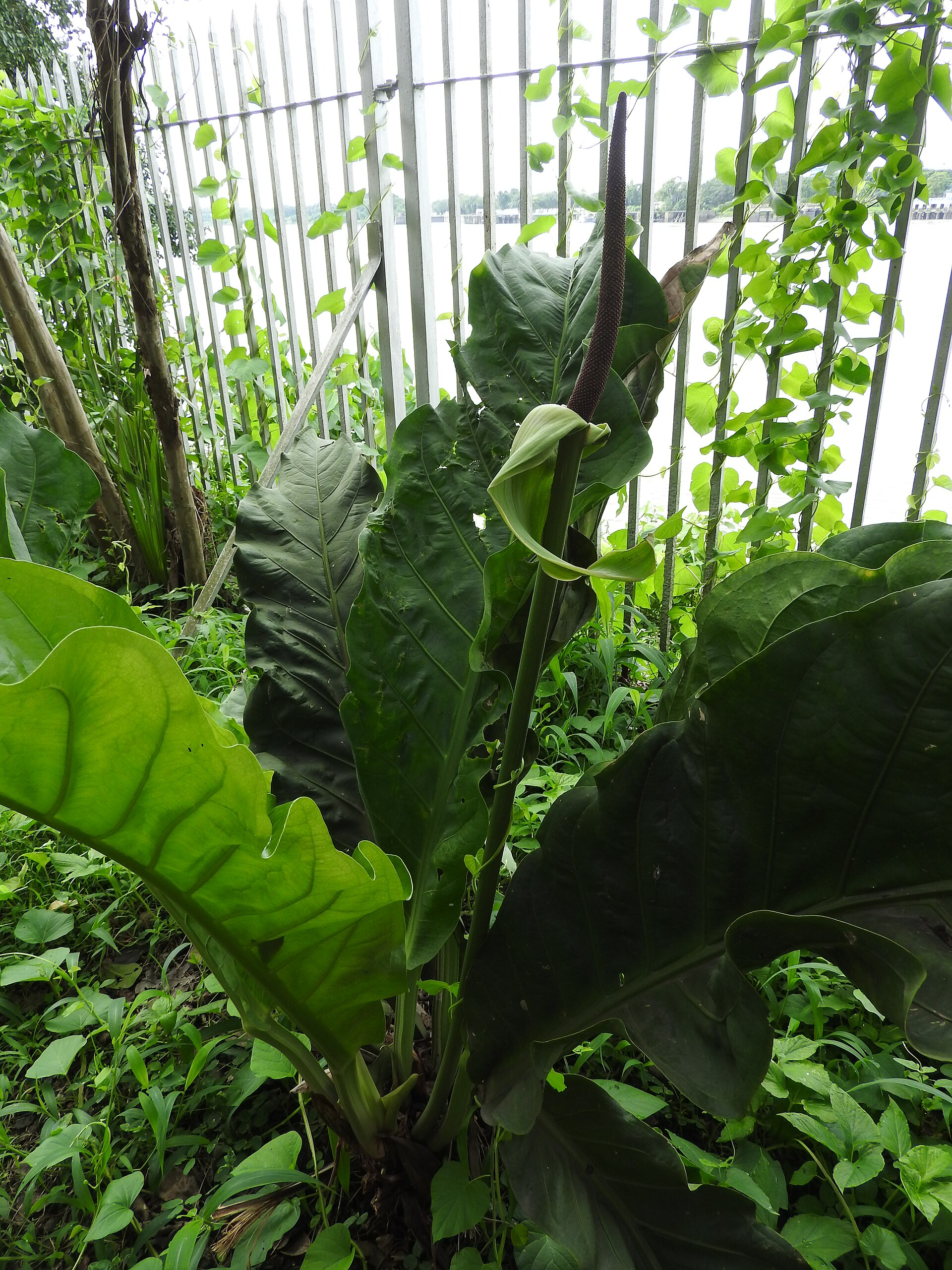
For collectors who grow rare aroids, Allerton and McBryde offer encounters that are difficult to replicate anywhere else on U.S. soil. The climate of the Lawai Valley — warm year-round, humid, with consistent rainfall and dappled light under a dense canopy — is as close to optimal aroid conditions as the continental United States can produce, and the collections reflect it.
Anthuriums grow here in scale that most collectors never see. Species in the Calomystrium and Cardiolonchium sections — the velvety, subsection-level groups that command serious prices in the collector market — are at home in conditions that mirror what they would experience on a wet Andean or Central American ridge. Watching a mature Anthurium of any significant species fully deploy under correct conditions adjusts your expectations permanently. The plants are not struggling; they are operating. The difference in leaf size, petiole thickness, and sinus depth between a plant at capacity and one merely surviving is not trivial.
Philodendrons appear throughout the collections, some as groundcover in the shaded interior paths, some clambering up tree ferns and host trunks in the fashion they would adopt on a Neotropical forest floor. The hemiepiphytic growth habit — germinating in the soil, climbing toward light, eventually losing the terrestrial root connection altogether — is visible here in specimens old enough to have completed that arc. It explains why the way you stake and position these plants at home matters so much.
Limahuli and the North Shore Counterpoint
NTBG's Limahuli Garden, on Kauai's north shore near Haena, occupies a different valley with a different character. Where the Lawai Valley is lush and enclosed, Limahuli opens dramatically toward the Napali cliffs, with ancient Hawaiian taro terraces (Colocasia esculenta in its cultivated, centuries-old context) stepping down the hillside. The garden has strong emphasis on native Hawaiian plants and traditional land management — an integration of ecology and cultural practice that puts the taro's place in Pacific history into perspective for any grower who has casually picked up an ornamental Colocasia.
Limahuli is smaller and less formal than Allerton, and it receives fewer visitors, which makes the time spent there quieter and more absorbing. The native plant collections include species in the Hawaiian lobelioid radiation — one of the most extraordinary examples of adaptive evolution in island flora — alongside endemic ferns, palms, and shrubs. For a collector whose primary interest is aroids and epiphytes, Limahuli is not the core destination, but it is not optional either.
The Ethics of Rarity
A visit to NTBG will do something inconvenient to the way you think about your collection. The garden holds plants that are rare because their habitat is gone, their pollinators are extinct, or their seed dispersers were hunted out before anyone thought to document them. The rare plants in your growing space are rare for a different set of reasons — most of them logistical, a matter of propagation capacity and import constraints rather than genuine peril.
That distinction is not an accusation. Collector demand for rare aroids has funded a lot of tissue culture work, driven growers to experiment with humidity and substrate, and created a knowledge base about tropical plant care that did not exist in any organized form thirty years ago. But it is worth being clear-eyed about the difference between a plant that is expensive because it is hard to propagate at scale and a plant that is endangered because it exists in a single forest fragment. NTBG makes that difference visible.
The garden also models a form of plant stewardship that any serious collector can learn from: attention to provenance, commitment to correct conditions, willingness to let the plant express itself fully rather than keeping it stable. The best growers already operate this way. Seeing that ethic embodied at institutional scale, in a valley that has been tended with that intention for decades, is clarifying.
If you grow rare tropical plants seriously, a visit to the National Tropical Botanical Garden will not make you feel that what you do at home is insignificant. It will make you feel that it connects to something larger — a global project of keeping tropical biodiversity present and knowable. That is a reasonable thing to feel.
What Not to Miss
Allerton Garden is accessed only by guided tour, which runs from the NTBG visitor center in Poipu. Book ahead; tours sell out, particularly in peak season. The tour covers the Allertons' designed garden rooms, the Diana Fountain area with the Ficus macrophylla specimens, the water gardens with their remarkable integration of built structure and planted material, and the Lawai Valley floor. Allow the full duration — rushing through accomplishes nothing.
McBryde Garden is self-guided and allows more time for close observation. If you grow aroids, bring your phone for photographs and take the time to read the labels carefully. The endangered-species collections are signed, and the context on those signs — wild population status, collection origin — is worth absorbing slowly. The palm collection at McBryde is extensive and includes species rarely encountered in cultivation outside specialist collections.
Limahuli on the north shore requires a separate trip and a separate ticket but rewards it. The drive along Kauai's north shore to reach it is itself instructive — the landscape shifts dramatically from the dry south to the wet, dramatically green north, the change happening fast enough that you can feel the climate gradient in real time. The taro terraces at Limahuli are among the oldest continuously cultivated agricultural structures in Hawaii, and standing among them while the Napali ridgeline rises overhead gives the visit a dimension that no purely horticultural experience can provide.