Step through the doors of the Palm House on a grey Copenhagen morning and the city disappears. The air thickens, warm and green-scented, and the light changes quality — filtered through glass panels set into a tall iron dome that has been collecting equatorial heat since 1874. Palms press toward the roof. Below them, in the lower registers of the glasshouse, the layered logic of a tropical forest reasserts itself: ferns in the understory, epiphytes clinging to bark, the broad paddles of tropical foliage overlapping in the half-shade. You are standing, technically, in the Østre Anlæg district of central Copenhagen. You feel rather less certain of that than you did a minute ago.
The Palm House anchors the glasshouse complex of the Botanical Garden of the University of Copenhagen — a garden that has occupied its current roughly ten-hectare site since the 1870s and is now administered as part of the Natural History Museum of Denmark. The garden is not a theme park or a contemporary eco-attraction. It is a working scientific collection with deep roots, and the Palm House is its centerpiece: a piece of Victorian engineering that set out to prove a provocative thesis — that the equator could be bottled, shipped north, and kept alive under cast iron and glass in one of Europe's colder capitals.
The Victorian Dream of Glass and Iron
To understand the Palm House, you have to understand what Victorian botanical glass meant to the people who built it. By the mid-nineteenth century, the great glasshouses of Europe — Kew's Palm House completed in 1848, the Crystal Palace of 1851 — had established a new kind of civic ambition: the tropical collection as public monument. These were not merely greenhouses. They were arguments. They argued that empire, science, and engineering together could compress geography, that a northern city could house the flora of Java or the Amazon and keep it breathing through a Danish winter. Copenhagen's Palm House, opened in 1874, belongs to that tradition consciously. Its tall dome of cast iron and glass, its slender structural ribs, its overall silhouette read as a deliberate echo of the great English glasshouses — a statement that Scandinavian botanical science belonged in the same conversation.
The engineering required to make this work was not trivial. Cast iron allowed structural spans that masonry could not achieve, admitting the volume of light that tropical plants demand while holding the heat. The dome form was partly aesthetic and partly thermodynamic: a tall interior allowed warm, humid air to stratify upward away from the plants below, moderating temperature swings. Every design decision was also a horticultural decision. The architects and the gardeners were solving the same problem from different angles: how do you keep something alive that has no business being alive here?
What resulted is a building that has outlasted the empire of ideas that produced it and remains, a century and a half later, completely persuasive. The Palm House is not a ruin or a museum piece. It is a functioning glasshouse, plants pressing against its panes, humidity fogging its ironwork, the same seasonal light cycling through the glass that has always cycled through it. The dream it embodies is still running.
Climbing a wrought-iron spiral into the palm crowns is not a metaphor. It is what the architect actually built, and it still works.
The Spiral Staircase: Architecture as Experience
The detail that separates the Copenhagen Palm House from most Victorian glasshouses is a single cast-iron spiral staircase that rises from the floor of the dome to a walkway suspended near the roof. This was not an afterthought or a maintenance access. It was designed to be used by visitors — to give ordinary people the experience of ascending into the canopy, of arriving at eye level with the upper fronds of palms that have been growing in this room for generations.
From the rooftop walkway, the perspective reverses entirely. You look down through the canopy rather than up at it. The geometry of palm fronds, which from below reads as a series of radiating silhouettes against bright glass, resolves from above into a dense, overlapping horizontal plane — the actual structure of the tropical forest ceiling that most of us only ever see in photographs taken from drones or light aircraft. The ironwork of the dome is visible up here as a kind of exoskeleton, ribs curving overhead, the whole apparatus suddenly legible as the machine it is: a climate engine built from Victorian materials.
For anyone who grows tropical plants at home — who has spent time trying to understand why a Philodendron gloriosum wants to sprawl horizontally, or why a Monstera develops fenestrations in response to the canopy above it — this perspective is not merely scenic. It is explanatory. Plants are doing what they evolved to do. The walkway puts you where the light is, and the logic of the plants below becomes obvious in a way it never quite is from the ground.
The Old Plants: Palms and Cycads with Institutional Memory
Some of the most significant specimens in the Botanical Garden are not the rarest or the showiest. They are the oldest. The collection includes palms and cycads that have been in continuous cultivation for well over a century, some of them among the longest-lived potted plants known — organisms that predate the institutions now caring for them, that have been watered and repotted and observed across generations of gardeners.
Cycads in particular reward this kind of attention. Members of genera like Cycas and Encephalartos are not fast. A specimen that looks modestly sized may represent decades of careful cultivation. A large, old cycad in a botanical collection is a record — of unbroken horticultural stewardship, of the patience that serious plant culture actually requires. The Copenhagen collection holds specimens whose age connects them to the earliest decades of the garden on its present site, and simply standing beside them rearranges your sense of scale.
For collectors who keep cycads or who grow slow aroids — a Philodendron species that takes years to push a mature leaf, an Anthurium warocqueanum working toward its full pendant length — these old plants make an argument that is both humbling and motivating. The timeline of serious cultivation is longer than a social-media feed suggests. The garden's oldest plants have been alive through both world wars, through the entire history of modern plant science, through the introduction of nearly every species currently traded in the rare-plant hobby.
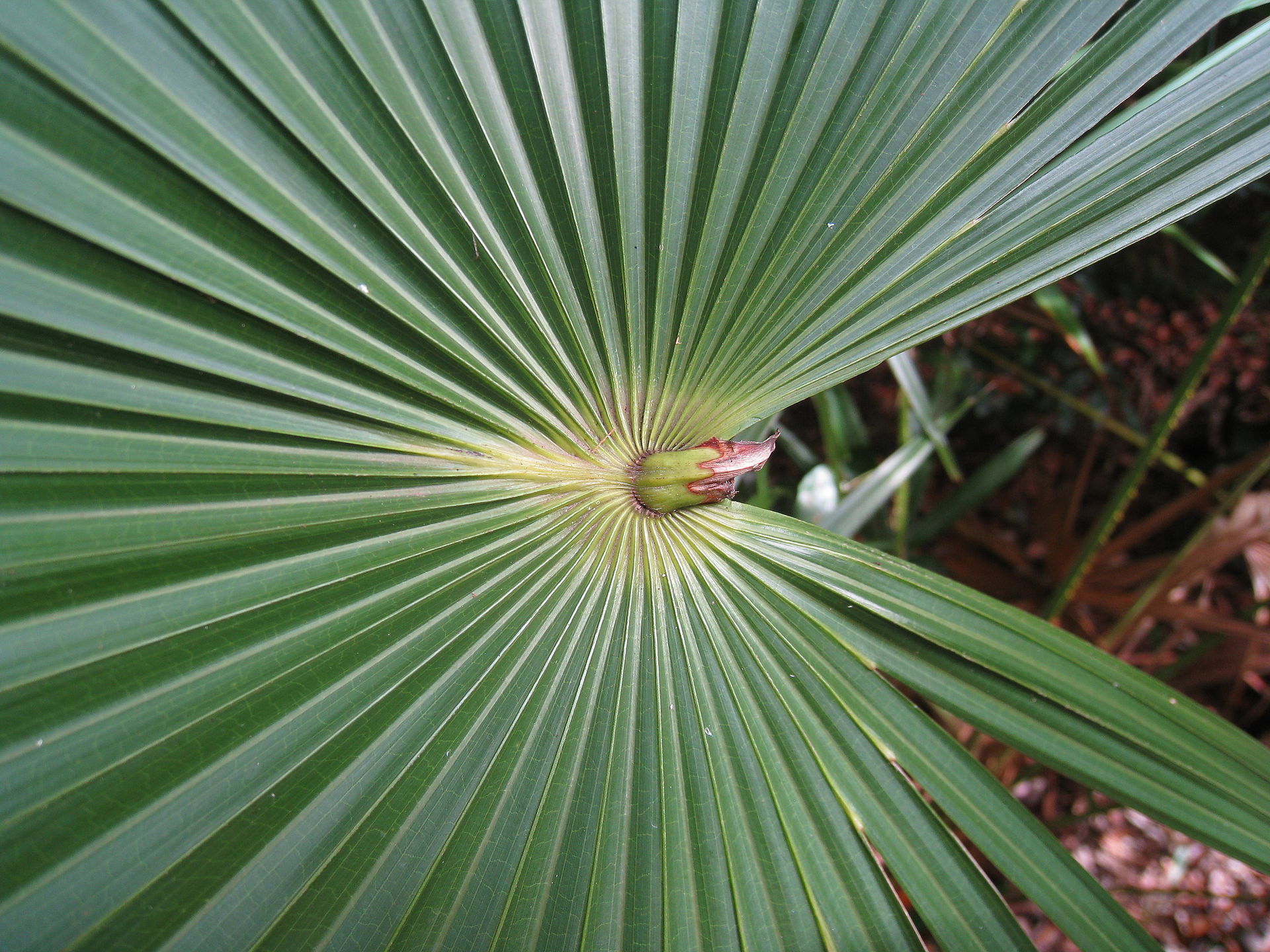
What the Collectors' Eye Will Find
The Palm House and the connected glasshouses of the Botanical Garden are not primarily aroid collections, and a visitor expecting wall-to-wall velvet philodendrons will need to recalibrate. What the collection offers is something more foundational: tropical forest ecology rendered at human scale, with enough botanical breadth to show the context in which the plants collectors obsess over actually evolved.
Epiphytes appear throughout — ferns and bromeliads anchored to bark and cork, demonstrating the attachment strategies that make an understanding of aroid mounting directly legible. The fern collection alone is worth time: the diversity of frond structure across genera illustrates the same adaptive pressures that shaped the leaf morphology of climbing aroids. When you see a large Platycerium spreading its shield fronds against a humid wall, you understand something about why Monstera species grow the way they grow, why certain Anthurium species hold their leaves at precise angles to intercept light.
The connected glasshouses extend the range of the collection beyond the Palm House itself. Different sections maintain different humidity and temperature regimes, and the transition between them — from the tall warmth of the palm dome into cooler, drier zones — is a useful reminder that 'tropical' is not a single condition. The plants collectors grow are from specific microclimates within tropical forest systems, and the Copenhagen collection is organized around exactly that kind of specificity.
Copenhagen as Context
The Botanical Garden sits adjacent to the Rosenborg Castle gardens in central Copenhagen, which means the Palm House exists in direct visual conversation with a seventeenth-century royal landscape. The contrast is not jarring — it is part of what makes the site so particular. Victorian botanical ambition dropped into the middle of a Scandinavian capital that was already several centuries deep in its own institutional life gives the garden a layered quality that purely modern botanical facilities cannot replicate.
The roughly ten-hectare grounds outside the glasshouses include an extensive outdoor collection — rock gardens, a systematic bed layout organized by plant family, trees that have grown to significant size over the decades. In the warmer months, the outdoor collection puts the indoor one in relief: here is what grows without intervention in this climate, and here, under glass, is what requires intervention. The line between those two categories is where horticulture lives.
Visiting in winter or early spring — when Copenhagen is genuinely cold and the outdoor garden is dormant — makes the Palm House most vivid. Walking in from a grey northern morning to that wall of green and warm air, the palms rising toward the glass ceiling, the spiral stair waiting at the center of the dome: the full force of the Victorian argument hits you then. They were right. You can bring the equator here. It is alive, and it is warm, and it has been alive and warm without interruption since 1874.
What Not to Miss
The spiral staircase is non-negotiable. Whatever else you see, climb it. The walk up is brief — the dome is not enormous — but the transition from ground level to the rooftop walkway is a genuine change of state. Take your time at the top. Let your eyes adjust to looking down through fronds instead of up through them. Notice how the ironwork reads differently from above: not as decoration but as structure, each rib carrying load, the whole thing demonstrating a Victorian engineer's confidence in new materials.
Spend time with the old cycads. Find the largest specimens and simply look at them for longer than feels comfortable. The trunk of a mature cycad is not smooth — it carries the scars of old leaf bases in a pattern that records growth the way tree rings do. These are slow-motion organisms, and the largest ones in this collection have been growing in this city through events that reshaped the world around them while they continued, with complete indifference, to push out one frond at a time.
The connected glasshouses reward a slow walk-through rather than a quick pass. The transition between climate zones — from the humidity of the Palm House into the sections maintained for succulents, cacti, or Mediterranean plants — is itself an education in what 'controlled environment' means across the full range of botanical collections. And if you have any interest in ferns, do not skip them. The fern section of a collection this old tends to hold specimens and species that never appear in the hobby trade, growing with the unhurried confidence of plants that have been in the same institution for most of a human lifetime.