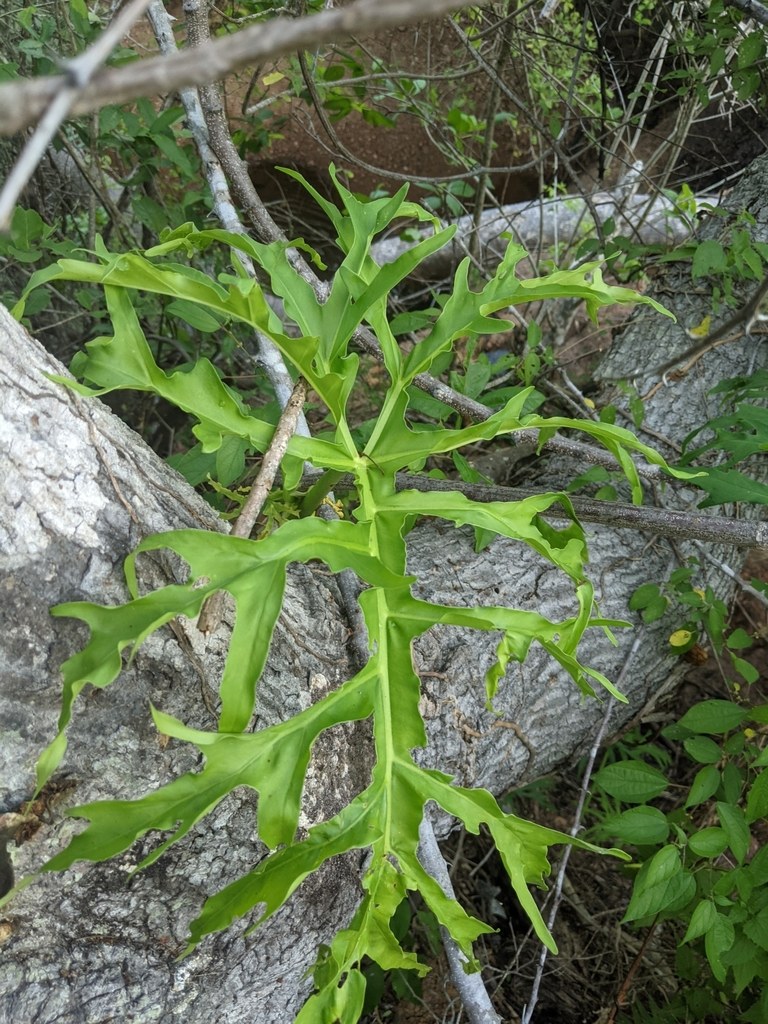
📷 José Garrido / iNaturalist (CC BY 4.0)
Field Guide · Philodendron
A deeply lobed giant that sheds leaves in the dry season and rewards collectors patient enough to wait it out.
Native to Central America from Mexico down through Costa Rica, warszewiczii produces paddle-shaped juvenile leaves that transform into dramatically pinnatifid adult blades — each lobe long, narrow, and slightly wavy. In the dry season it may shed most of its foliage, pulling resources into a stout, tuberous-ish base before re-flushing when humidity and moisture return. Mature specimens can push blades over 60 cm with 10 or more pairs of lateral lobes. It is terrestrial in habit, so it does not need a pole and actually resents being forced to climb.
Species spotlightNow correctly Thaumatophyllum bipinnatifidum but still sold and tracked under the old epithet, this species is the benchmark for dissected terrestrial philodendrons. Adult leaves reach 90 cm or more, with deeply wavy sinuses and a slightly glossy finish. It is genuinely stoic about humidity drops that would punish velvet-leaf species, making it a useful anchor plant in a collection that mixes xeric and tropical conditions. Stem tissue develops a thick, almost corky exterior with age — a visual cue that the plant is reaching maturity.
Most forgivingA Central American climber with leaves that pin-stripe into clean, narrow segments as the plant matures — the sinuses cut almost to the midrib, giving each blade a skeletal, graphic quality. Unlike warszewiczii, radiatum wants a sturdy mount or pole and will push larger foliage on a climbing stem than it would scrambling on the ground. Light requirements are slightly higher than for most philodendrons; in dim conditions leaves remain smaller and the lobing is less pronounced. It is underrated relative to its visual impact.
Best climberElegans is the collector's dissected philodendron — the sinuses are so deeply cut that mature leaves look more like a skeletal grid than solid lamina. It climbs readily and produces progressively more complex leaves as the stem ascends, so the difference between a node-cutting and an established plant is striking. Humidity matters here: below 55% the leaf margins tend to crisp at the sinus tips before the blade has fully expanded. Patience at potting-up stage pays dividends; root disturbance can trigger reversion to simpler juvenile foliage.
Collector pickA Jamaican and Cuban native with broadly lobed rather than fully pinnatifid blades — the lobing is irregular and somewhat asymmetric, which gives it a wilder look than the more regimented dissection of elegans. Lacerum is a solid mid-difficulty species that tolerates lower humidity than most Caribbean aroids, probably reflecting its seasonally dry native range. It climbs but is slower-moving than radiatum, which makes it easier to manage in a grow tent or cabinet. An honest, handsome plant that rarely commands inflated prices.
Best value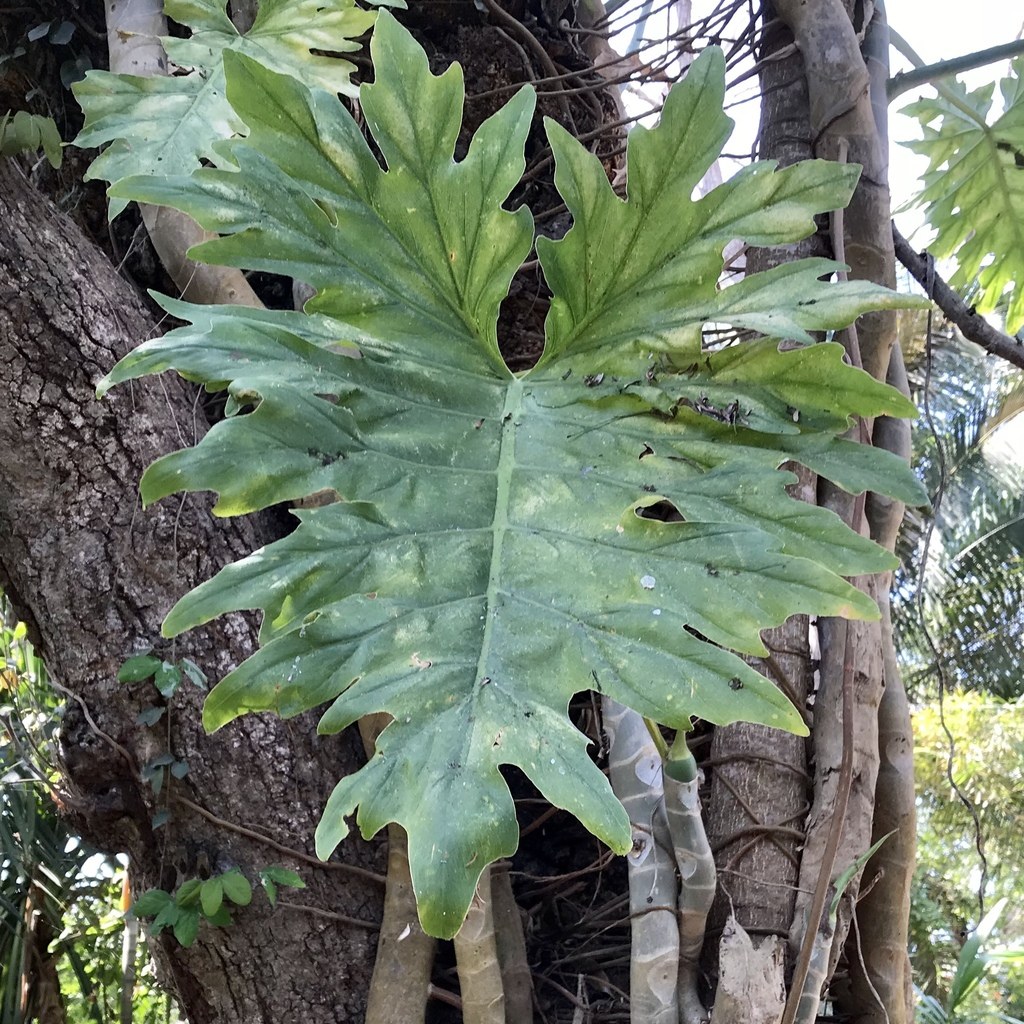
Warszewiczii and its dissected relatives pull from a different playbook than velvet-leaf climbers. In the ground in Costa Rica, warszewiczii roots into fast-draining volcanic soils that flood briefly in the wet season and then dry considerably. Replicate that in a container by building a substrate that is open rather than moisture-retentive. A workable mix: two parts coarse perlite or pumice, one part orchid bark (10–15 mm grade), one part coconut coir. Avoid peat-heavy mixes — they compact over time and hold water in the center of the pot long after the surface has dried, which is exactly the condition that triggers basal rot in a plant already primed by evolution to tolerate drought.
Pot choice matters as much as mix composition. Terracotta is the easiest corrective tool available: it wicks moisture from the mix and communicates dryness clearly by color change on the exterior. For warszewiczii specifically, a pot only slightly wider than the root mass forces the substrate to dry evenly. Overpotting is the single most common cultural mistake with this species — a large volume of damp bark around sparse roots is a rot vector, not a growth stimulus.
Repot in late winter or very early spring, just before the plant breaks dormancy. Roots are easier to assess when the plant is not actively flushing new growth, and disturbing the root system during active leaf expansion can stall the flush for weeks.
The dormancy behavior of warszewiczii is the trait most collectors are unprepared for. As day length shortens and temperatures drop in autumn, the plant may yellow and drop the majority of its leaves. This is not a pest problem, a root rot event, or a care failure — it is the plant doing what it evolved to do. Resist the urge to compensate with more water. Reduce irrigation frequency by roughly half from October through February, letting the top two-thirds of the substrate dry before watering again. The base will remain firm and the roots viable even when the canopy looks nearly bare.
When warmth and longer days return, the plant will begin pushing new growth from the crown. This is the cue to resume normal watering frequency and, if needed, apply a dilute balanced fertilizer — something in the 3-1-2 NPK ratio range works well for supporting leaf expansion without overdriving soft, rot-prone tissue. The first few leaves of the new flush are often smaller and less dissected than the leaves that will follow; this is normal and not a sign of poor health.
Humidity requirements for warszewiczii are moderate by aroid standards. It performs well at 55–70% and can tolerate brief dips below 50% without the crisp-edged damage that afflicts more sensitive species like elegans. Airflow is more critical than raw humidity: stagnant air at 65% is worse than moving air at 55%. A small clip fan running on a low cycle is worth more than an expensive ultrasonic humidifier in a poorly ventilated grow space.
Bright, indirect light is the target — two to four metres from a south- or west-facing window, or under a 6500K LED panel at roughly 200–300 PPFD at canopy level. Warszewiczii will push larger, more deeply lobed blades in better light. In dim conditions the leaves stay smaller, the internodes stretch, and the petioles grow disproportionately long relative to the blade. Occasional morning sun (before 9 a.m. in summer) is tolerable; harsh afternoon sun bleaches the lamina and causes irreversible pale streaking along the lobes.
The three mistakes collectors make most often with this species: first, watering through dormancy on the same schedule as active growth — this almost always ends in basal rot. Second, mounting or staking it as though it were a climbing aroid — warszewiczii is terrestrial and performs best allowed to spread outward rather than upward. Third, mistaking dormancy-related leaf drop for a deficiency and hitting it with fertilizer in winter, which produces weak, etiolated growth that is vulnerable to pest pressure and collapses once temperatures stabilize. Learn the plant's calendar and work with it rather than against it.
The Field Guide from Leaf People.