📷 Anders Hastings / iNaturalist (CC BY 4.0)
Field Guide · Philodendron
A terrestrial creeper from western Amazonia with frilled petioles, heart-shaped leaves, and a stubborn refusal to climb.
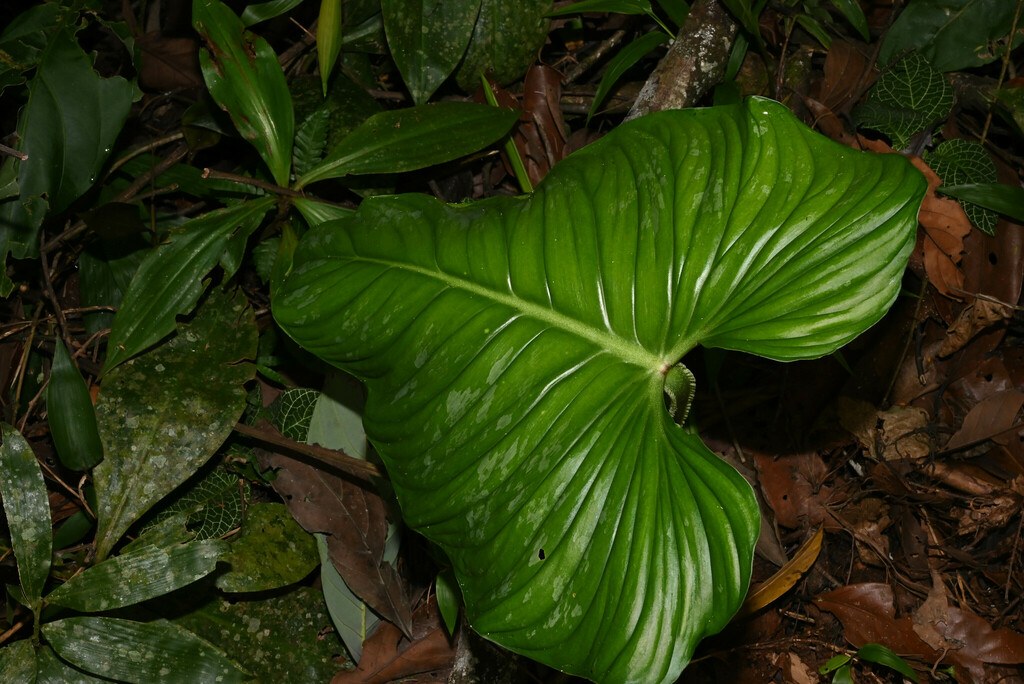
The benchmark crawler: broad, sub-velvet heart-shaped blades with pale midrib flashes and a wavy, almost frilled petiole edge that catches light like a piecrust. Mature leaves can pass 60 cm in cultivation if the rhizome is given a long, shallow run. It wants to creep, not climb, and sulks if forced upright on a pole. Native to Ecuador and Peru in lowland forest leaf litter.
The benchmarkOften shelved next to plowmanii and frequently confused with it in trade. Mamei shows silver flecking across the blade and a flatter, less ruffled petiole; the leaf substance is thinner and more matte. Easier than plowmanii in average home conditions and faster to push a new leaf. A good gateway to the crawler group.
Easier siblingThe clean, glossy cousin: deep green heart-shaped blades with a pronounced quilted texture and a smooth, un-ruffled petiole. Pastazanum crawls hard and fast along the substrate, so give it a long, low tray rather than a tall pot. Tolerates slightly lower humidity than plowmanii and forgives the occasional dry-out.
Most forgivingA pigment variant rather than a stable variegate, pushing new leaves in butter-yellow to chartreuse that age toward green. Growth is slower than the standard form and sun-scorch happens fast above roughly 250 PPFD. Worth chasing if you already keep the straight species well; not a first plowmanii.
Collector pick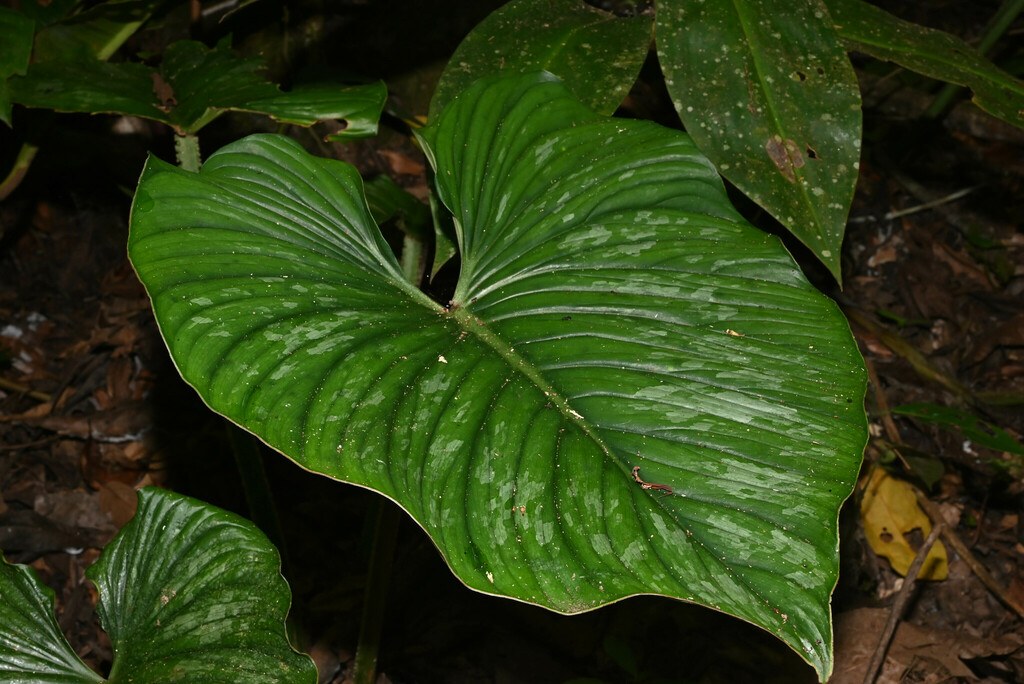
Plowmanii grows from a creeping rhizome that wants to run horizontally across the forest floor. In a deep nursery pot the back half of the rhizome sits in stale, wet mix and rots while the front end tries to escape over the rim. Use a shallow bulb pan, a long window box, or a wide nursery tray with drainage holes — something that gives the rhizome 30 to 45 cm of forward travel and only 10 to 15 cm of depth.
Mix airy and chunky. A working blend is roughly four parts orchid bark, two parts perlite or pumice, two parts coco chunk or coir, and one part worm castings, with a handful of horticultural charcoal. The goal is a substrate that drains within seconds of watering and dries on top within two or three days while staying barely damp underneath. Lay the rhizome on the surface, not buried — pin it down with a bent piece of wire or a small stone and let aerial roots find their own way in. Buried rhizomes are the single most common cause of rot in this species.
Give bright indirect light: roughly 150–250 PPFD at the leaf, or a bright east window with sheer diffusion. Direct midday sun bleaches the blade and crisps the ruffled petiole edge within a day or two. Under grow lights, aim for a 12-hour photoperiod and keep the canopy 30–45 cm below a mid-power LED bar.
Water when the top 2–3 cm of mix is dry but the deeper layer still reads slightly damp on a wooden skewer. Plowmanii hates both extremes — bone-dry mix collapses fine feeder roots, sodden mix rots the rhizome from underneath. Rainwater, RO, or filtered tap is preferable; this species shows tip burn quickly in hard, chlorinated water.
Humidity is where most collectors lose the plant. Sustained 65–80% with gentle airflow produces flat, full-sized leaves and clean petiole ruffling. Below about 50% the new leaves emerge smaller, the petioles stiffen, and edges brown. A grow tent, IKEA cabinet conversion, or enclosed shelf with a small clip fan is more reliable than open-room misting, which does almost nothing for ambient RH.
Mounting it on a pole. Plowmanii is not a climber. Strapped to moss it will produce smaller, oddly oriented leaves and eventually stall. Let it crawl.
Confusing it with mamei or a hybrid. Trade plants labeled plowmanii are frequently mamei, pastazanum, or plowmanii × pastazanum crosses. Check the petiole: true plowmanii has a clearly wavy, frilled wing along most of its length. Mamei shows silver flecking on the blade; pastazanum has a smooth petiole and glossier leaf.
Fertilizer timing. Feed lightly and often — roughly a quarter-strength balanced liquid every second watering during active growth, tapering in winter. Heavy monthly doses scorch the fine roots that sit just under the surface of a chunky mix.
Reading new growth. A healthy plowmanii pushes a new leaf every 6–10 weeks in good conditions, each one slightly larger than the last. If new leaves come in smaller, suspect low humidity first, then root damage from overwatering, then insufficient light — in that order. If the rhizome tip goes soft or translucent, cut back to firm green tissue immediately, dust with cinnamon or sulfur, and reroot on damp sphagnum in a covered tray.
The Field Guide from Leaf People.