📷 no rights reserved / iNaturalist (CC0)
Field Guide · Philodendron
The blushing philodendron and its descendants — what to grow, how to keep them, and why the red stem matters.
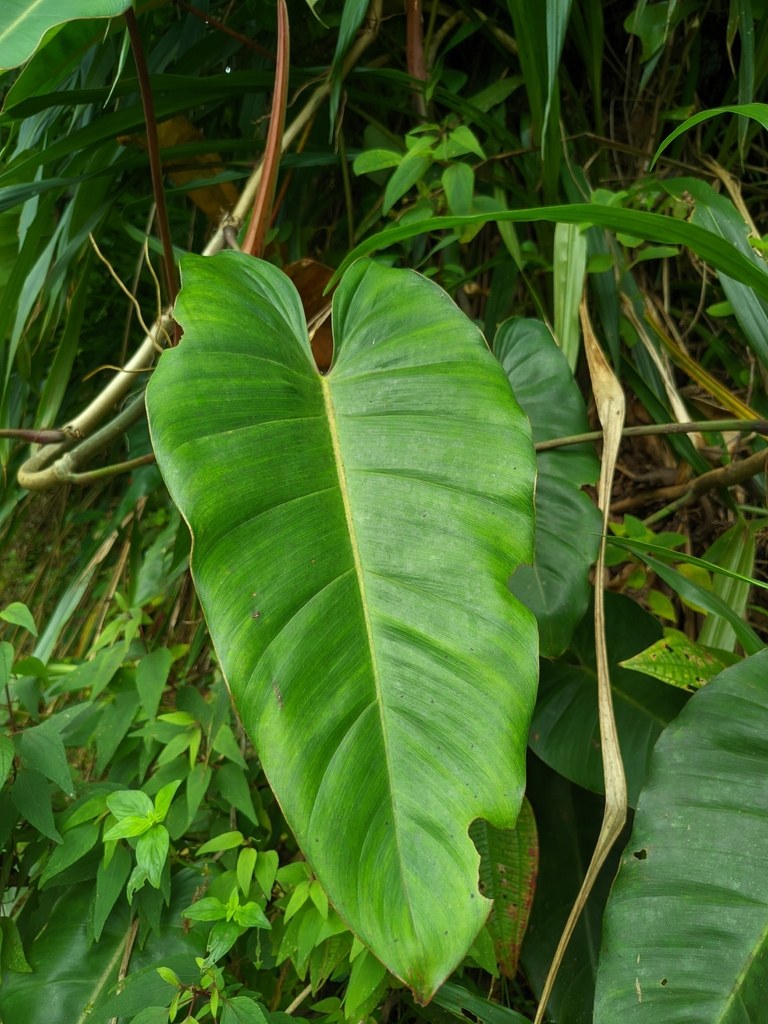
The wild type from Colombian foothill forest, with deep green arrow-shaped leaves on wine-red petioles and a coppery flush on new growth. It climbs hard and fast given a slab or moss pole, throwing larger leaves with every node it can grip. Mature blades can pass 18 inches in cultivation. Still the benchmark every red-stemmed cultivar is measured against.
The originalA chimeric sport of erubescens that throws pink sectors on near-black leaves when light and node selection cooperate. It is slower than the species and prone to reverting to all green or all pink — neither stable nor especially vigorous. Buy a cutting with balanced variegation on the working node, not the leaves above it. Worth growing if you understand chimeras; frustrating if you don't.
Collector classicAn older erubescens selection with elongated, glossy green leaves and oxblood petioles and stems. It is the most forgiving red-stem in the group: fast, tolerant of average humidity, and willing to climb almost anything. New leaves emerge a translucent burgundy and harden to deep green. The plant to start with if you want the look without the drama.
Most forgivingA mid-century hybrid of erubescens and wendlandii, compact and shrub-like rather than climbing. Leaves emerge bright red, age through bronze, and settle into dark green with a wine underside. Growth is famously slow — a few leaves a year is normal — but the plant is nearly indestructible once established. Good for collectors who want red without a pole.
Compact pickSister sports in the erubescens line, with marbled pink or crisp white sectors on green leaves and pale petioles. The White Princess is generally more stable than Pink Princess and grows faster under the same conditions. Both demand bright, even light to hold variegation and resent wet feet. Treat them like the species, then dial humidity up a notch.
For variegation hunters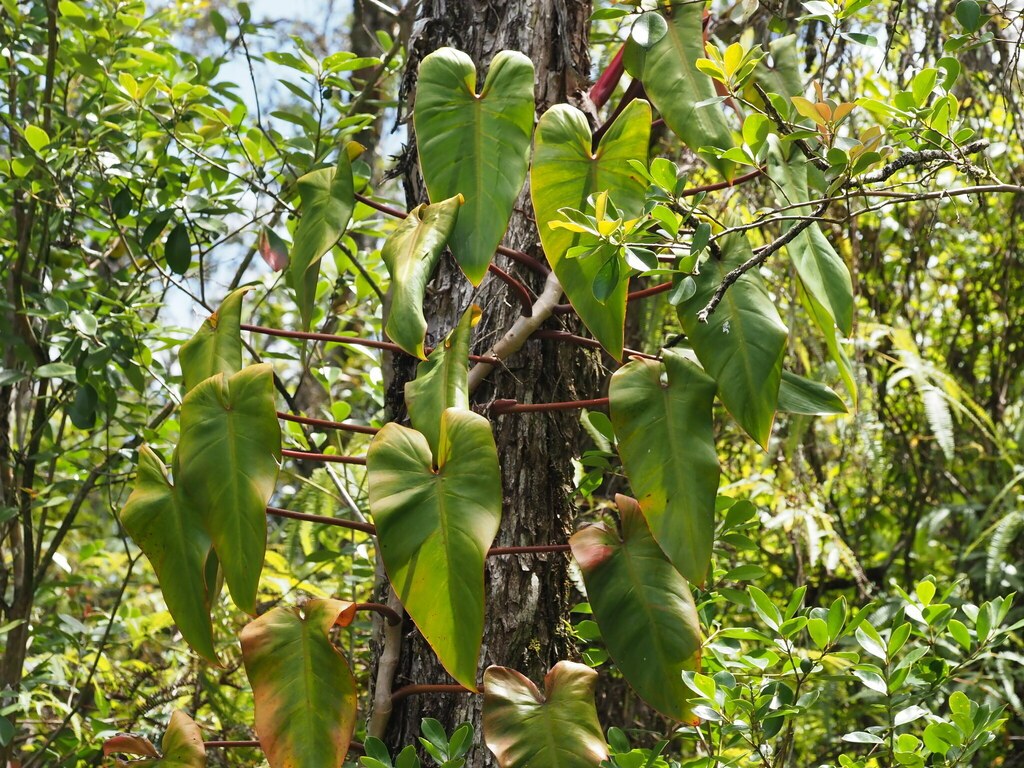
Philodendron erubescens was described in 1854 from collections in the Colombian Andes, where it climbs the lower trunks of wet montane forest between roughly 200 and 1,800 meters. The specific epithet means blushing — a reference to the red petioles, the burgundy cataphylls that sheathe each new leaf, and the coppery underside of emerging blades. In the wild it behaves like most hemiepiphytic philodendrons: a seedling germinates on the floor, scrambles toward the nearest trunk, and produces progressively larger leaves as it climbs into brighter light.
The red pigment is anthocyanin, the same compound that colors new growth on many tropical understory plants. It is not decorative — it shields developing tissue from UV damage and may deter chewing insects until the leaf hardens. Every cultivar in the erubescens line inherits some version of this red-stem trait: Red Emerald keeps it on petioles and stems, Burgundy carries it into the leaf itself, Pink Princess scatters it as chimeric sectors. Understanding that the color is a juvenile-tissue trait explains a lot of grower frustration. New leaves are red. Old leaves are not. That is the plant working correctly.
Pot erubescens in something an epiphyte would recognize as dirt. A working mix is roughly 40% orchid bark, 30% coco chunks or coir, 20% perlite or pumice, and 10% worm castings, with a handful of charcoal. The mix should drain within seconds and stay airy for a year before it breaks down. Straight peat-heavy houseplant soil will eventually rot the roots; pure sphagnum works short-term but compacts.
Light is the variable most growers underestimate. Erubescens and its cultivars want bright, indirect light — think a meter back from an unshaded east window, or directly under a 30-40W LED on a 12-hour cycle. Pink Princess and the variegated sports need more, not less: the white and pink sectors do no photosynthesis, so the green tissue has to work overtime. In low light, variegated plants will throw all-green leaves to survive, and they are right to do so.
Give it something to climb. Mature leaf size, internode spacing, and that satisfying upright posture are all triggered by contact with a vertical surface — a moss pole kept damp, a cedar slab, or a wrapped PVC pipe. A plant left to trail in a hanging basket will keep producing juvenile leaves indefinitely. None of this is decorative; aroids read texture and moisture against their aerial roots and respond accordingly.
Water when the top inch of mix is dry and the pot feels light. In a chunky mix this is usually every 5–8 days in summer, 10–14 days in winter. Water thoroughly until it runs from the drainage holes, then let it drain completely — never leave the pot sitting in a saucer of runoff. The single most common cause of death in this group is a fine-grained mix kept constantly damp, which suffocates roots within weeks.
Humidity above 60% produces the best leaves, but mature erubescens tolerates household 40-45% without complaint. New growth at low humidity often emerges crinkled or stuck inside its cataphyll; a pebble tray or a small ultrasonic humidifier near the plant solves this. Airflow matters as much as humidity. A stagnant 80% room grows mold; a moving 55% room grows leaves.
The mistakes worth naming: cutting a Pink Princess above a node with no pink in the visible stem (you will get an all-green plant); fertilizing a sick root system to try to push growth (you will burn what's left); chasing red color by withholding water (anthocyanin responds to light, not stress, and a dehydrated plant is just a dehydrated plant). Feed at quarter strength every other watering during active growth, flush the pot monthly, and repot every 18-24 months before the mix collapses.
The Field Guide from Leaf People.