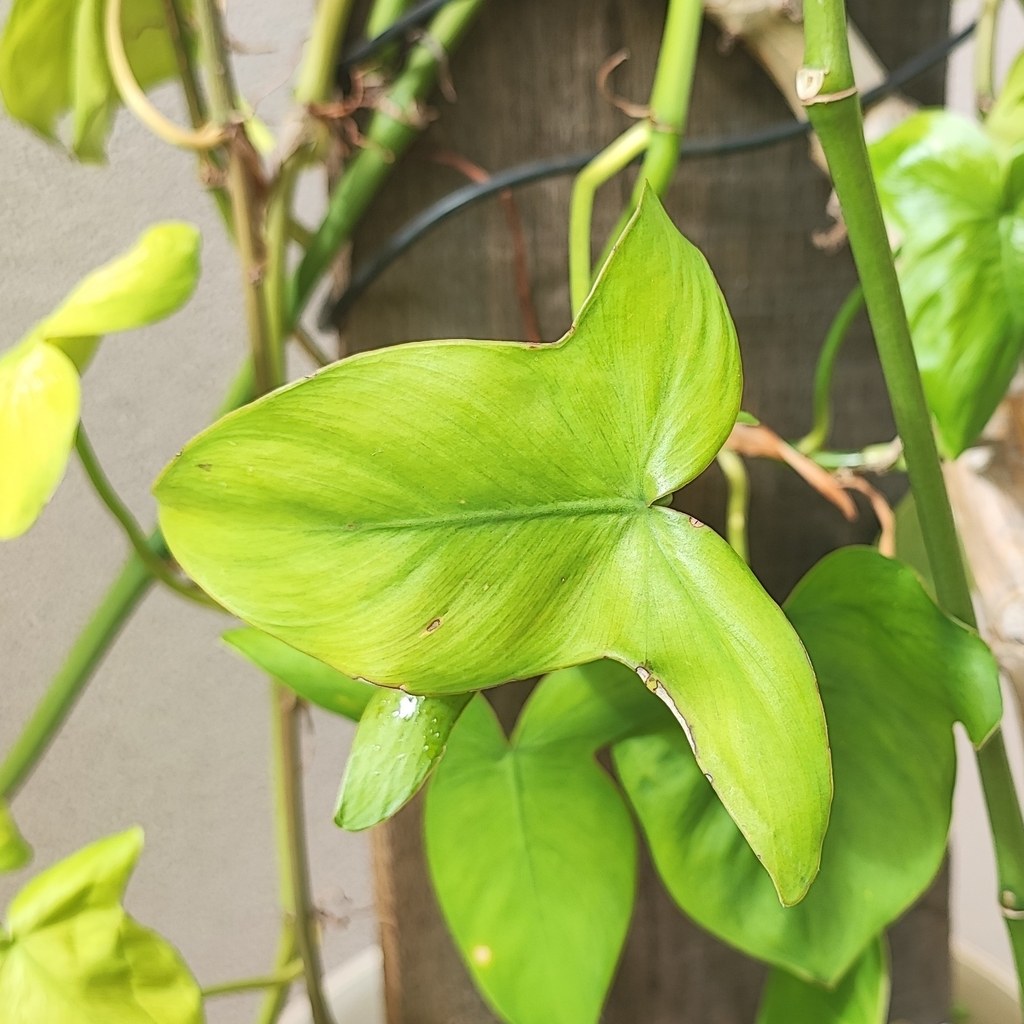
📷 Thomaz Ricardo Favreto Sinani / iNaturalist (CC BY 4.0)
Field Guide · Philodendron
A small-format climber that rewards patience with three distinct leaf shapes and a copper flush most aroids can't match.
The subject of this guide and still the cleanest example of leaf metamorphosis in the genus. Juveniles push small heart-shaped blades with a coppery, slightly velvety surface; sub-adults elongate and develop side lobes; adults settle into a three-lobed sagittate shape with a long central blade. Stays compact on a moss pole, which is why it suits collectors short on vertical space.
The subjectIf camposportoanum hooks you on velvet, verrucosum is the obvious next step up. The leaves are larger, deeper green, with pale veins and a red reverse; the petioles are covered in fine hairs that give the species its name. Wants higher humidity and more airflow than camposportoanum, and sulks fast in stagnant warmth.
Velvet upgradeA trailing form within the hederaceum complex with bronze-green leaves and a satin sheen that shifts under light. It's the most forgiving velvet-adjacent philodendron and a useful gateway before committing to fussier species. Climbed on a pole, leaves enlarge noticeably and the iridescence deepens.
Most forgivingA rhizomatous crawler rather than a climber, with heart-shaped leaves that can exceed 18 inches and bright white primary veins on a matte, deeply velvet surface. Needs a long, shallow planter so the rhizome can travel horizontally. Pair it with camposportoanum if you want both growth habits represented in one shelf.
Crawling counterpart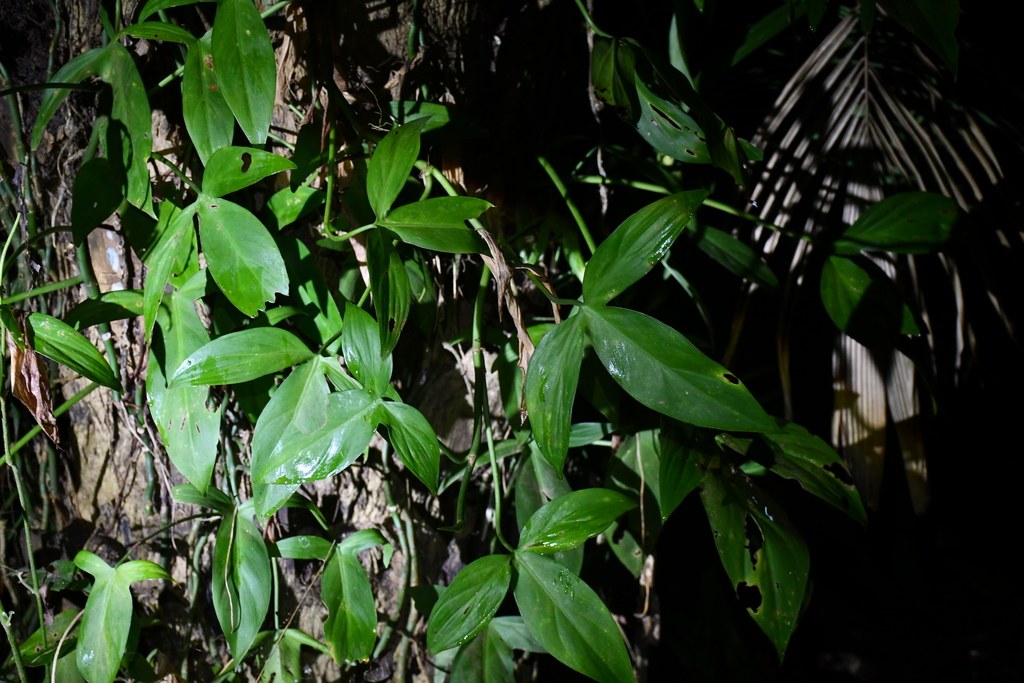
Philodendron camposportoanum is native to Brazil, Colombia, and parts of Central America, where it climbs slim host trees in humid lowland forest. In cultivation it stays manageable — a mature plant on a 24-inch pole is normal, and leaves rarely exceed 8 to 10 inches on the long axis. The appeal is morphology rather than size.
Juvenile leaves are small, cordate, and carry a coppery-pink flush when they harden off; the surface has a soft, low-pile velvet quality that catches light at an angle. As the plant climbs and the stem thickens, leaves elongate and two basal lobes push outward. The adult form is sagittate with a pronounced central lobe and two backward-pointing ears — a shape distinct enough that new growers often think they've been sold the wrong plant. They haven't. Getting a single specimen through all three stages is the point.
The species is sometimes confused with Philodendron nangaritense (bristled petioles) and juvenile Philodendron sodiroi (silver, not copper). Check the petiole — camposportoanum's is smooth, slightly grooved, and often blushed red where it meets the blade.
Substrate. Build an airy, chunky mix: roughly equal parts orchid bark, perlite or pumice, and coco chips, with a small fraction of worm castings or a high-quality aroid soil for moisture retention. The roots are fine and rot quickly in dense peat-heavy mixes. A 4 to 5 inch pot is plenty for a year of growth; oversize the pot and you'll get yellowing lower leaves before you get new ones.
Light. Bright indirect, equivalent to a few feet back from an east or north window, or filtered south. Direct midday sun bleaches the velvet finish and can scorch the copper flush on new leaves within a day. Under grow lights, target around 150 to 250 µmol/m²/s at the canopy; more than that and the leaves stay small and pale.
Water and humidity. Let the top inch dry between waterings and then water thoroughly until it drains. The plant is more drought-tolerant than its velvet cousins but resents being soggy at the crown. Humidity in the 60 to 75 percent range produces the best leaf size and the cleanest morph transitions; it will live at 50 percent but stalls on producing adult leaves. Pair humidity with gentle air movement — a small clip fan on low, run several hours a day, prevents the fungal spotting that velvet philodendrons are prone to.
Adult leaves only appear when the plant has something to climb and a thickening stem to support them. A sphagnum or coir pole, kept damp, is the single biggest lever. Aerial roots that contact moist moss will grip and the next leaf node will push a noticeably larger blade. Without a pole, camposportoanum will trail and produce juvenile leaves indefinitely — fine if that's what you want, but you'll never see the three-lobed form.
Feed lightly and consistently rather than heavily and occasionally. A balanced fertilizer at quarter strength every second watering during active growth works well; stop or reduce in winter when light drops. Repot when roots circle the pot, not on a calendar.
Common mistakes: keeping the plant in a too-small, too-wet pot of bagged houseplant soil (root rot within months); misting the leaves while leaving the air still (bacterial leaf spot, brown halos); cutting the growth point off thinking you'll get a bushier plant (you'll get one slow side shoot and lose six months of progression). Let it climb, let it dry between drinks, and let the leaves do what they're going to do.
The Field Guide from Leaf People.