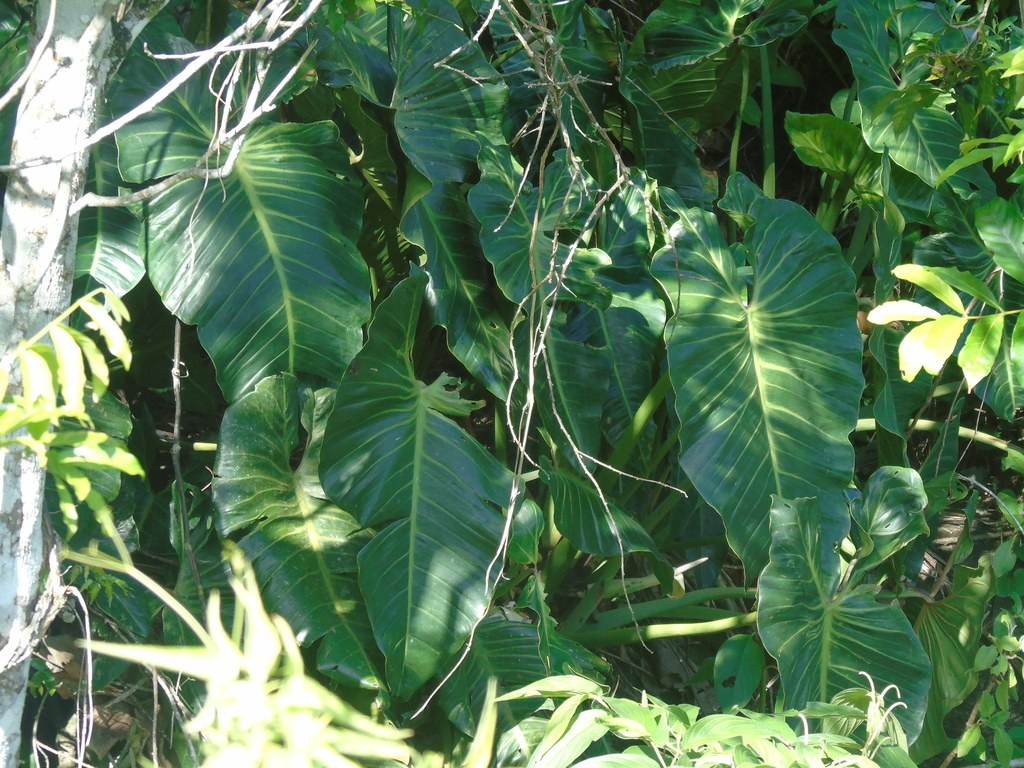
📷 Gabriel Jovêncio Ribeiro / iNaturalist (CC BY 4.0)
Field Guide · Philodendron
The long, dark leaves and bright white venation of bernardopazii reward growers who nail humidity and airflow — here's how to get it right.
Narrow, elongated leaves — sometimes exceeding 60 cm on a mature plant — carry a pronounced silvery-white midrib and lateral veins against deep green, semi-matte lamina. The contrast sharpens noticeably above 65% humidity, which is also when new growth accelerates. It climbs readily and will throw larger leaves as it ascends a chunky moss or coco-coir pole. This is not a beginner plant, but it is not theatrical about its demands either — meet humidity and drainage and it rewards steadily.
Best in classA terrestrial rather than a climber, gloriosum pushes heart-shaped leaves with crisp white primary and secondary venation on a thick rhizome that crawls across the soil surface rather than ascending. Leaf width can reach 50–90 cm in good conditions, making pot selection and horizontal space more relevant than a pole. Slower than most climbers — one or two leaves per month under ideal conditions — but the size and texture of mature leaves justify the patience. Needs excellent drainage; the rhizome rots readily in wet substrate.
Statement terrestrialJuvenile sodiroi leaves are heavily marbled with silver — the entire surface rather than just the veins — which fades as leaves mature and enlarge toward their adult, mostly-green form. Collectors tend to prize the juvenile phase, making smaller plants more commercially sought after than large specimens. It climbs aggressively given something to grip and handles slightly lower humidity than bernardopazii without immediately sulking. A good companion species if you're already running the conditions for silver-veined philodendrons.
Silver juvenileDeep olive-green to near-black leaves with pale venation and a velvet surface that catches light at low angles — melanochrysum is slower-growing than bernardopazii but produces larger leaves on maturity, with some collectors reporting lamina past 90 cm on well-established climbers. The petiole is D-shaped in cross-section, a useful identification trait. Requires the same 60%+ humidity bracket and punishes inconsistent watering with yellowing older leaves before anything more serious shows. Widely available relative to some of its velvet peers, which keeps prices honest.
Deep velvetHairy petioles — covered in fine, pale cataphyll-like trichomes — set verrucosum apart from other silver-veined climbers immediately. The leaf surface is velvet, the venation chartreuse to pale yellow-green rather than white, and coloration intensifies at cooler temperatures, roughly 16–20 °C nights. Multiple geographic ecotypes exist with variation in venation color and leaf size; Ecuadorian forms tend toward the most saturated hue. Humidity requirements are among the highest in the genus — consistent 70%+ is not excessive — and it reacts to dry spells faster than most.
Cool-grower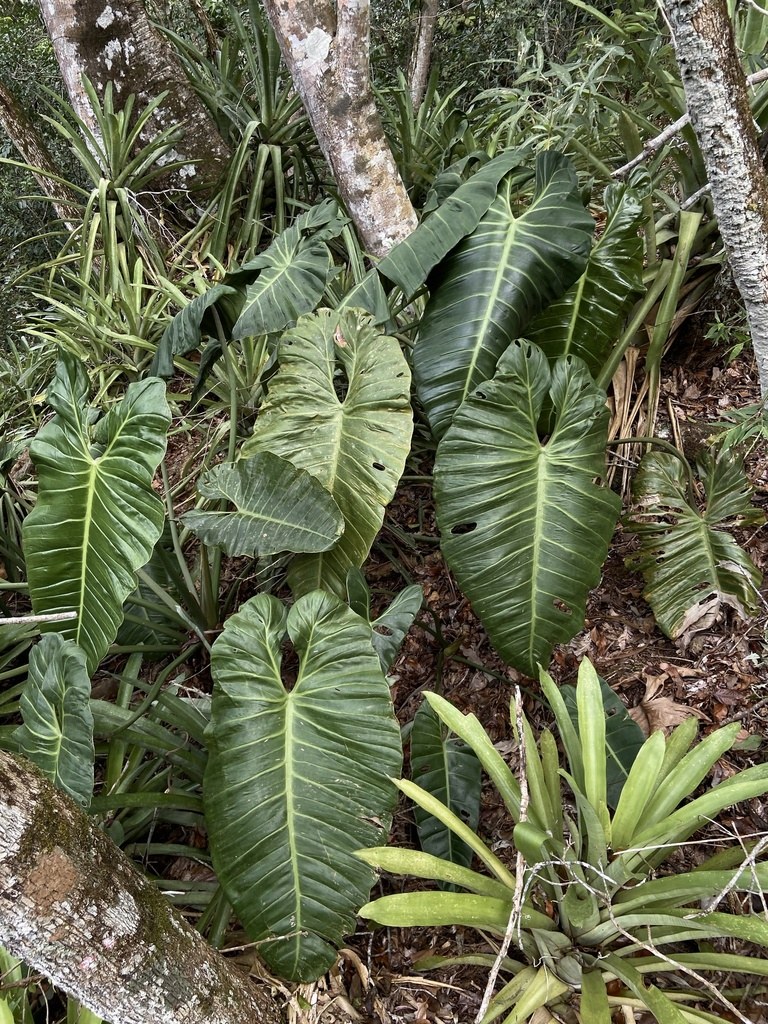
Philodendron bernardopazii is hemiepiphytic — in the wild it moves between soil and bark as it climbs — which means its roots expect a medium that holds some moisture but never stays saturated. A reliable starting point: two parts fine orchid bark, one part perlite, one part coconut coir. That ratio gives you drainage, a little moisture retention, and enough structure for roots to grip. Avoid heavy peat mixes; they compact over time and create wet pockets at the root zone that invite rot.
Pot choice matters. Terracotta wicks moisture and helps prevent overwatering in humid environments; plastic retains more, which can work in drier climates if you're careful. Size up only when roots visibly circle the bottom or push through drainage holes — bernardopazii in an oversized pot sits in wet media too long between waterings. A 15–18 cm pot for a plant with four to six leaves is usually the right call. Repot in spring or early summer when growth is active, and always check the root ball for any soft or brown roots before dropping it into new media.
A chunky moss pole or coco-coir totem is worth adding early. As the plant climbs and aerial roots contact the pole, leaf size increases and venation expression improves — this is consistent enough across growers to be treated as a care variable, not just aesthetics. Keep the pole moist; aerial roots that contact a dry surface rarely attach.
Bright indirect light is the target — two to four metres from a south or east-facing window, or directly beside a north-facing window with good sky exposure. Direct sun bleaches the lamina and scorches the velvet surface in a matter of days; the pale venation makes the damage obvious. If you're supplementing with grow lights, a 6500K LED at 100–200 µmol/m²/s for 12–14 hours works well and tends to produce shorter internodes and better color saturation than the equivalent in natural low light.
Temperature range: 18–28 °C covers the comfortable growing zone. Bernardopazii will tolerate brief dips to around 15 °C but slows sharply, and anything below 12 °C risks cellular damage at the leaf margins. More practically: don't put it near a drafty window in winter or directly under an air conditioning vent in summer. Cold air movement combined with low humidity is the fastest route to brown leaf tips, and the combination of the two is worse than either factor alone.
Seasonal slowdown is normal and not a problem to fix. Plants pushed with extra fertilizer in winter under low light tend to produce etiolated growth with weak petioles — it is better to let the plant sit quietly and resume feeding when new growth starts moving again in late winter or early spring.
Water when the top 3–4 cm of substrate is dry — not when the surface is dry, and not when the pot has dried completely through. With a well-draining mix, this typically means watering every five to eight days in summer, stretching to ten to fourteen days in winter. Use water that has sat overnight or been filtered; bernardopazii shows tip burn with high fluoride or chlorine, which is a nuisance in many municipal supplies.
Humidity below 50% produces noticeably narrower venation expression and leaf lamina that curls inward at the margins. The 60% threshold is real — at 65–70%, the same plant under the same light produces visibly broader, flatter leaves with cleaner venation contrast. A quality ultrasonic humidifier in an enclosed grow space is the most effective solution at scale. Pebble trays and misting do not move the dial on ambient humidity enough to matter for a plant with these requirements.
Airflow is the variable collectors most often omit from humidity setups. A small circulation fan — not aimed directly at the plant, but moving air around it — significantly reduces the risk of fungal issues and bacterial soft rot that humid, still conditions invite. In a grow tent or cabinet, run the fan continuously at low speed. On an open shelf, even a gentle oscillating fan on a timer helps. Stagnant humid air and a wet substrate is a combination that causes more losses than any single care mistake.
The Field Guide from Leaf People.