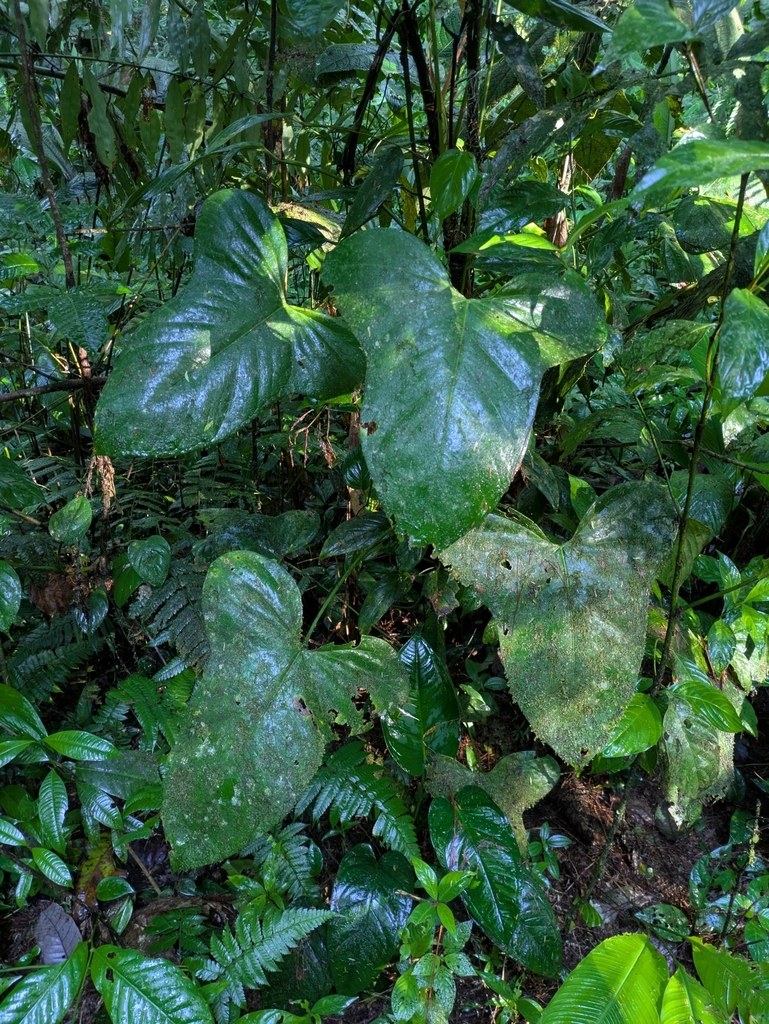
📷 portioid / iNaturalist (CC BY 4.0)
Field Guide · Anthurium
A Central American climber with deeply lobed leaves, a quiet temperament, and a habit of being mistaken for its more famous cousins.
The subject of this guide. Native to Costa Rica and Panama, it pushes out leaves that mature from a simple sagittate blade into a deeply pedately-lobed form with seven to eleven finger-like segments. The texture is matte, not velvet, and the petioles are long and wiry, built for scrambling up bark in wet lowland forest. A patient grower — the lobed adult form only appears once the plant commits to a totem.
The subjectThe Mexican cousin subsignatum is most often confused with. Leaves are larger, lobes deeper and more numerous, and the plant tolerates slightly drier air. If you wanted a pedate Anthurium for a living room rather than a cabinet, this is the more forgiving choice. Sold widely as 'Fingers'.
Easier cousinA South American species with the most fern-like silhouette of the lobed anthuriums — narrow, almost separate leaflets radiating from a central point. Smaller in every dimension than subsignatum, and a faster climber on a thin moss pole. Worth chasing if you like the lobed look but lack the space for a meter-wide leaf.
Compact optionIncluded as a contrast, not a substitute. Clarinervium shares none of subsignatum's lobing but is the species most new collectors picture when they hear 'rare anthurium'. Keeping it next to subsignatum teaches you how different the genus can be — one wants chunky bark and a pole, the other wants a shallow pan of pumice and limestone grit.
For contrast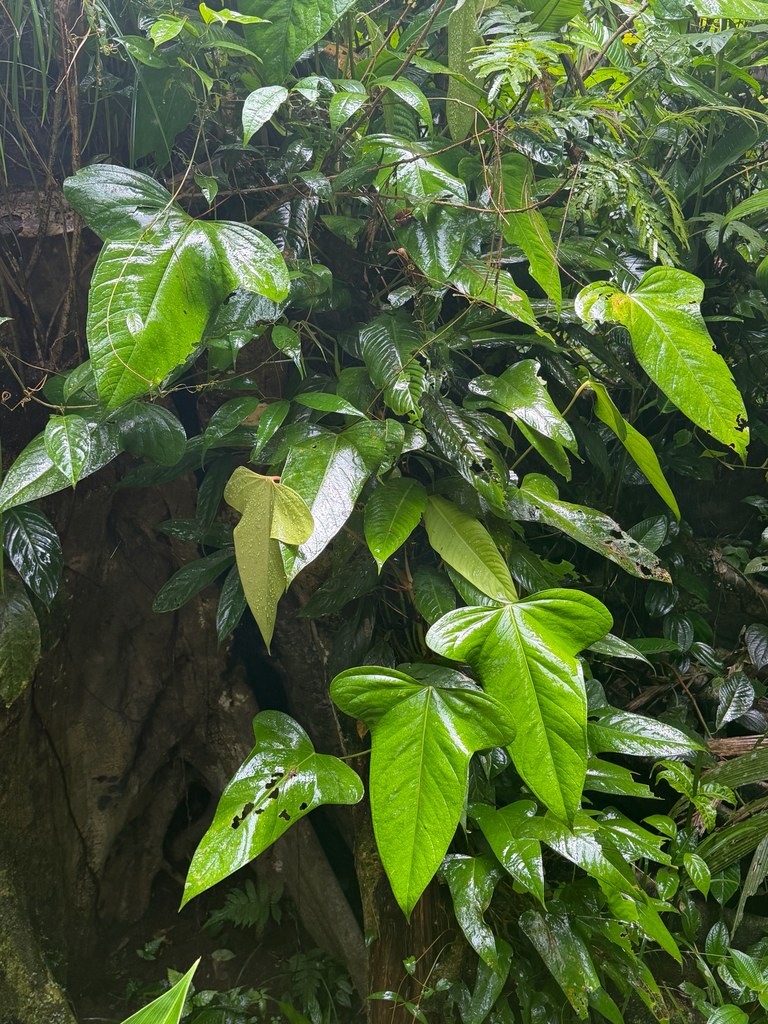
Anthurium subsignatum is a hemiepiphyte. In habitat it germinates on the forest floor, finds a tree, and spends the rest of its life climbing with roots pressed into wet bark and leaf litter. Replicate that and the plant gives you adult leaves. Fight it and you get a permanent juvenile rosette.
Mix coarse: roughly 40% medium orchid bark, 30% perlite or pumice, 20% coco chips, 10% horticultural charcoal, with a handful of sphagnum worked in for moisture buffering. The mix should hold its shape when you squeeze it and drain within a few seconds when watered. Fine peaty mixes suffocate the thick, exploratory roots and are the single most common reason imported subsignatum stalls.
Give it a pole. A damp sphagnum-wrapped pole, a slab of tree fern, or a cedar plank will all work — the species is not picky about the material, only about having something to climb. Aerial roots that find moist bark trigger the leaf-size jump and the appearance of true pedate lobing. A plant left in a pot with no support will keep producing modest sagittate leaves indefinitely.
Bright indirect light, no direct midday sun. Around 150–250 µmol on a PAR meter, or a spot where a sheer-curtained east or north window throws even brightness all day. Direct sun bleaches the matte surface to a papery tan within a week and the damage does not recover.
Water when the top inch of the mix is approaching dry but the core is still faintly damp. In a chunky aroid mix that usually means every three to five days in summer, weekly in winter. The roots want oxygen between waterings; they do not want a drought. Rainwater, RO, or filtered tap is safer than hard municipal water — subsignatum shows tip burn fast when fed mineral-heavy water.
Humidity above 65% is where this species looks its best. It will survive at 50% with crisp leaf edges and slower growth, and it sulks below that. A grow tent, an Ikea cabinet with a small fan, or a humid bathroom with a clip-on circulator are all reasonable setups. Airflow matters as much as the humidity number itself: stagnant 80% air invites bacterial blight, moving 70% air does not.
Expecting adult leaves on a young plant. Juvenile subsignatum leaves are simple, heart-shaped, and unremarkable. The lobing emerges leaf by leaf as the plant climbs and the petioles lengthen. If your plant is under 30 cm tall and still in a nursery pot, it is doing exactly what it should — wait.
Treating it like clarinervium. The velvet, lithophytic anthuriums want a gritty, fast-draining, almost stony mix and tolerate drying out. Subsignatum wants more organic matter and consistent moisture at the root zone. Swapping their substrates will kill both within a season.
Misidentification at purchase. Vendors routinely sell pedatoradiatum, polyschistum, and even seedling podophyllum as subsignatum, because juvenile leaves across the pedate group look nearly identical. Check the mature leaf photograph from the seller's stock plant, count lobes, and ask about provenance. A true subsignatum has seven to eleven lobes at maturity, with the central lobe noticeably longer than the laterals, and a relatively narrow sinus between segments.
The Field Guide from Leaf People.