📷 no rights reserved / iNaturalist (CC0)
Field Guide · Anthurium
The original flamingo flower keeps a quieter household than its glossy cousin A. andraeanum, and rewards growers who respect its cloud-forest manners.
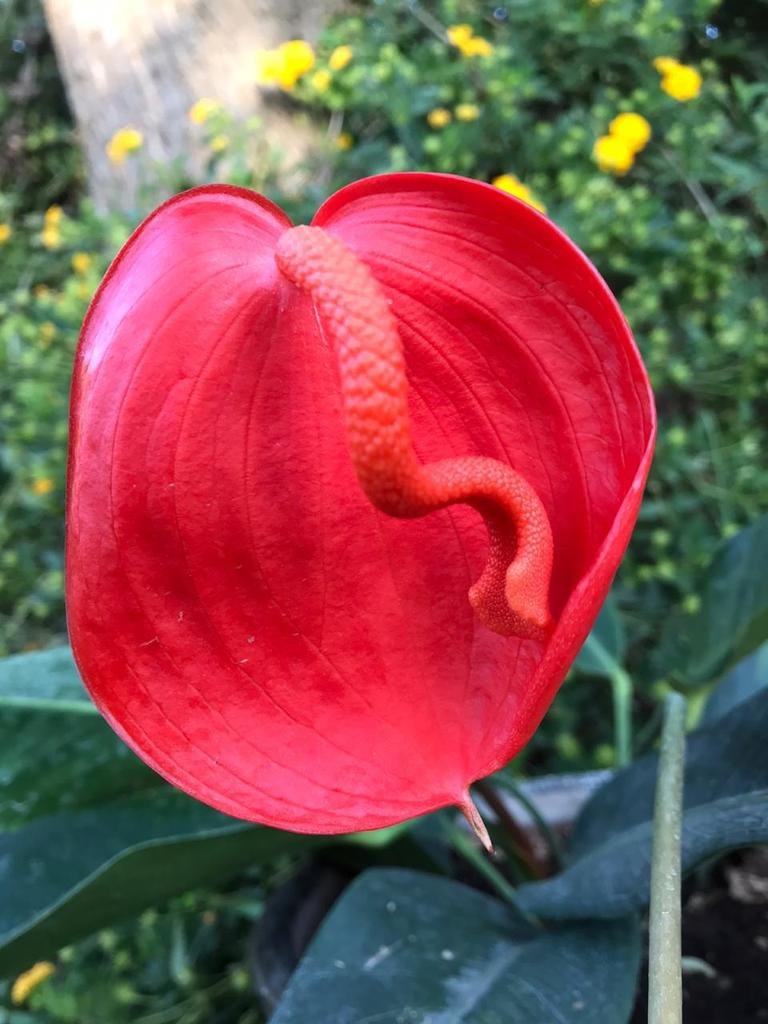
The defining flamingo flower, native to the cloud forests of Costa Rica. Lance-shaped matte leaves on short petioles, with a scarlet spathe and a spiraled orange spadix that no other common Anthurium produces. Slower and smaller than A. andraeanum, topping out around 30–40 cm, which makes it a genuine windowsill plant. Long-lived in a chunky epiphyte mix if you don't drown it.
The classicThe plant most people picture when they hear "anthurium" — the florist's flamingo flower from western Colombia and Ecuador. Larger, glossier, and more upright than scherzerianum, with a straight spadix rather than a curl. Modern cultivars come in white, pink, coral, near-black, and bicolor. Easier to flower indoors than the velvety species, which is why it dominates supermarket benches.
Most availableA dwarf andraeanum-type hybrid bred for tidy growth and persistent pink spathes. Stays under 40 cm and flowers reliably in average household humidity, which makes it the rare bloom-forward Anthurium that doesn't demand a grow tent. Spathes hold color for six to eight weeks before fading to green. A good gateway if you've killed scherzerianum from overwatering.
Beginner pickA 19th-century selection with a cream-and-red speckled spathe over the signature curled spadix. Less common in the trade than the plain red form but propagated steadily by European hobbyists since the Victorian craze. Culture is identical to the species — cool nights, airy mix, restrained watering. Worth seeking out if you like horticultural history sitting on your shelf.
Collector's formThe white-spathed form, with a pale yellow curled spadix that reads almost ivory against the dark green foliage. Slightly slower than the red type in our experience, and prone to sulking if humidity drops below 50%. Flowers are smaller but held longer. A quietly elegant plant that photographs better than it sells.
Quiet beauty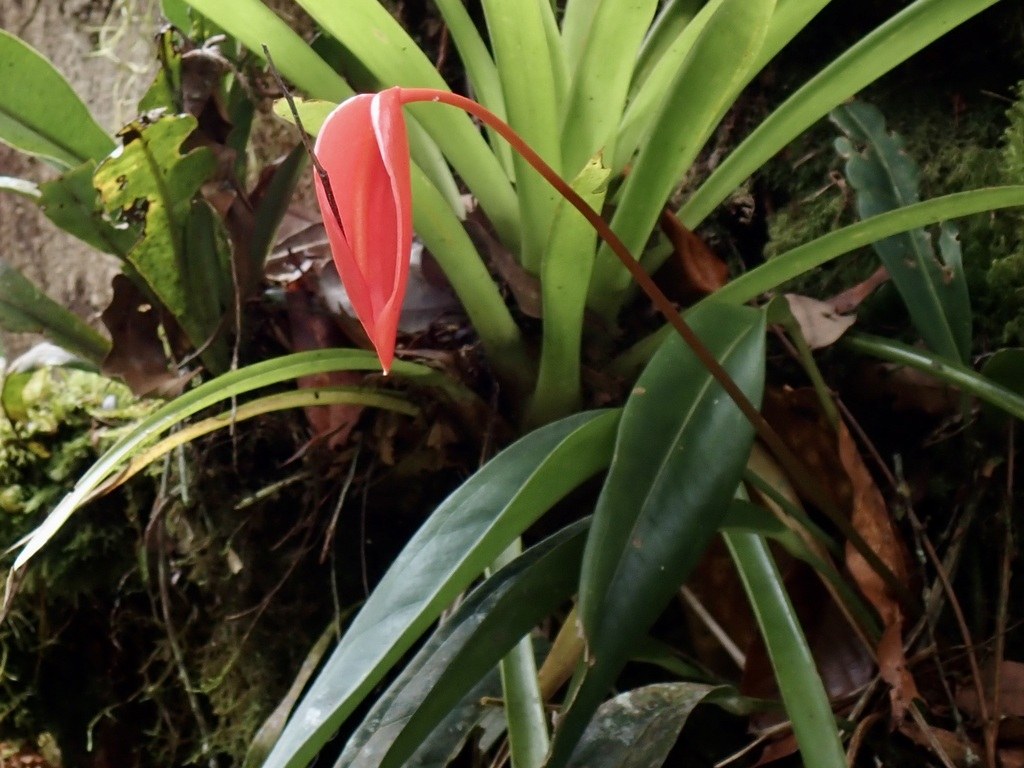
A. scherzerianum is an epiphyte in the wild, clinging to mossy branches in Costa Rican cloud forest between roughly 1,300 and 2,100 meters. That tells you what the roots want: air, moisture, and nothing close to wet potting soil. Build a mix around coarse orchid bark, perlite or pumice, and a smaller fraction of chopped sphagnum or coco chunks — something like 50% bark, 25% perlite, 25% sphagnum is a sane starting ratio. The mix should drain in seconds when you flood the pot.
Plastic nursery pots with extra side holes work well, as do net pots inside cachepots. Terracotta dries too aggressively for this species in most homes — the fine feeder roots crisp at the pot wall. Repot every 18–24 months, or sooner if the bark has broken down into something that smells like forest floor. When you do, tease the root ball apart gently; scherzerianum holds its roots in a tight epiphytic mat and resents being shredded.
Give it bright indirect light — an east window, or a foot or two back from a south or west window with sheer cover. Direct midday sun bleaches the matte leaves to a sickly yellow-green within a week. Under grow lights, aim for around 150–250 µmol/m²/s at canopy, 12 hours a day. Too little light and you'll keep the plant alive but never see the flower it's named for.
Water when the top inch of the mix has dried but the deeper bark is still barely damp. In a chunky epiphyte mix that usually means every 5–7 days in summer, every 10–14 in winter. Use rainwater, RO, or tap that's been sat out overnight — scherzerianum is mildly sensitive to chloramine and to mineral buildup, and you'll see it first as crispy leaf margins.
Humidity is the lever most people get wrong in either direction. The plant wants 60–70% ambient, tolerates down to about 50% sulkily, and rots fast if you pair 90% humidity with stagnant air. A small clip fan moving air across the leaves matters more than another humidifier. Cool nights help — it flowers best when nighttime temperatures drop to 16–18 °C (60–65 °F), which is why summer apartments often refuse to bloom.
Treating it like A. andraeanum. The florist flamingo flower is more forgiving of warmth, dry air, and heavy soil. Scherzerianum is a cooler, airier plant and will quietly decline in conditions its cousin shrugs off. If you bought one labeled simply "anthurium," check the spadix: curled means scherzerianum, straight means andraeanum, and they want different things.
Overpotting. A 4-inch plant does not need a 6-inch pot. Anthurium roots want to fill the container; excess wet mix around a small root ball is the fastest route to black, mushy roots and a collapsed crown. Step up one pot size at a time.
Cutting spent spathes too early. The spathe will fade from scarlet to green and hang on for weeks — that's normal, and the plant is still photosynthesizing through it. Cut the flower stalk only once it yellows at the base. Removing green spathes prematurely costs the plant energy it was about to recover.
The Field Guide from Leaf People.