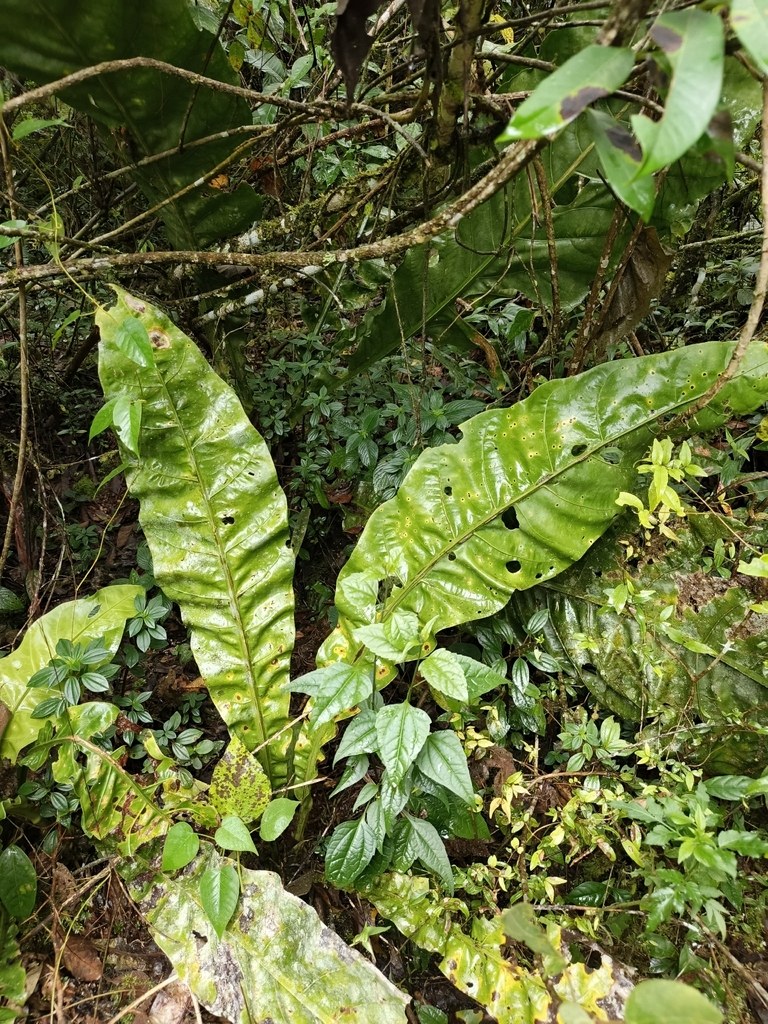
📷 no rights reserved / iNaturalist (CC0)
Field Guide · Anthurium
A strap-leaved giant from the Amazon basin that rewards patience with five-foot, wave-edged blades.
The reference plant for this guide. Strap-shaped leaves emerge stiff and upright, then arch as they lengthen, with a ruffled, undulate margin that deepens with age. Wild plants in Brazil, Bolivia, and Paraguay grow as semi-epiphytes on rocks and tree bases, catching leaf litter in the central cup. Tougher than A. jenmanii and faster than A. superbum, which is why it shows up in big-box stores under the wrong name.
The benchmarkEcuadorian, compact, and architectural. Leaves stand nearly vertical with a deep central keel and a coppery underside that flashes red on new growth. Slower than plowmanii but holds its form better in a tight pot, which makes it the bird's-nest of choice for collectors short on floor space. Mature plants top out around three feet.
Best small-spaceThe Guiana Shield endemic that gets confused with plowmanii in every nursery on earth. Leaves are broader, flatter, and less rippled, with a rounded apex and a leathery feel. It hybridizes freely in cultivation, so most plants sold as jenmanii are crosses — buy from growers who can name the parents. Slow, sturdy, and forgiving once established.
Often mislabeledThe real hookeri is a Caribbean and northern South American species with fine black dots on the leaf underside and tight purple berries — not the giant green thing usually sold under the name. Leaves are paddle-shaped, semi-erect, and form a deep litter-catching funnel. Worth chasing if you want a documented species rather than a nursery guess. Confirm via the dots and the berry color.
For puristsA selected cultivar with exaggerated, almost frilled margins and a more compact habit than the straight species. Newer leaves can look pleated for the first few weeks before they relax. Easier to fit under shop lights and on shelves, and it propagates by division like the species. Treat it identically to wild-type plowmanii.
Showiest form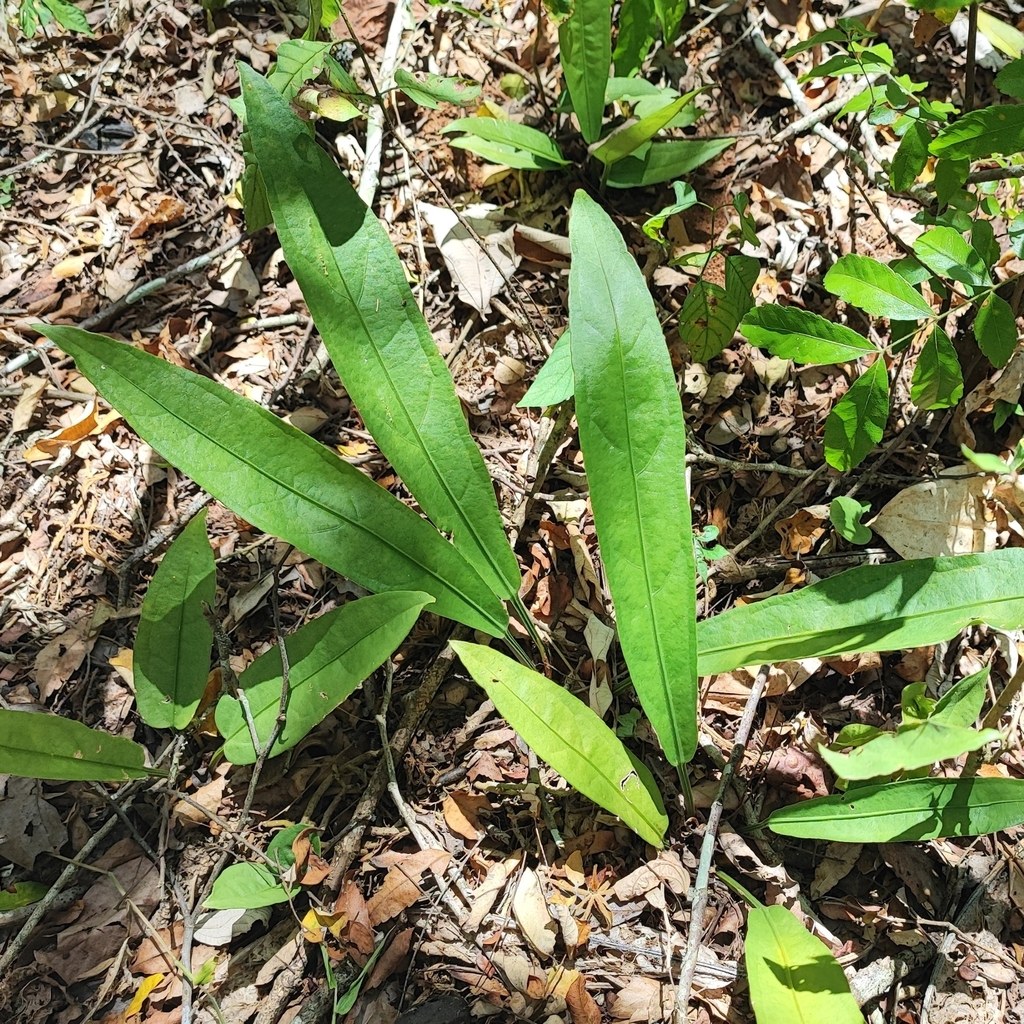
A. plowmanii is a litter-trapping semi-epiphyte, not a houseplant in soil. The roots want air, chunky structure, and consistent moisture without sitting wet. A mix of roughly 40% orchid bark (medium grade), 20% perlite or pumice, 20% coco chips or coco husk, and 20% sphagnum or high-quality peat works across most homes. Skip dense peat-heavy potting soils — they compact, hold water at the wrong depth, and rot the thick fleshy roots in a season.
Pot choice matters more than people admit. These plants build a heavy rosette on a short, stout rhizome, so a top-heavy mature specimen will tip a plastic nursery pot. Move to a wide, heavy ceramic or a slatted basket once the plant is over two feet across. Repot every two to three years, in spring, going up one pot size only. They flower and push better when slightly root-bound.
Bright indirect light is the target — an east window, or two to three feet back from a south or west window with a sheer. Direct midday sun bleaches the strap leaves to a flat yellow-green and can scorch the central cup. Too little light gives you long, floppy leaves that never stiffen and never ripple properly. If your plant's new growth is leaning hard toward the window, rotate it a quarter turn each week.
Water when the top inch of substrate is dry. In a chunky mix that usually means a thorough soak every five to ten days, depending on pot size and airflow. Pour through the leaves and let water briefly sit in the central cup — that's how the plant feeds itself in the wild — but tip it out if it lingers more than a day, because stagnant water in the crown invites bacterial rot. Humidity above 50% keeps leaf margins from crisping; 60–70% is ideal but not required. plowmanii tolerates household humidity better than almost any other large anthurium, which is half its appeal.
Feed lightly. A balanced liquid fertilizer at quarter strength every third watering through spring and summer is plenty. Heavy feeding pushes soft, oversized leaves that don't develop the characteristic ripple.
The biggest one is buying a young plant and expecting rippled, five-foot leaves in a year. Juvenile plowmanii leaves are nearly flat. The undulate margin develops with maturity and with adequate light — usually leaf number eight or nine onward, sometimes later under shop lights. Patience is the care requirement nobody lists.
The second is overpotting. A small division dropped into a ten-inch pot of damp mix sulks for months and often rots at the rhizome. Match the pot to the root mass, not to the eventual size of the plant. Third: confusing this species with A. jenmanii or A. superbum and then following the wrong care notes. plowmanii wants more light and more airflow than jenmanii; superbum wants slightly less water. Identify before you adjust.
Finally, watch for thrips. Bird's-nest anthuriums hide them deep in the crown where sprays don't reach. Inspect new growth monthly with a loupe — silvery streaks and black frass mean it's already a problem. Systemic granules at label rate clear an established infestation faster than foliar sprays on a plant with this much surface area.
The Field Guide from Leaf People.