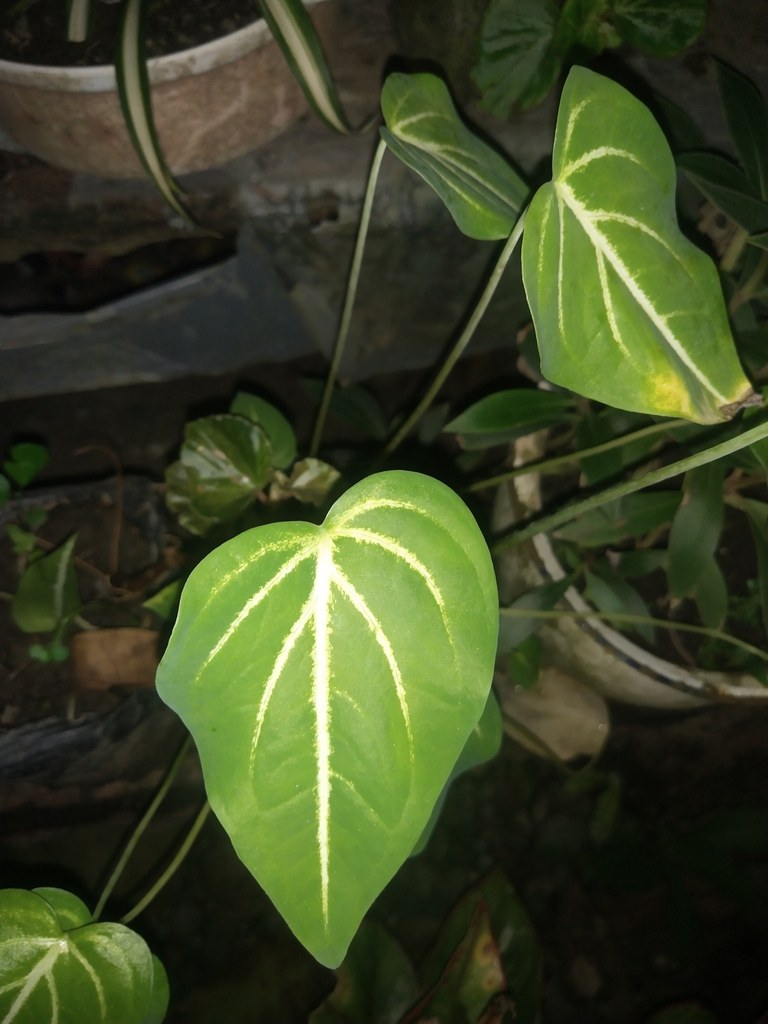
📷 Greg III Espera / iNaturalist (CC BY 4.0)
Field Guide · Anthurium
The velvet hybrid that humbles even careful growers — what it actually wants, and the sibling crosses worth chasing.
The benchmark cross. You get the heavier substance and squared petioles of magnificum with the faster pace and brighter silver venation of crystallinum. Leaves push bronze, harden to deep emerald with white veining, and size up faster than pure magnificum. The most forgiving entry point into the velvet-leaf section Cardiolonchium.
Best overallSame parents, pod parent reversed, and the phenotype shifts. Expect rounder leaf shape, thicker substance, and slower node spacing than the standard cross. Petioles often show the winged, quadrangular profile of magnificum. Worth growing alongside the standard cross if you want to see how maternal effect actually reads in person.
Collector pickA close cousin to the magnificum cross and a useful comparison plant. The papillilaminum parent brings deeper, almost black velvet and a more pendant leaf posture; crystallinum keeps the venation crisp. Slightly fussier about humidity dips than the magnificum hybrid. Often mislabeled, so buy from growers who can show the pollen parent.
Darker siblingA selected crystallinum form with rounder leaves and unusually wide white veins. Useful as a benchmark for what the crystallinum side of your hybrid is contributing. Grows faster than any of the hybrids on this list and tolerates 55–60% humidity once established. A good plant to learn velvets on before spending real money on the cross.
Most forgivingThe other parent, worth growing for context. Square, winged petioles are the giveaway; mature leaves get heavy and slightly corrugated with silver-green venation. Slower and more sensitive to root disturbance than the hybrids it sires. If you can keep this alive and pushing leaves, the cross will feel easy.
Parent reference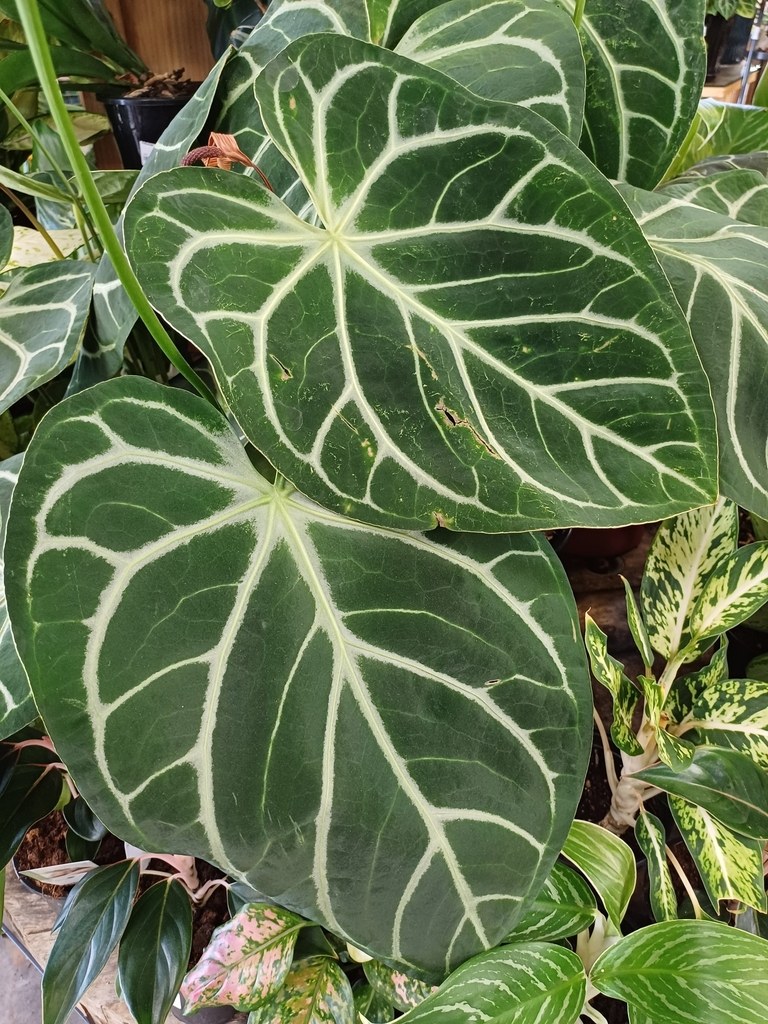
These hybrids are terrestrial in habit but root like epiphytes — thick, white, oxygen-hungry roots that rot the moment they sit in stagnant wet. Build a chunky, structural mix and forget anything resembling bagged houseplant soil. A reliable recipe: 40% medium orchid bark, 20% perlite or pumice, 20% coco chunks or chips, 10% horticultural charcoal, 10% worm castings. The mix should hold its shape when you squeeze it and fall apart again immediately.
Pot choice matters more than people admit. A tall, narrow nursery pot with extra side slits, or a net pot inside a cache, gives roots the air exchange they want. Terracotta dries unevenly and stresses velvets — skip it. Repot only when roots circle the bottom, and do it during active growth; magnificum genetics mean the plant sulks for weeks after root disturbance in winter.
One quiet detail: these hybrids respond well to a thin top layer of sphagnum over the chunky mix. It keeps the upper roots — the ones that actually feed the newest leaf — from drying to crisp between waterings, without waterlogging the core of the pot.
Bright indirect light, full stop. Think 150–300 µmol/m²/s at the leaf, or a north-facing window with a clear sky, or about a meter back from an east window. Direct sun bleaches the velvet finish within a day and the damage doesn't grow out. Under LEDs, 12 hours at moderate intensity beats 8 hours blasting — velvets photosynthesize slowly and don't reward intensity spikes.
Water when the top inch of mix is dry but the core is still barely cool to the touch. In a chunky mix that usually means every 4–7 days indoors, longer in winter. Use rainwater, RO, or distilled if your tap runs above 150 ppm; crystallinum blood is sensitive to mineral buildup and you'll see it first as crispy vein margins. Flush the pot thoroughly once a month to clear fertilizer salts.
Humidity is the lever that decides whether new leaves come in clean or distorted. Aim for 65–75%. Below 50%, new leaves emerge stuck to the cataphyll and tear; above 85% without airflow, you invite bacterial blight, which on a velvet anthurium is a death sentence. A small clip fan moving air across — not at — the plant solves more problems than any humidifier upgrade.
Overpotting. A 6-inch root ball in a 10-inch pot stays wet in the middle for two weeks. Use the smallest pot the roots will fit into, and size up by one increment at a time.
Chasing the next leaf. Velvets push a leaf every 4–8 weeks in good conditions; pushing fertilizer to speed that up burns roots. A weak, balanced feed (¼ strength, every other watering) is plenty.
Ignoring the petiole. The petiole tells you which parent is expressing. Round and smooth means the crystallinum side is dominant in that leaf; squared, winged, or sulcate means magnificum is pulling harder. Neither is wrong, but it tells you what to expect from the next leaf's size and substance.
Buying unrooted cuttings in winter. These hybrids root slowly when day length is short. Pay more for an established plant with three or more leaves; you'll save money against the dead cuttings you'd otherwise replace.
The Field Guide from Leaf People.