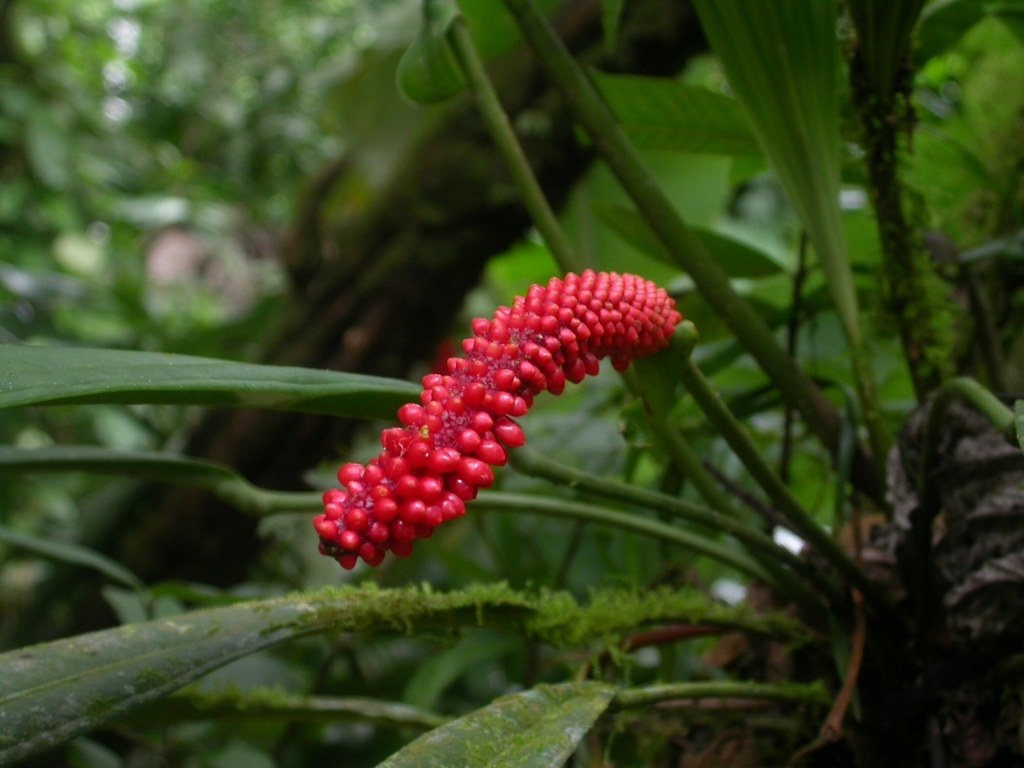
📷 Eduardo Chacón Madrigal / iNaturalist (CC BY 4.0)
Field Guide · Anthurium
A tough, pendant Central American strap-leaf that rewards patient growers with a spadix studded in scarlet berries.
Native from Guatemala south through Costa Rica and Panama, A. bakeri throws narrow, leathery leaves 18–28 inches long with reddish-brown speckling on the underside. It's one of the easiest strap-leaves to flower indoors, and the infructescence ripens into a tight cluster of bright red berries that hold for weeks. Mount it or grow it in a slatted basket so the inflorescence can hang. Forgiving of brief humidity dips that would scorch a velvet.
Best overallOften confused with bakeri in the trade, friedrichsthalii has longer, more ribbon-like leaves and a cleaner green underside without the speckling. The berries ripen white to pale lavender rather than red, which is the fastest way to tell a mislabeled plant apart. Habit is more strongly pendant — give it height. Likes the same airy bark mix as bakeri but sulks faster if it dries fully.
Close cousinThe showpiece pendant strap-leaf, with leaves that can exceed four feet on a mature plant. Wild populations in Amazonian Peru and Brazil hang from high branches, so a tall mount or a basket suspended at eye level is non-negotiable. Berries ripen pink to magenta. Slower to establish than bakeri and less tolerant of low humidity — keep it above 65%.
For the showoffA subtly velvety strap-leaf from Ecuador, often sold (incorrectly) as vittariifolium. The leaves are narrower, semi-matte, and have a faint sheen rather than the high gloss of bakeri. It wants more humidity (70%+) and steadier moisture at the root zone. Worth chasing if you already grow the easier strap-leaves well.
Collector's pickThe strap-leaf that looks like a velvet philodendron decided to grow sideways. Leaves are deep green, softly velveted, and can reach three feet, with a famously corkscrewed spadix. Native to wet forests in Costa Rica and Panama at 100–900 m. Demanding on humidity and airflow — this is not a first strap-leaf, but it's the one most growers eventually want.
End game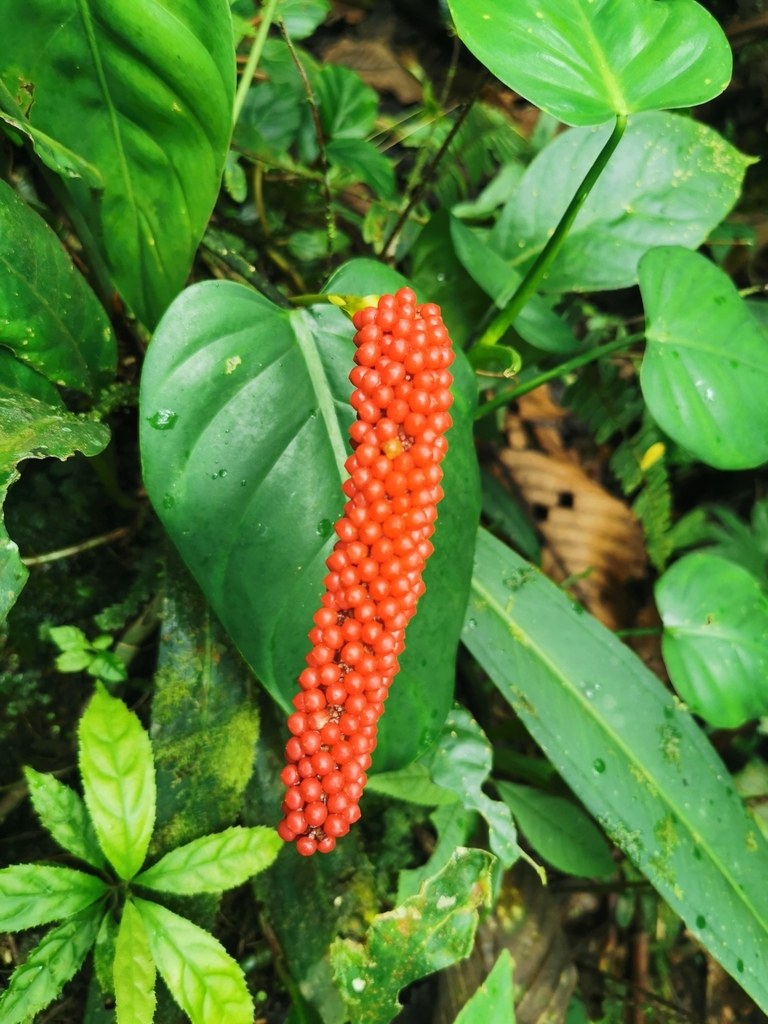
A. bakeri is an epiphyte. In the wild it grows clinging to bark with most of its roots exposed to moving air, so the worst thing you can do is pot it in dense peat. Use a chunky mix: roughly 50% medium orchid bark, 20% perlite or pumice, 20% coconut husk chips, and 10% sphagnum to hold a little moisture against the roots. The mix should drain within seconds of watering and never feel sodden an hour later.
Slatted cedar baskets are the ideal container because they let the inflorescence drop through the bottom and keep the root zone airy. A plastic nursery pot works if you drill extra holes and prop the plant so the spadix can hang freely — berries that develop pressed against a pot wall tend to rot. Mature specimens can also be slab-mounted on cork or tree fern, wrapped with a generous pad of long-fiber sphagnum, but plan to soak the mount daily.
Repot every two to three years, or when the bark breaks down to dust. Bakeri resents root disturbance less than most anthuriums, but still expect a month of sulking after a heavy root cleanup.
Bright indirect light, no direct midday sun. An east window, a south window filtered by a sheer, or 150–250 µmol PPFD under a grow light for 12 hours all produce good color and reliable flowering. Direct afternoon sun bleaches the strap leaves to a yellow-green within days and scars them permanently. Too little light is more common — a bakeri that hasn't flowered in two years is almost always under-lit.
Water when the top inch of the mix is dry to the touch, then water until it runs freely from the bottom. In a chunky epiphyte mix that usually means every three to five days in summer, every seven to ten in winter. Rainwater, distilled, or RO water is worth the trouble; bakeri tolerates tap better than crystallinum or warocqueanum, but tip burn from fluoride and chloramine still shows up over time.
Humidity above 60% keeps new leaves opening cleanly. The plant survives at 50% with cosmetic damage to the newest growth; below that, expect crispy edges and stalled inflorescences. Pair humidity with airflow — a small clip fan moving air across the leaves prevents the fungal spotting that high humidity alone will cause.
Treating it like a hybrid Anthurium andraeanum. The big-box red-flower anthuriums tolerate dense potting mix and lower light. Bakeri does not. Most rot cases come from growers who repotted a new plant into standard houseplant soil because that's what the tag said.
Cutting the spadix too early. The berries take four to six months to ripen from green to red. Growers who deadhead the spent spathe often snip the developing infructescence by accident. Wait until berries are fully colored and beginning to soften — they pull off easily then, and the seeds are viable if you want to try growing your own.
Stagnant wet sphagnum at the crown. If you mount or top-dress with sphagnum, keep it away from the base of the petioles. The crown of a strap-leaf anthurium is the first thing to rot, and a wet collar will take a healthy plant down in under two weeks.
The Field Guide from Leaf People.