📷 no rights reserved / iNaturalist (CC0)
Field Guide · Anthurium
The waxy red bract on your grocery-store shelf and the matte-black Anthurium papillilaminum share a genus — and almost nothing else.
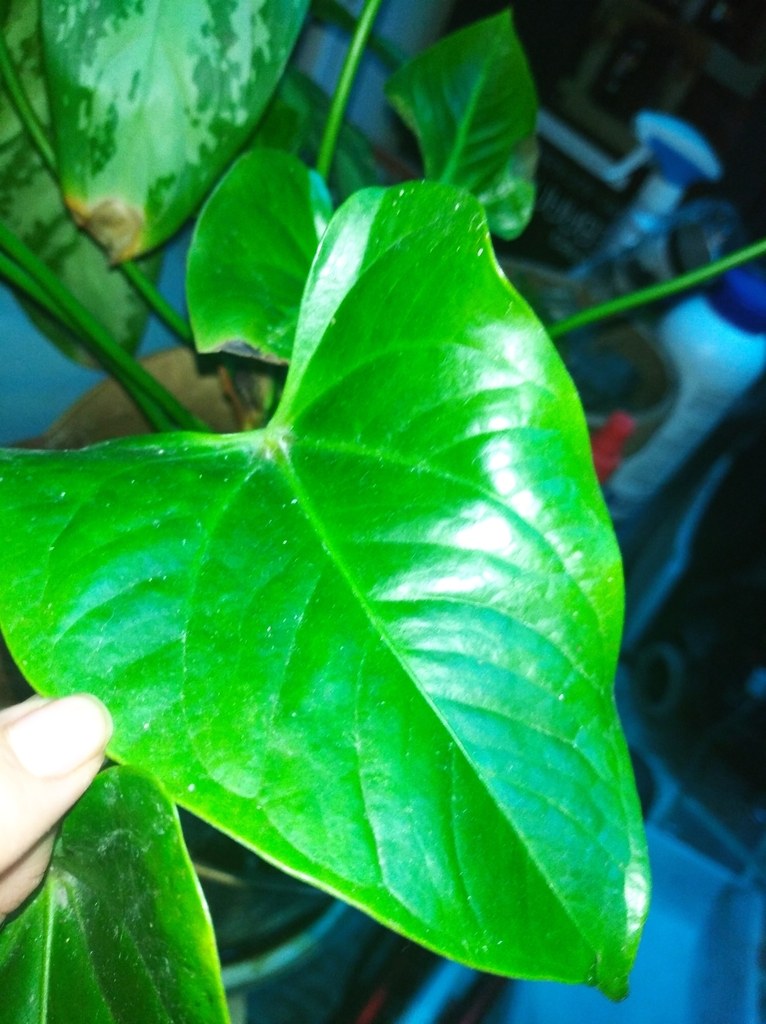
The florist anthurium, native to wet forests of western Colombia and Ecuador. Bred for decades into hundreds of cultivars with lacquered red, pink, white, or coral spathes that hold for weeks. Leaves are smooth, semi-glossy, and cordate — not velvet, not deeply sulcate. It is the easiest Anthurium to grow indoors and the one least likely to interest a collector after the first year.
The floristA Chiapas endemic that grows on limestone outcrops, with thick cardboard-stiff leaves and bone-white primary veins on a deep green velvet field. Smaller than A. crystallinum and considerably more forgiving of household humidity. The inflorescence is unremarkable; nobody grows this plant for its bloom. A solid first step into the velvet-leaved section Cardiolonchium.
Best gatewayWidespread from Panama through Peru, with elongated heart-shaped leaves that emerge coppery and harden off to dark green with bright silver venation. New leaves can push 18 inches in a mature plant. Often confused with — and frequently sold as — the larger A. magnificum, which has a terete (round) petiole versus crystallinum's square-winged one. Worth buying from a vendor who can tell the difference.
Collector classicA Panamanian species with long, pendant, almost black velvet leaves and a sandpaper-fine papillate surface that swallows light. True papillilaminum has become difficult to source clean; the market is thick with hybrids passed off as the species. Demands very high humidity, perfect airflow, and an extremely airy substrate. The grail leaf of section Cardiolonchium for most collectors.
The grailThe Queen Anthurium, a Colombian cloud-forest species with pendulous lance-shaped leaves that can exceed four feet on mature specimens. Velvet surface, silver midrib, slow to establish and quick to spite you if humidity crashes. Grows best mounted or in a net pot with mostly bark and perlite, where roots can breathe. Worth the trouble once it settles.
The queen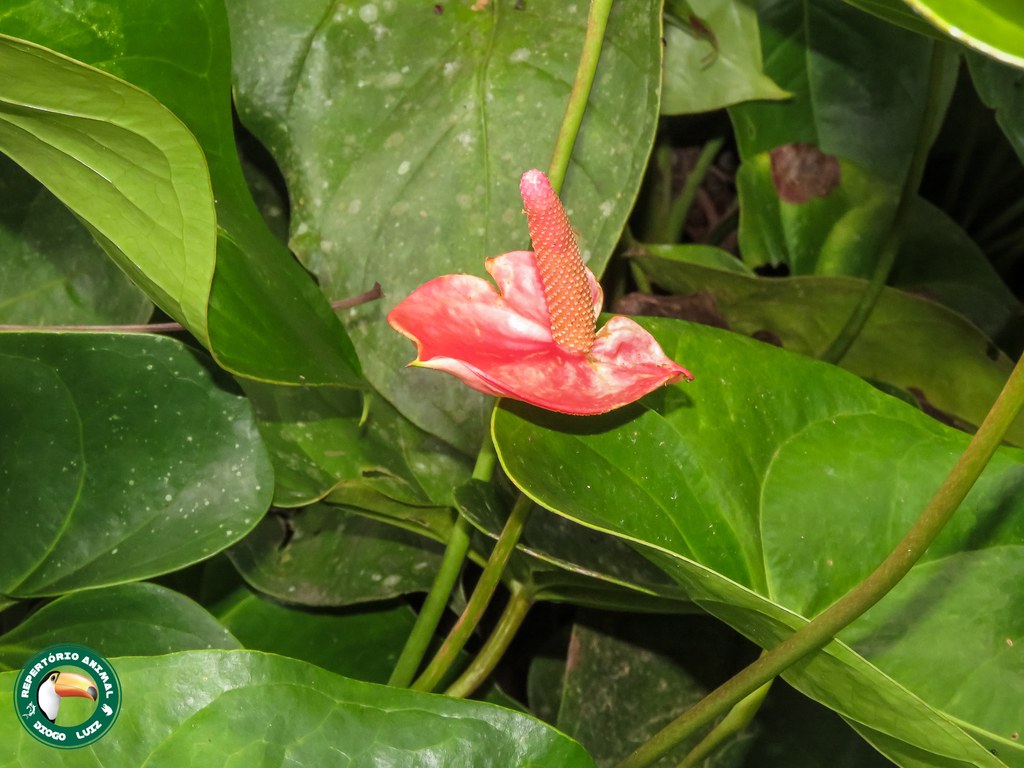
The fastest tell is the leaf surface. A. andraeanum and its cultivars have a glossy, almost plastic cuticle that reflects light evenly. Collector species in section Cardiolonchium — clarinervium, crystallinum, magnificum, papillilaminum, forgetii — have a matte velvet finish caused by papillate epidermal cells that scatter light. Hold the leaf at an angle to a window: glossy bounces, velvet absorbs.
The second tell is venation. Florist anthuriums have faint, evenly colored veins. Velvet collector species have bright primary and secondary veins that read as silver or white against dark green, the network running like circuitry across the blade. A. clarinervium shows the boldest contrast; A. crystallinum runs finer and more filigreed.
Petioles matter too. A. crystallinum has a square, winged petiole. A. magnificum has a terete, four-angled one — this is the single most reliable feature distinguishing the two, and most mislabeled plants in commerce fail this test. The spathe is the least useful character in the genus for ID; ignore the flower and look at the petiole cross-section.
Every Anthurium worth growing is epiphytic or lithophytic in habit, which means roots want air. A mix that stays soggy will rot a collector species in weeks. Build a chunky substrate: roughly equal parts orchid bark, perlite or pumice, and coarse coco chips, with a handful of charcoal and a smaller fraction of sphagnum to hold moisture without compacting. Pot in something that breathes — net pots, slotted orchid pots, or terracotta.
Light should be bright and indirect. East-facing windows are ideal; a south or west window works behind a sheer. Direct midday sun bleaches velvet leaves and crisps the margins of A. warocqueanum within an afternoon. Under grow lights, aim for 100–250 µmol/m²/s at leaf height, 12 hours on.
Water when the top inch of mix is dry but the core is still faintly moist. Anthuriums are not succulents, but they will not tolerate a wet substrate against the root crown. Rainwater, distilled, or RO is strongly preferred for the velvets — tap minerals accumulate fast in chunky mixes and burn root tips. Humidity should sit at 65–80% for velvets; A. andraeanum is content at 50%.
The most common kill is overpotting. A young A. clarinervium in a six-inch pot of dense mix will sulk and then collapse. Pot tight, in an airy medium, and step up only when roots fill the container.
The second is buying on a photo. Velvet anthurium ID is genuinely hard, and the trade is full of mislabeled magnificum, crystallinum, papillilaminum, and their hybrids. If you want a species, buy from a vendor who shows the petiole and parent plant, not just a glamour shot of a single leaf.
The third is chasing humidity without airflow. A sealed cabinet at 90% with no fan grows bacterial blight faster than it grows leaves. Keep air moving — a small clip fan on low, 24 hours — and your velvets will thank you.
The Field Guide from Leaf People.